Map initiatives to funnel stages
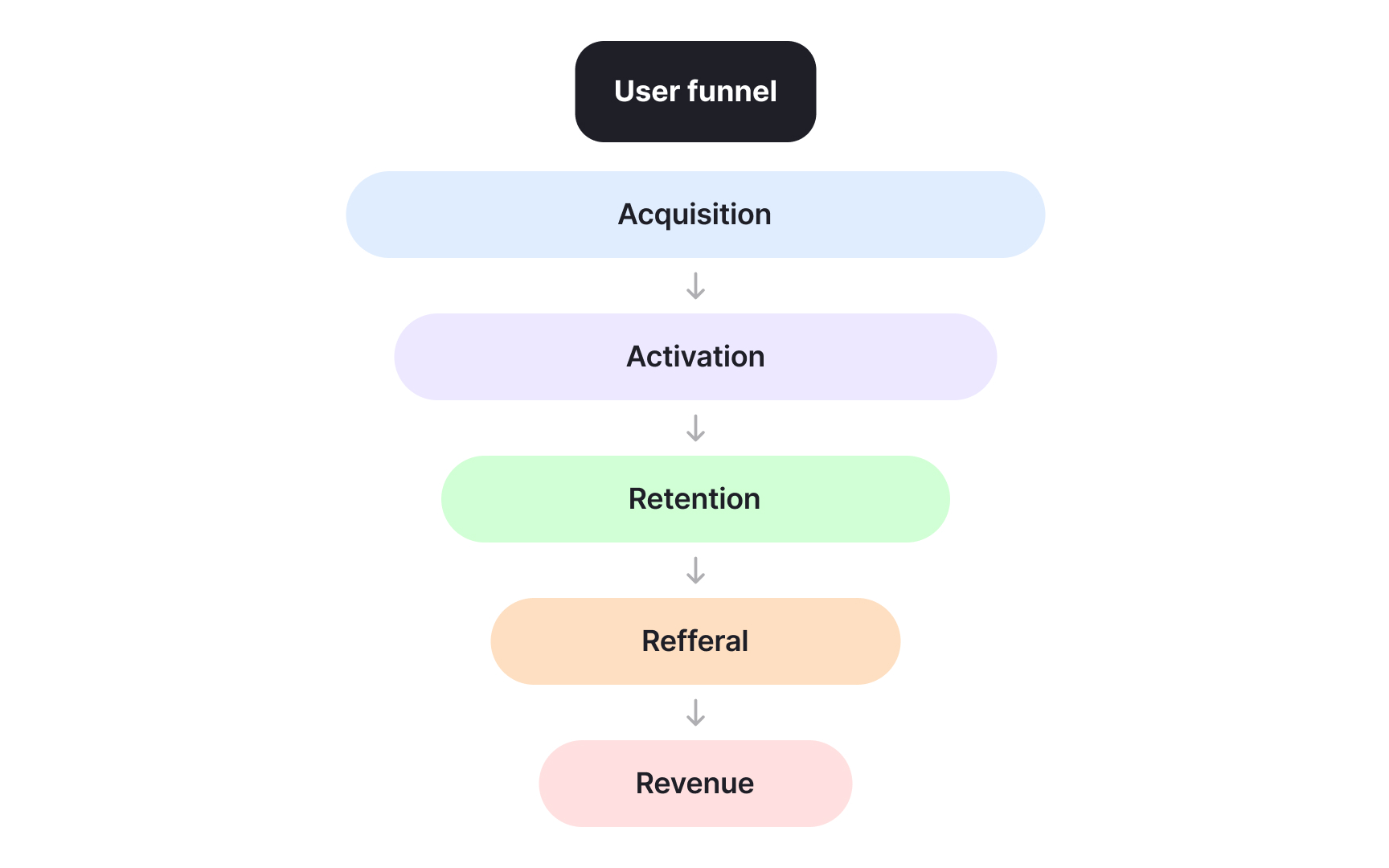
Strategic themes should address the full customer journey. The user funnel represents how people discover, try, and become loyal customers of your product.
Common stages include:
- Awareness: Users discover your product
- Interest/Consideration: Users explore your offerings
- Desire/Evaluation: Users seriously consider your product
- Action/Conversion: Users take the desired action
- Retention: Users continue using your product
Map where each theme primarily impacts your user funnel to ensure balanced strategy:
- Identify where each theme primarily impacts the funnel. "Remove friction from remote teamwork" might primarily affect retention by keeping teams engaged after initial adoption.
- Analyze your funnel for bottlenecks by measuring conversion rates between stages. If 1000 users reach your product page but only 200 proceed to trial, you've identified a critical drop-off point that themes should address.
- A balanced strategy prevents focusing too heavily on one stage while others suffer. Improving activation is wasted if retention is poor. Building premium features matters little if users can't discover core value first.
- Map themes across the funnel to ensure comprehensive coverage. This systematic approach transforms vague strategic goals into targeted improvements at specific customer journey points.[1]