Executive-facing view
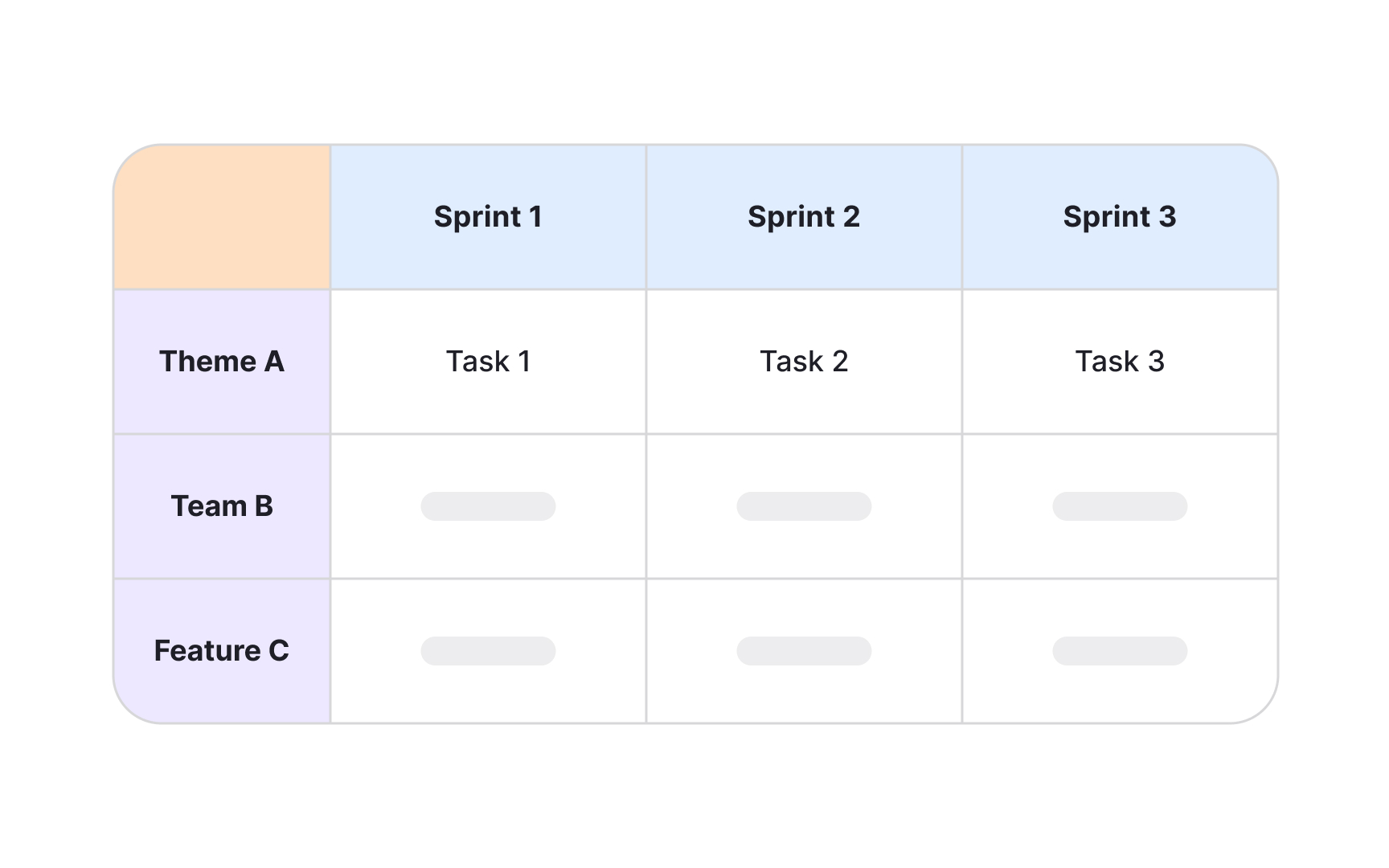
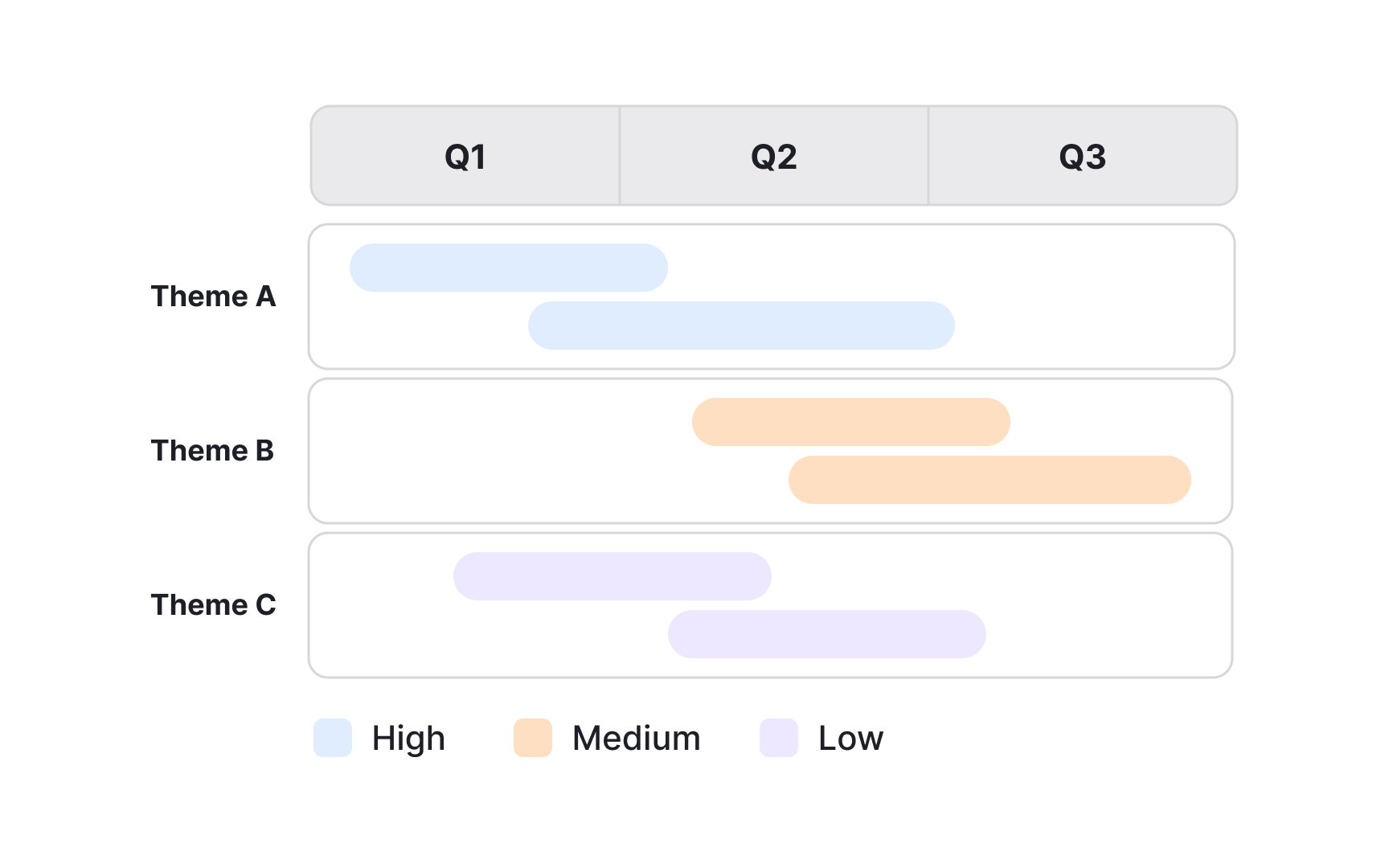
Executives expect a roadmap that highlights the product’s direction at a strategic level. They look for themes, milestones, and links to company goals rather than a breakdown of individual features. Including too much detail can distract from the bigger picture and lead to unproductive discussions about specific tasks. A concise view with clear priorities helps keep attention on what drives the business forward.
Certain elements should be intentionally left out. Detailed engineering dependencies, sprint-level planning, and speculative features are not relevant to an executive audience. Overly long timelines are also problematic, since forecasts far beyond nine to twelve months are rarely accurate and can create a false sense of certainty. Instead, executives should see a limited horizon with high-level initiatives, approximate timing, and clear markers of business impact.
Clarity about certainty is essential. Each roadmap item can be marked according to how confident the team is about its delivery. For example, features already in development may be shown with a high-confidence label, while longer-term initiatives can be marked as medium or low confidence. Using color codes or simple legends prevents executives from interpreting the entire roadmap as guaranteed. This distinction makes it easier to separate near-term commitments from longer-term possibilities and keeps expectations realistic.