What are OKRs
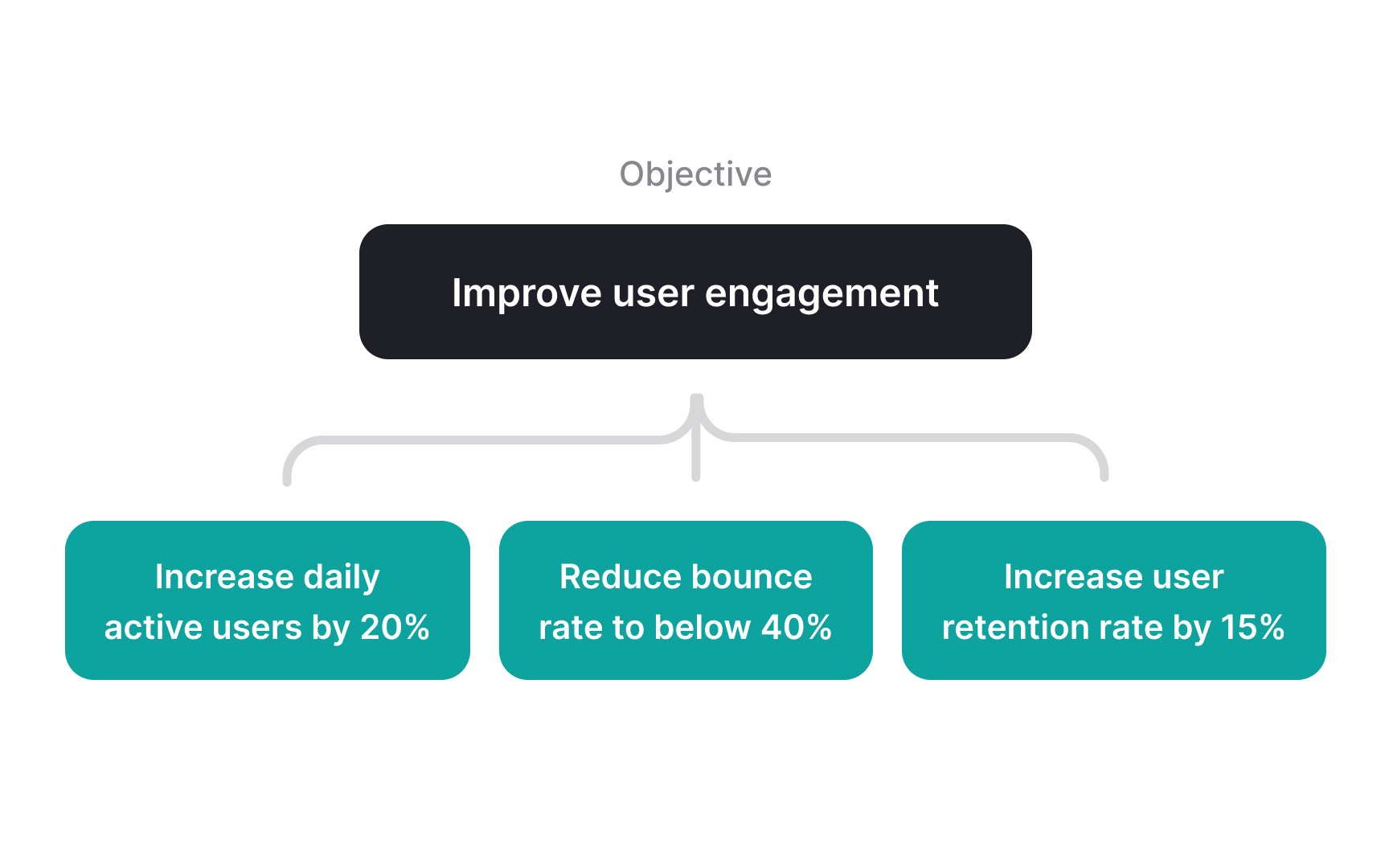
Objectives and key results (OKRs) are a goal-setting framework that connects ambitious goals with measurable outcomes. The objective is what you want to achieve: a clear, inspiring goal that motivates your team. Key results are the specific, measurable outcomes that show you're making progress toward that objective. The OKR framework was popularized by Intel and Google, designed to align teams around shared goals while providing clear measures of success. Unlike traditional goal-setting, OKRs encourage teams to set challenging targets. Achieving just 70% of an OKR is often considered successful.[1]
For example, a product team might set an objective to "Create the most user-friendly onboarding experience in our industry." The key results could include "Reduce time-to-value from 30 minutes to 5 minutes," "Increase completion rate of onboarding from 65% to 90%," and "Achieve an onboarding satisfaction score above 4.5/5." These clearly show whether the objective is being achieved.
OKRs work best when they flow through the entire organization. Company objectives break down into team objectives, which connect to individual objectives. This alignment helps everyone see how their daily work contributes to the company's bigger mission, creating better focus and preventing scattered efforts. A similar framework is the concept of levers and the rate-limiting step. In this framework, the levers are the metrics that move the north star (the key results), and the rate-limiting step is the biggest bottleneck or the most important lever. Smaller teams often use this framework because it is simpler and more direct.