Metrics as a common language
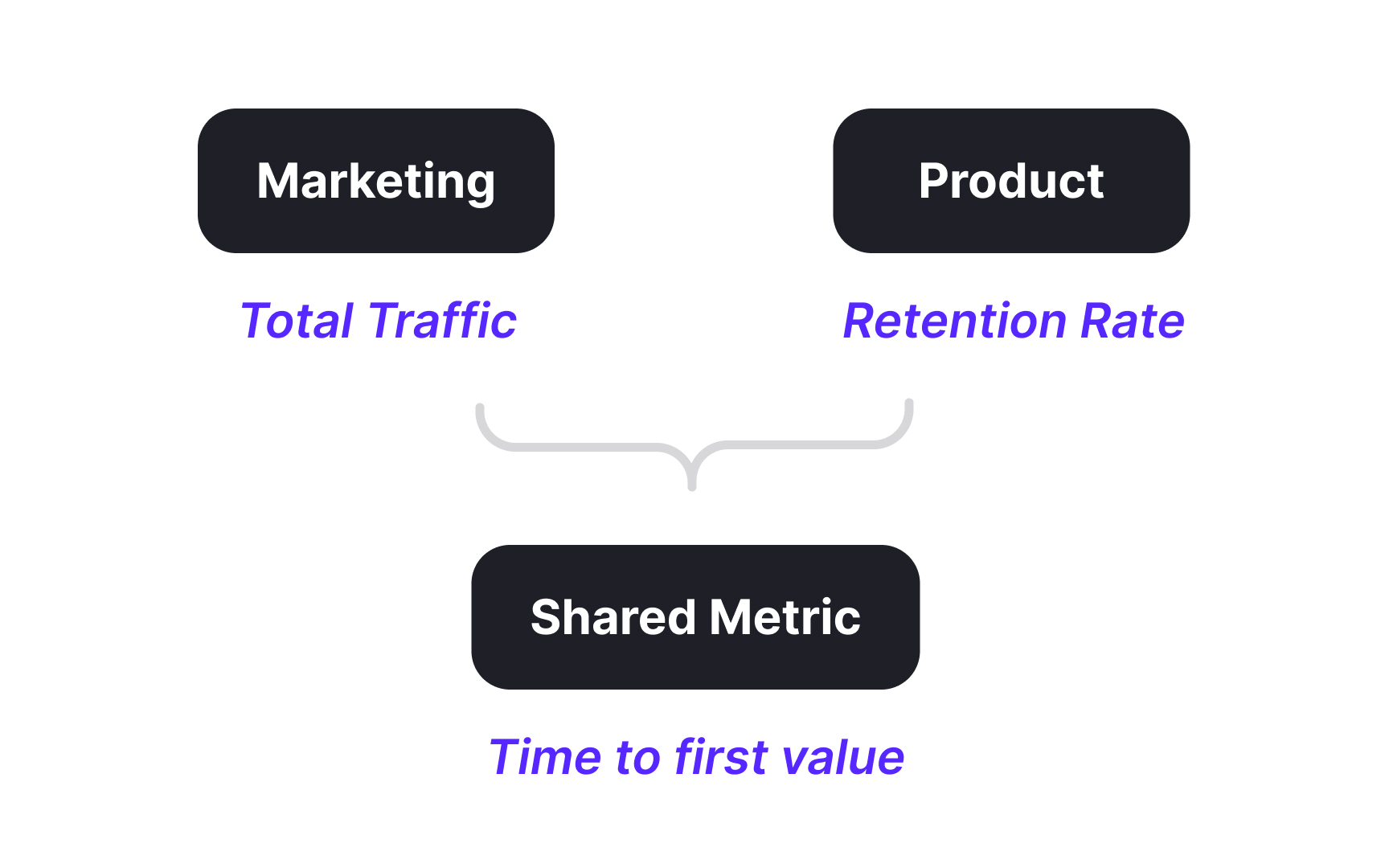
When teams operate with different definitions of success, misalignment is inevitable. For instance, a marketing team might celebrate increased traffic while the product team worries about declining engagement metrics, creating unnecessary tension and competing priorities.
Shared metrics bridge these gaps by establishing a common reference point.[1] In the example above, the company above may unify its departments by focusing everyone on "time to first value," how quickly new users achieved their first meaningful outcome. This metric can help marketing attract qualified leads, guided product design decisions, and informed customer support training.
The power of common metrics lies in their ability to translate abstract goals into concrete targets that everyone understands. They transform discussions from subjective preferences ("I think users want this feature") to objective evaluations ("This feature reduced time to first value by 22%"), making collaboration more productive and less emotionally charged.