Creating clear metric ownership
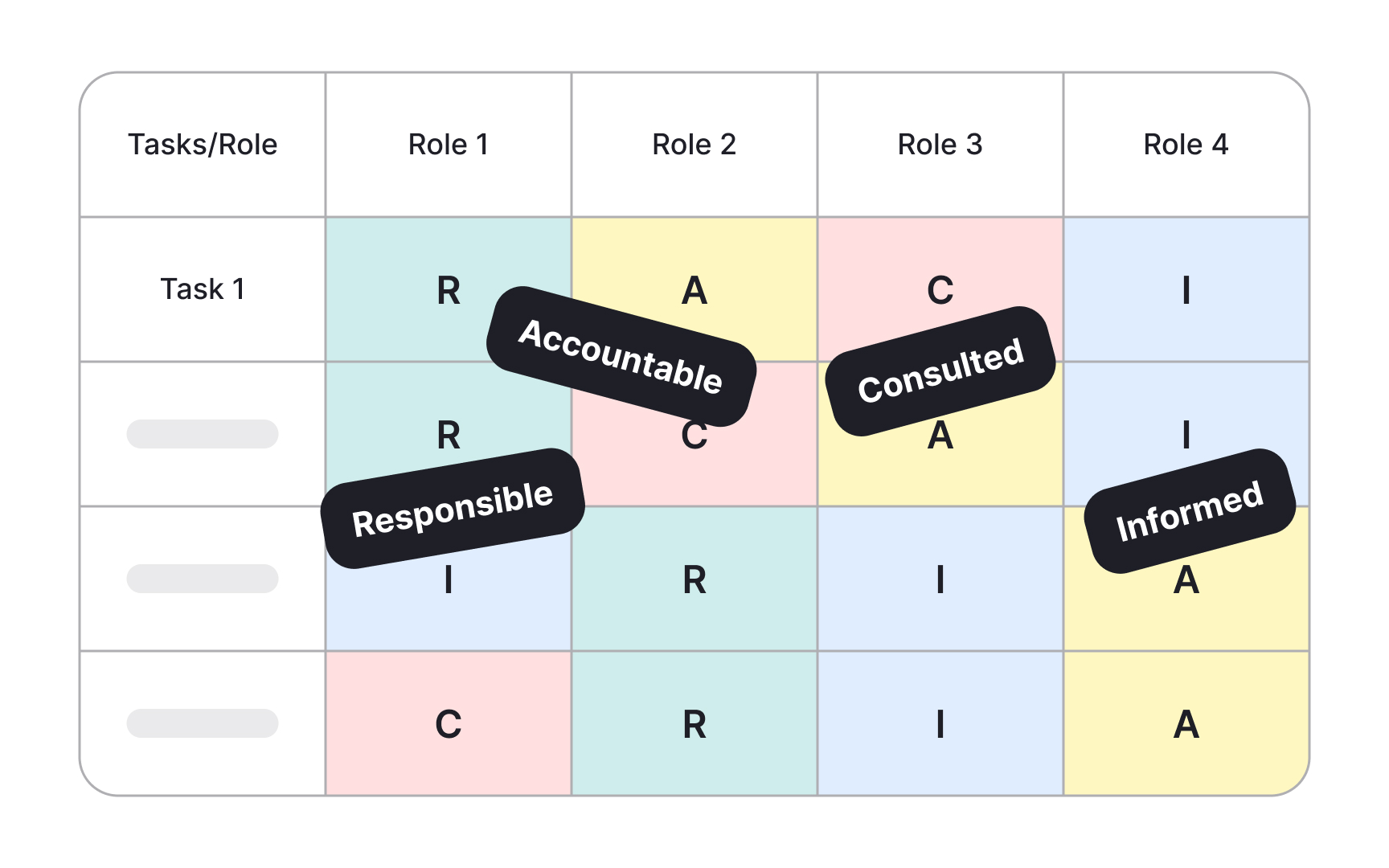
Establishing clear ownership for each metric prevents the common pitfall of shared responsibility becoming no responsibility. For example, a cross-functional team implementing a new customer onboarding process could make use of a RACI matrix (Responsible, Accountable, Consulted, Informed) to clarify roles for their key metrics. This structured approach defines exactly who owns what aspect of each measurement.
For their "time to first value" metric, the RACI matrix would designate a single product manager as Accountable (the ultimate project owner coordinating all actions), while making specific team members Responsible for different components that impact the metric. The onboarding designer would be Responsible for interface improvements, the engineer for technical implementation, and the content writer for simplifying instructions. The matrix would also identify stakeholders who should be Consulted before changes (like customer support) and those who need to be Informed of progress (like sales).
This RACI approach clarifies decision-making authority and escalation paths when metrics go off track. When the "time to first value" metric shows an unexpected increase, everyone can tell that the product manager was accountable for coordinating a response, with specific team members responsible for investigating their areas. This eliminates confusion about who should take action, allowing the team to address issues quickly without diffusion of responsibility.[1]