Designing feedback loops for improvement
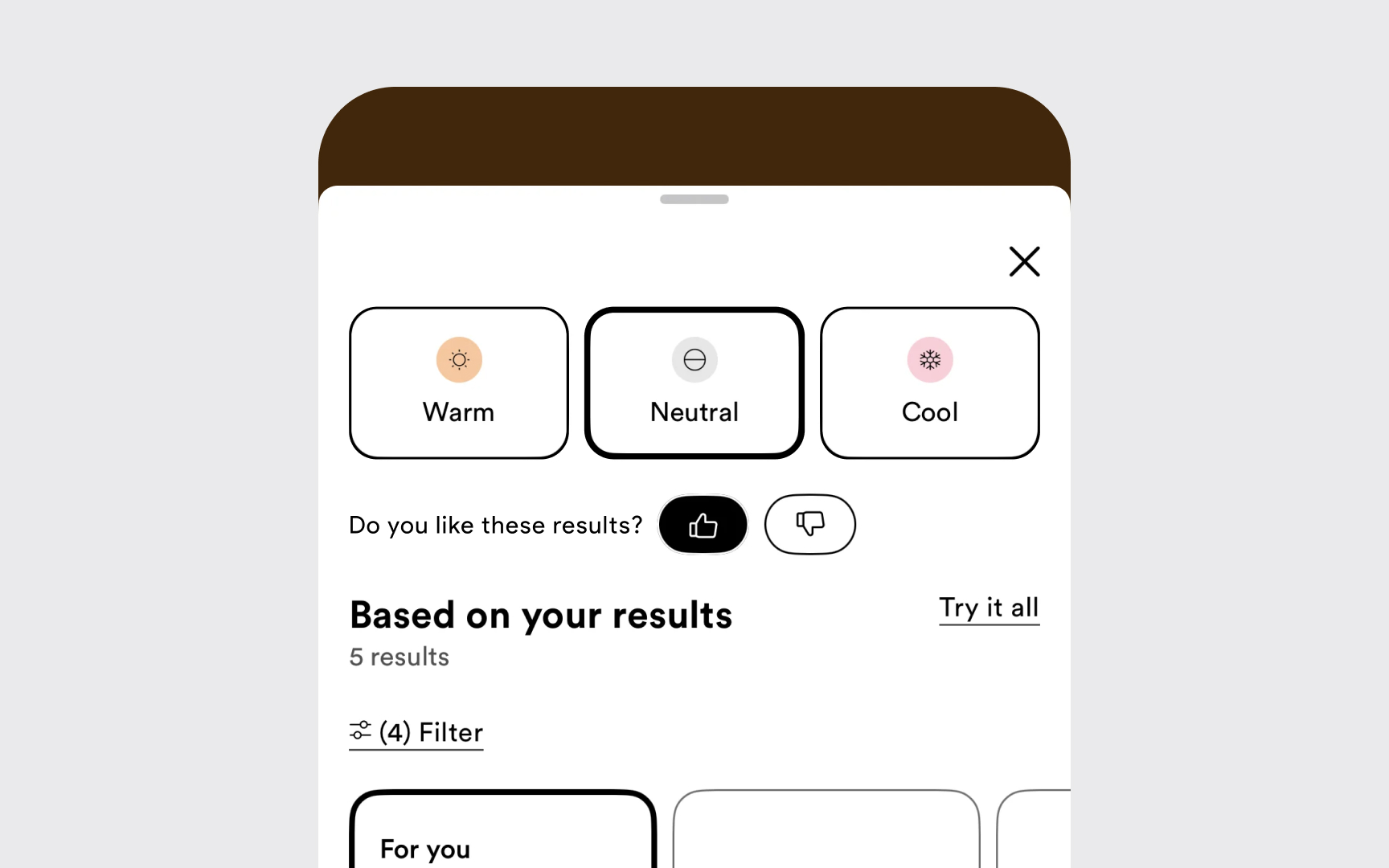
Failed predictions create teaching opportunities. When AI misidentifies something, users can provide the correct answer. This moment of user expertise can improve the system if captured thoughtfully.
Make feedback specific and immediate. A running app asking "Too easy?" or "Too hard?" after each run gets more responses than complex surveys later. Binary choices work because users can tap while cooling down rather than filling out detailed forms.
Bi-directional feedback works best. After a thumbs down, the system could ask "What was off?" with quick options like "Wrong shade" or "Not my skin type." When users select "Wrong shade," explaining "I matched based on your 'Neutral' selection" helps users understand the system while teaching AI their true preferences. Show that feedback matters. Tell users when their input creates improvements. "Thanks to feedback like yours, we've improved face grouping accuracy by 15% this year." This proves their time wasn't wasted and encourages future help.