Unit economics fundamentals
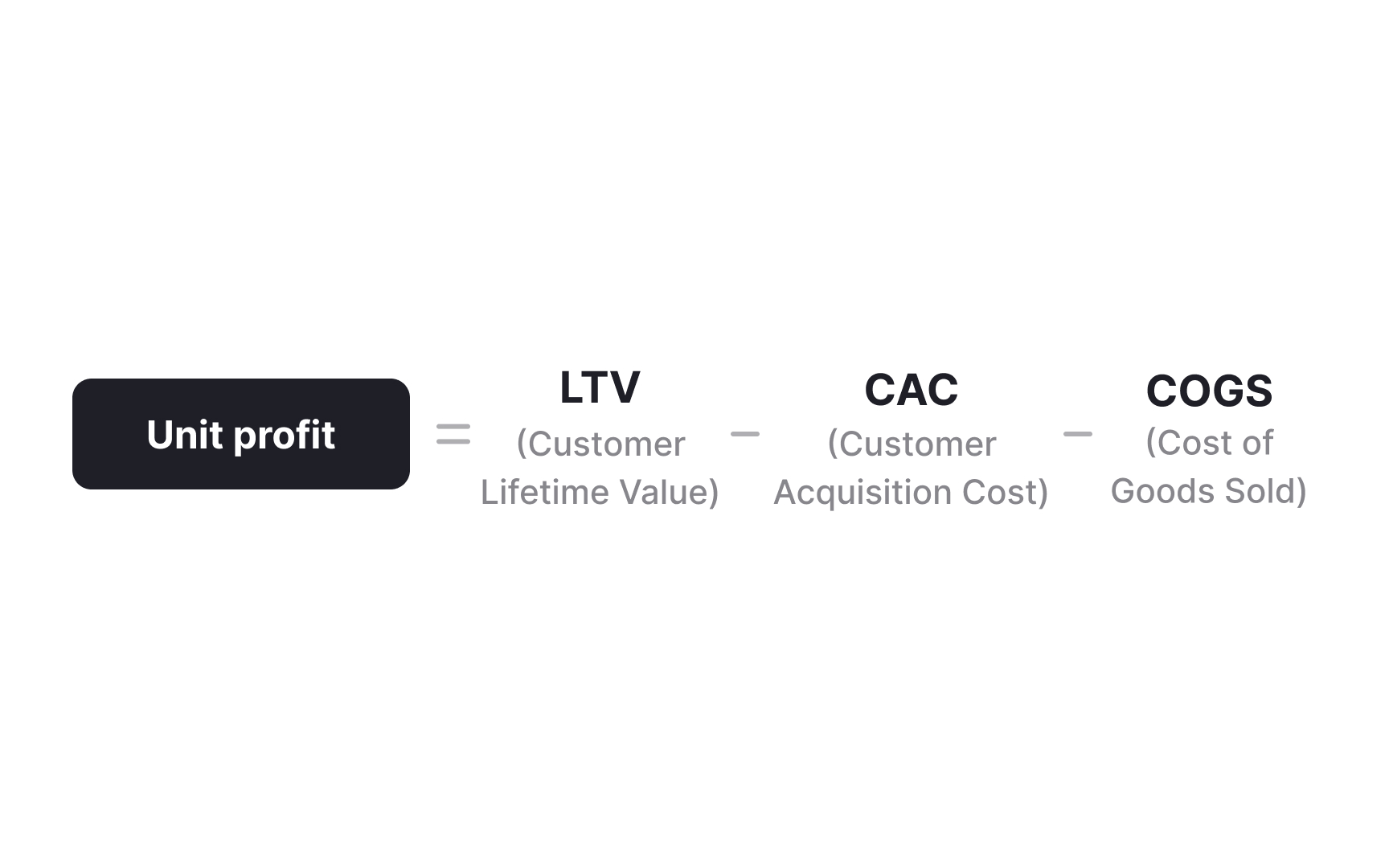
Unit economics analyzes the direct revenues and costs associated with a single unit of your business model, whether that's one customer, transaction, or product sold. Understanding these metrics helps determine if your business can be profitable at scale. Key metrics include Customer Acquisition Cost (CAC), Lifetime Value (LTV), and contribution margin.
Healthy unit economics show that you earn more from customers than it costs to acquire and serve them. A common benchmark is maintaining an LTV:CAC ratio of at least 3:1, meaning customer lifetime value should be 3 times the acquisition cost.[1] This buffer accounts for operational expenses and provides room for growth.
Many startups fail because they scale before achieving positive unit economics. Growing a business with negative unit economics only amplifies losses. Focus on optimizing these fundamentals before pursuing aggressive expansion.
Pro Tip: Calculate unit economics for different customer segments separately to identify your most profitable audiences.