Framing OKRs
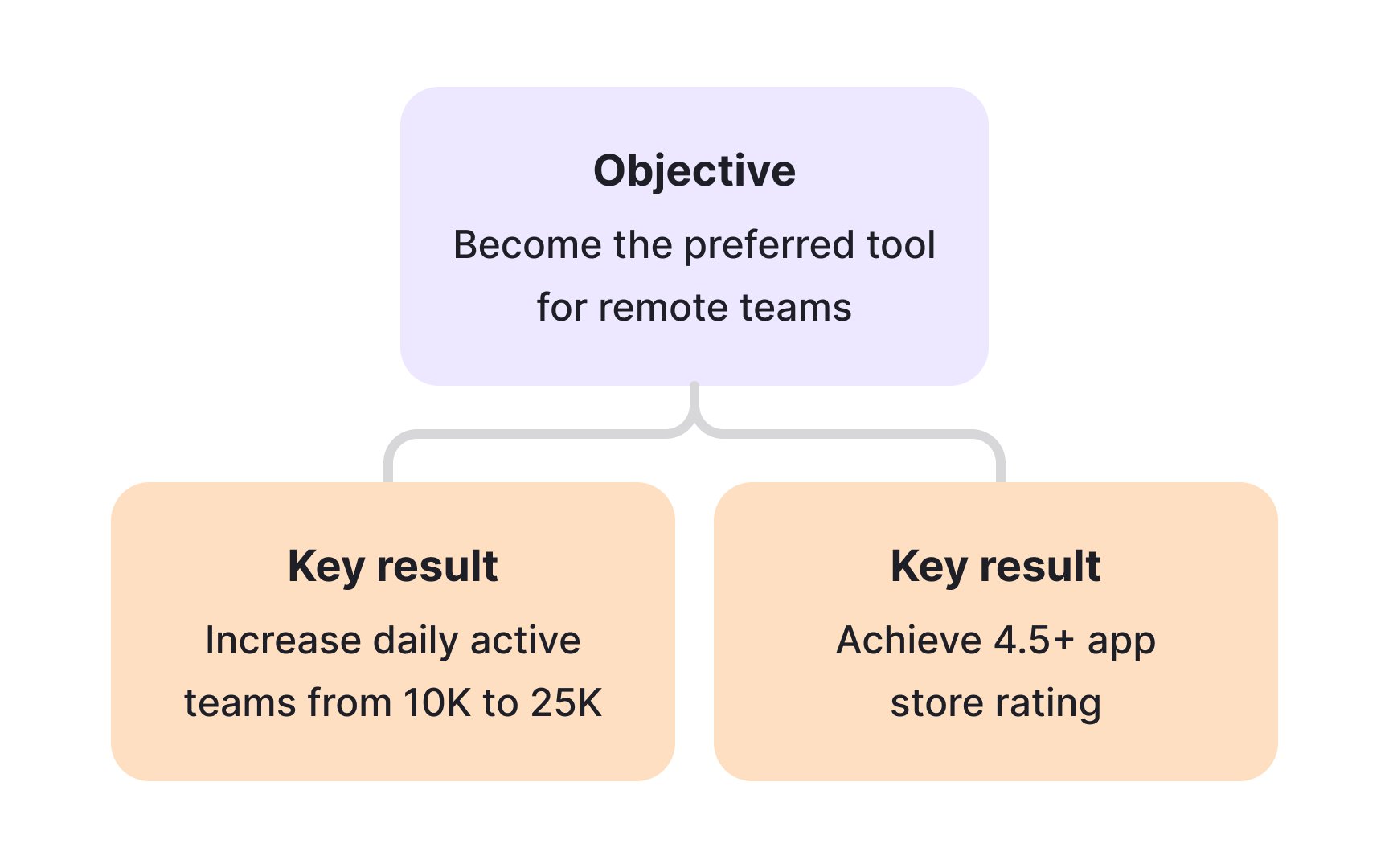
Objectives and Key Results (OKRs) align teams around measurable user outcomes instead of feature lists. The objective states your ambitious goal: "Become the preferred tool for remote teams." Key results measure success: "Increase daily active teams from 10K to 25K" or "Achieve 4.5+ app store rating."
Good OKRs focus on outcomes, not outputs. "Launch video calling" is an output. "Increase team collaboration sessions by 40%" is an outcome. This shift keeps teams flexible about solutions while committed to results. Google aims for 70% OKR achievement - 100% means you're not ambitious enough.
Product OKRs should ladder up to company goals while staying within team control. If the company objective is "Expand internationally," product might target "Support 5 new languages with 80%+ user satisfaction." Quarterly cycles work best for product teams to balance ambition with adaptability.