Platform labor dynamics
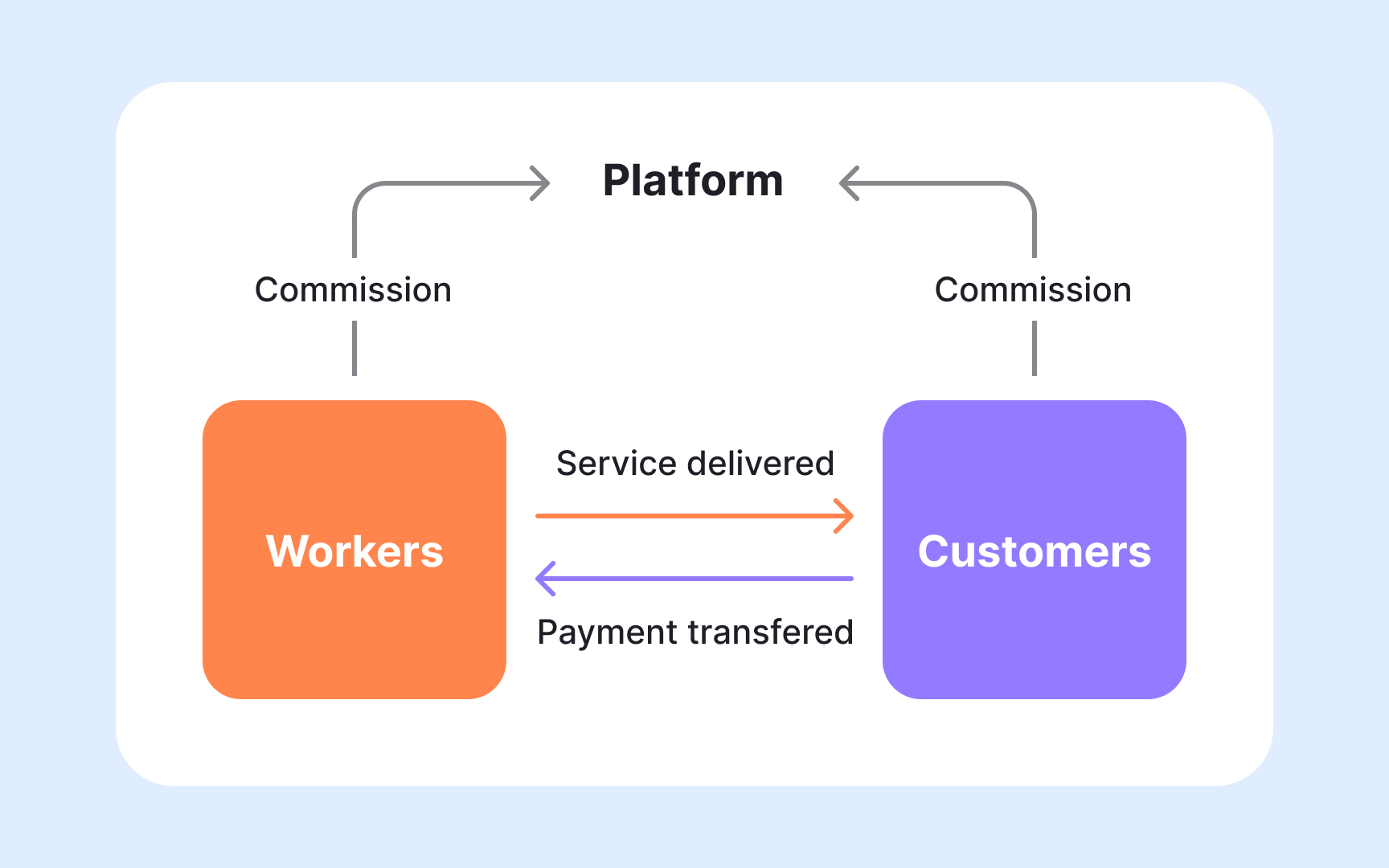
Platform labor markets operate through digital intermediaries that connect workers with customers, fundamentally changing traditional employment relationships. Unlike conventional jobs with fixed salaries and clear employer-employee structures, platform work involves interactions between workers, platforms, and customers. Companies like Uber, DoorDash, and Upwork use technology to coordinate task matching, pricing, and quality control across potentially millions of users simultaneously.
These markets create distinct economic dynamics. Workers often classify as independent contractors rather than employees, affecting their access to benefits, job security, and legal protections. Platforms extract value by taking commission from transactions while positioning themselves as neutral intermediaries. For example, Grab dominates Southeast Asian ride-hailing with over 90% market share in some countries.[1] Network effects favor larger platforms, as more workers attract more customers and vice versa, leading to market concentration where one or two platforms dominate entire sectors.
Understanding these dynamics helps product teams recognize how design decisions affect market balance. Features like task allocation algorithms, pricing structures, and worker classification systems shape economic outcomes for all participants. Products that account for power imbalances and market concentration can create more sustainable and equitable labor ecosystems.