Two-tier vs. three-tier architecture
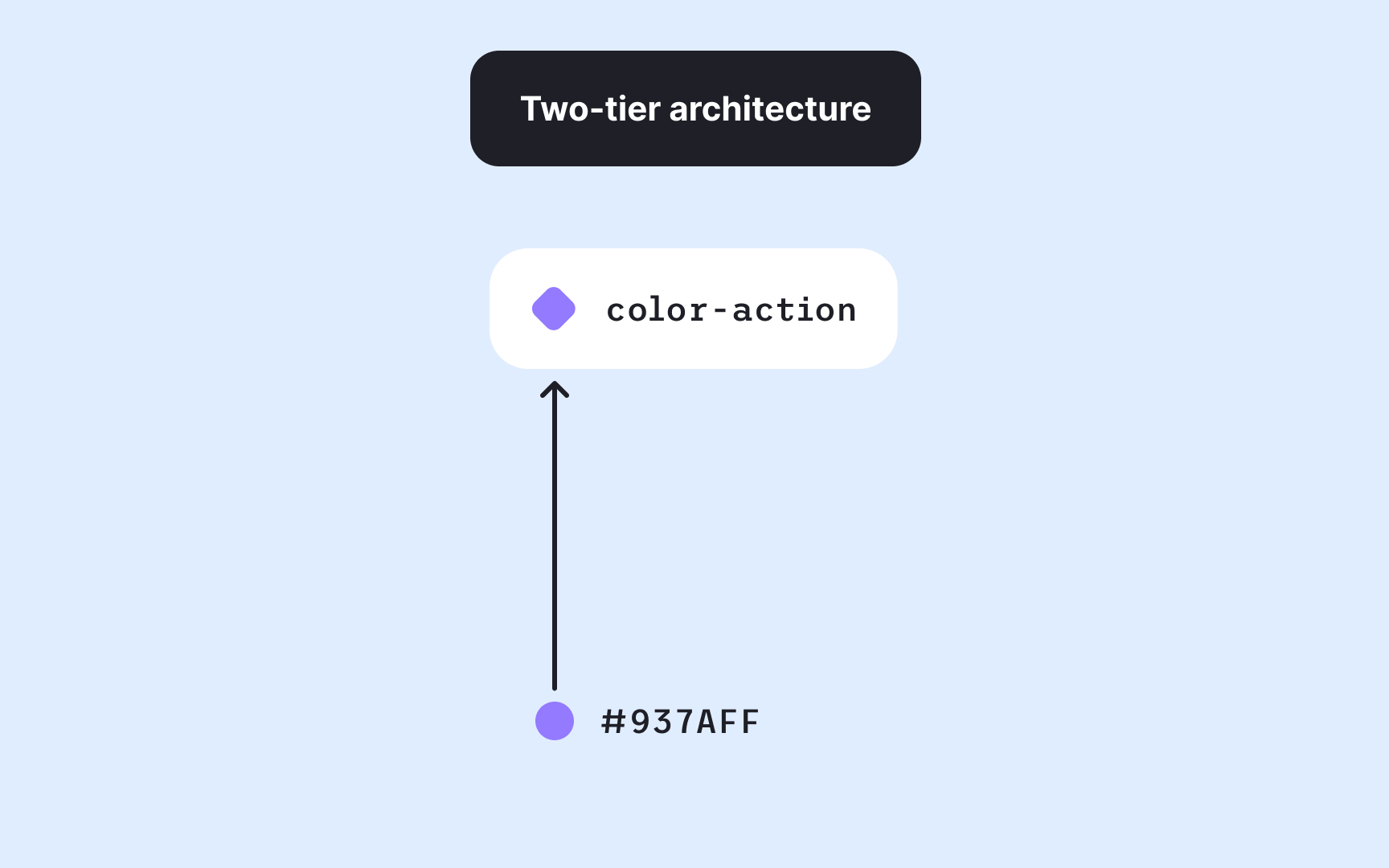
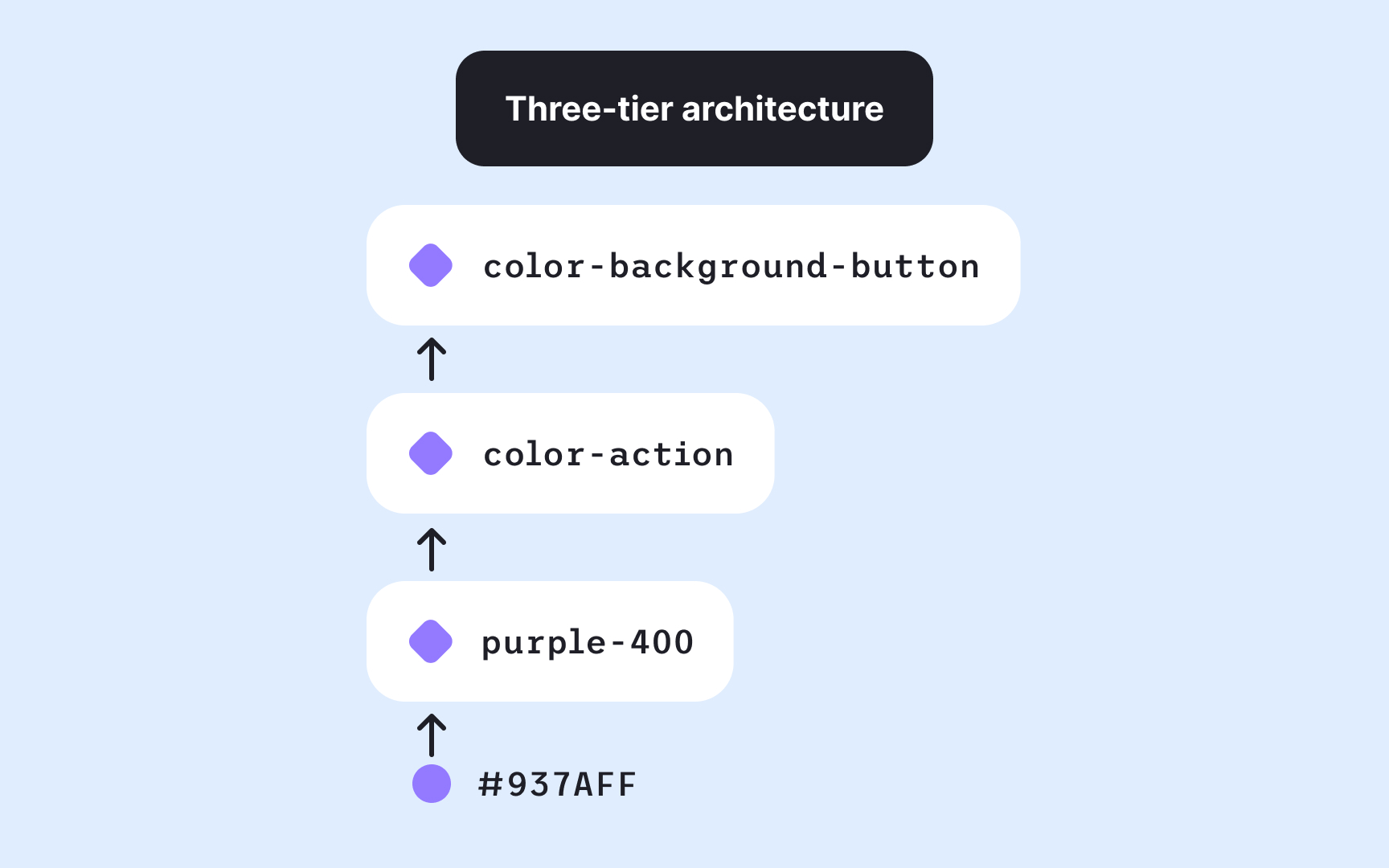
Design token systems can be structured with either two or three layers, depending on complexity. The right approach depends on scale, collaboration needs, and the expected lifespan of the system.
- A two-tier setup includes option and decision tokens. It’s simpler to maintain and works well for smaller teams or stable design systems where major changes are rare. Designers define the base options and then map them directly to their contextual uses.
- A three-tier setup adds a component layer on top of option and decision tokens. This structure offers more flexibility and precision, especially for systems that support multiple brands, themes, or products. Changes made in one layer cascade predictably through the others, helping maintain both consistency and adaptability. However, it also increases maintenance effort, as each new component may require its own token definitions.[1]