Mapping emotional journeys
Emotions often drive customer decisions more than logic, yet most businesses focus only on the functional side of their products. What they miss is that most decisions happen subconsciously without the customer even realizing it. These choices are shaped by past experiences, emotions, and perceptions built up over time.
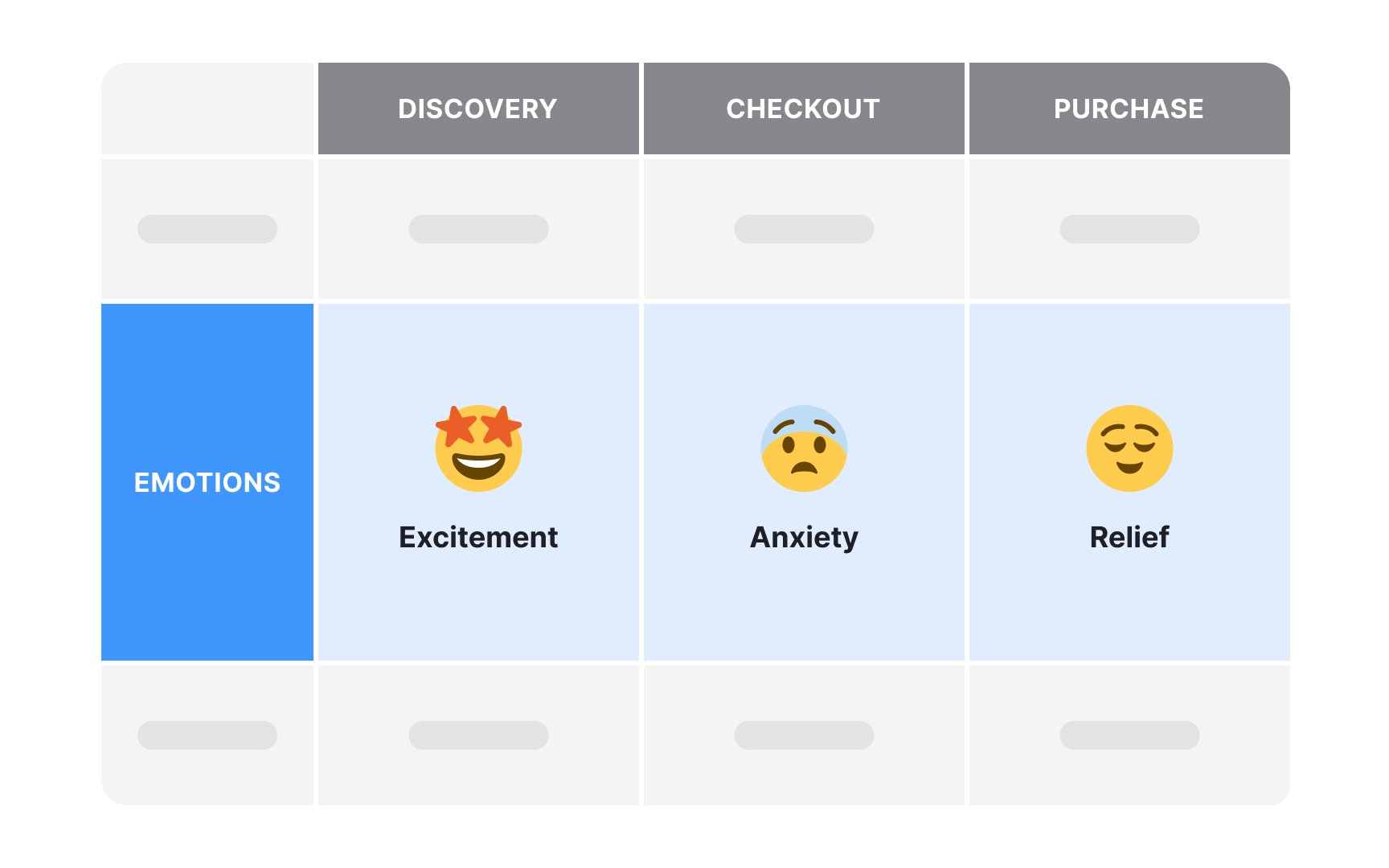
Customer journey mapping helps teams track the emotional highs and lows customers go through at each touchpoint. These feelings directly affect satisfaction, loyalty, and what people say about the product later. For example, excitement during discovery might turn into anxiety at checkout, followed by relief after a successful purchase.
To capture these shifts, journey maps often use simple scales or emotion words. This makes it easier to spot patterns and fix pain points. When teams understand how emotions shape decisions, they can design experiences that reduce stress, build trust, and create moments people remember. Mapping emotions alongside actions gives teams a way to spot gaps, remove friction, and build confidence. That’s what helps turn a one-time interaction into something people want to repeat and recommend.