The emotions layer
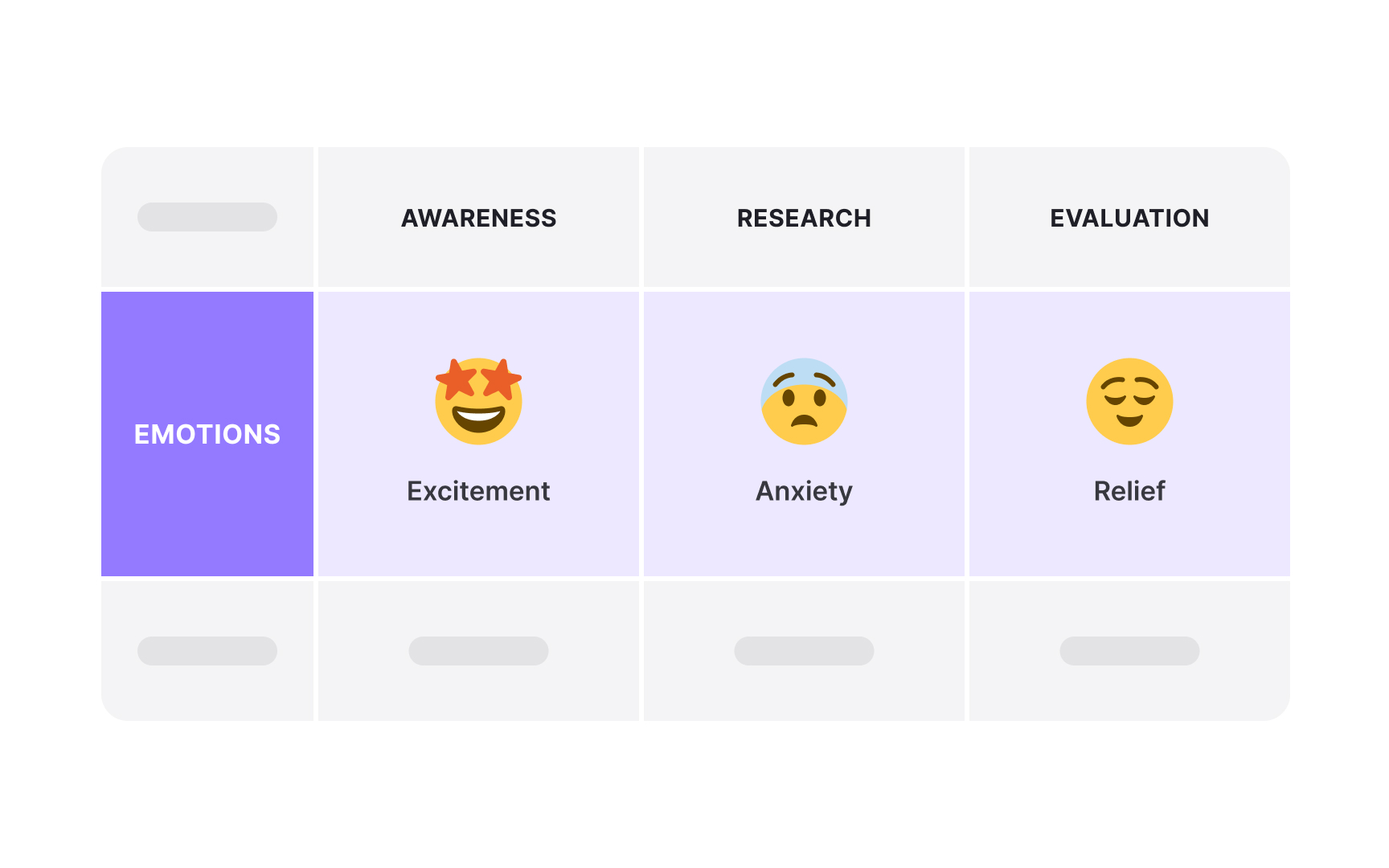
The emotions layer transforms journey maps from functional diagrams into empathy-building tools. This layer captures how customers feel at each touchpoint, using emotional descriptors like "frustrated," "confident," or "delighted." Visual representations often include emotion curves that rise and fall across the journey, making emotional peaks and valleys immediately apparent.
Capture emotions through direct research methods: customer interviews, surveys, and observation. Ask participants to describe their feelings at specific moments, not just their actions. Use emotion wheels or scales during research sessions to help customers articulate complex feelings. Avoid assumptions about how customers "should" feel based on your intended experience.
Visualize emotions using consistent scales and clear indicators. Common approaches include line graphs showing emotional highs and lows, emoji or face icons indicating mood states, or color gradients from red (negative) to green (positive). The key is making emotional patterns visible so teams can quickly identify where experiences need improvement and where positive moments can be amplified.