Writing error handling prompts
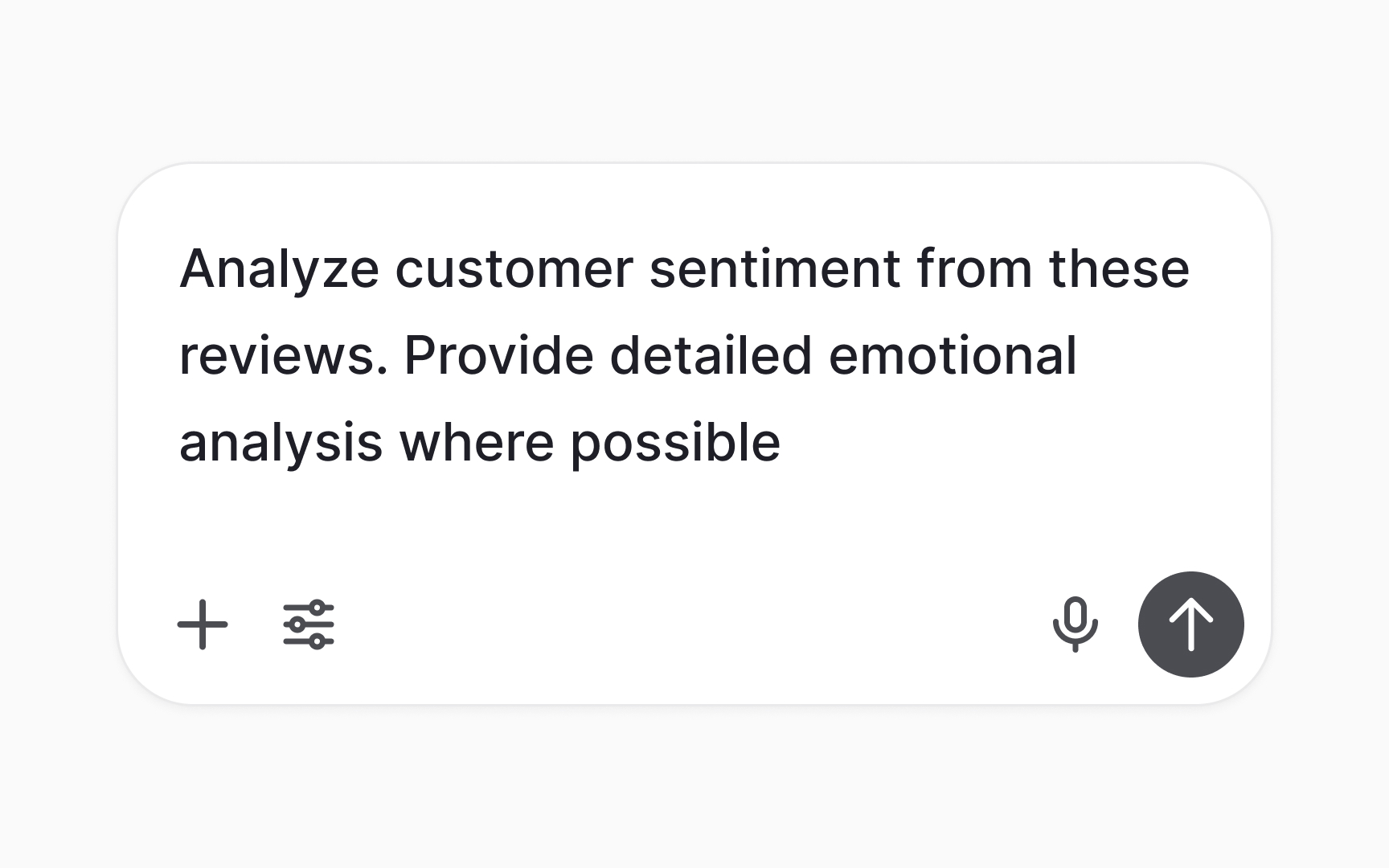
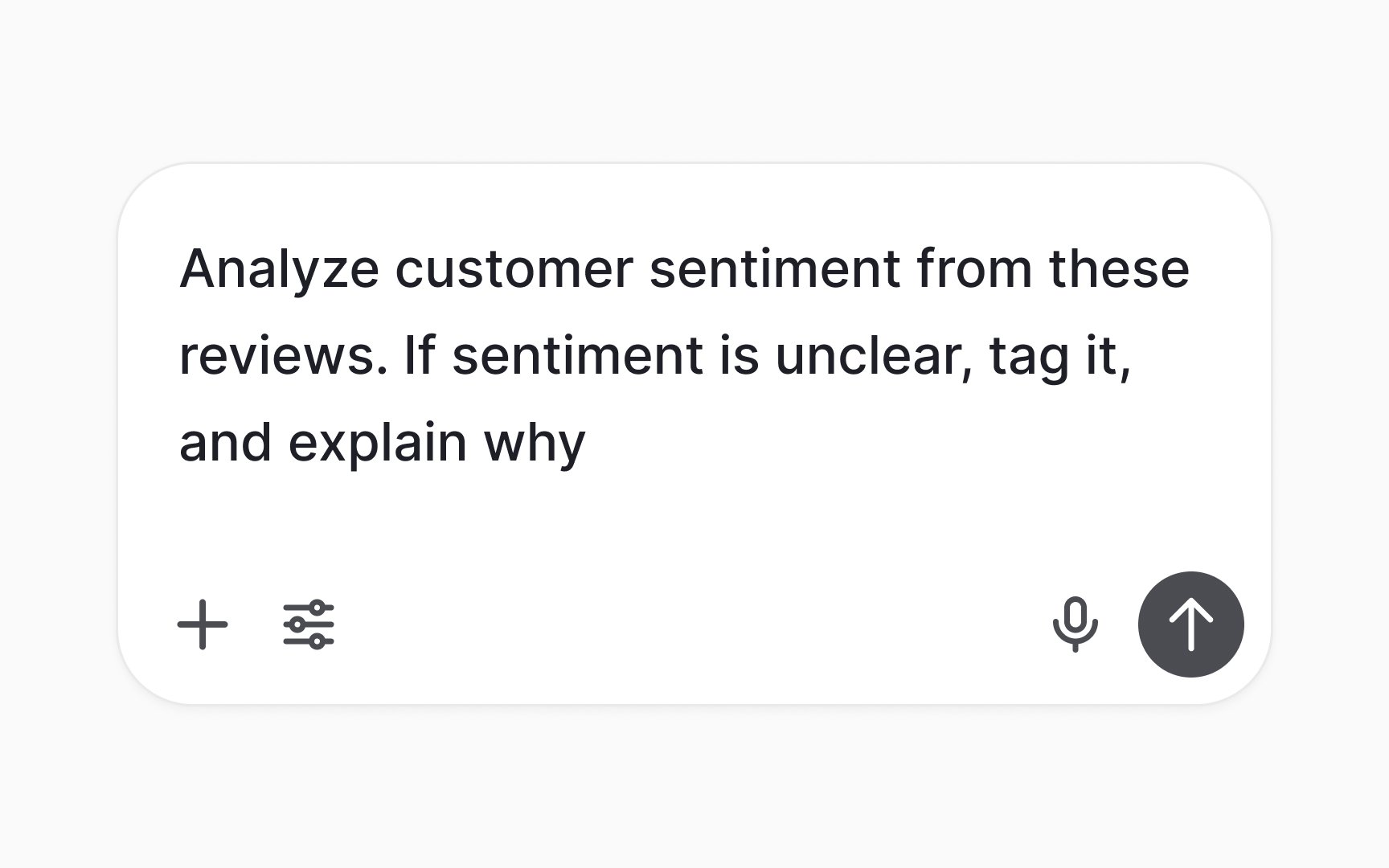
Error handling prompts prepare AI for problems and edge cases, ensuring useful responses even when your requests hit limitations. Like planning for contingencies, you guide AI on how to respond when it can't fulfill your exact request:
- Anticipate common failure modes. Identify where AI typically struggles: insufficient data, ambiguous requests, or technical limitations. Include instructions for these scenarios in your prompts: "If the data is incomplete, list what's missing and suggest alternatives using industry benchmarks."
- Guide AI's response to problems. When you know AI might struggle with parts of your request, tell it how to handle difficulties: "If you cannot find exact statistics, provide estimates based on similar industries and explain your reasoning." This produces helpful outputs instead of vague apologies.
- Build in self-validation. Add instructions for AI to check its own work: "After generating the analysis, verify all calculations make logical sense. If any seem incorrect, flag them and explain why." This self-checking reduces errors in final outputs.
- Design graceful alternatives. When perfect outputs aren't possible, specify acceptable substitutes: "If you cannot create a detailed timeline, provide a high-level overview with major milestones instead." This ensures you always get something useful.
Pro Tip: Test error handling by intentionally providing problematic inputs to see the responses.