Designing appropriate trust calibration
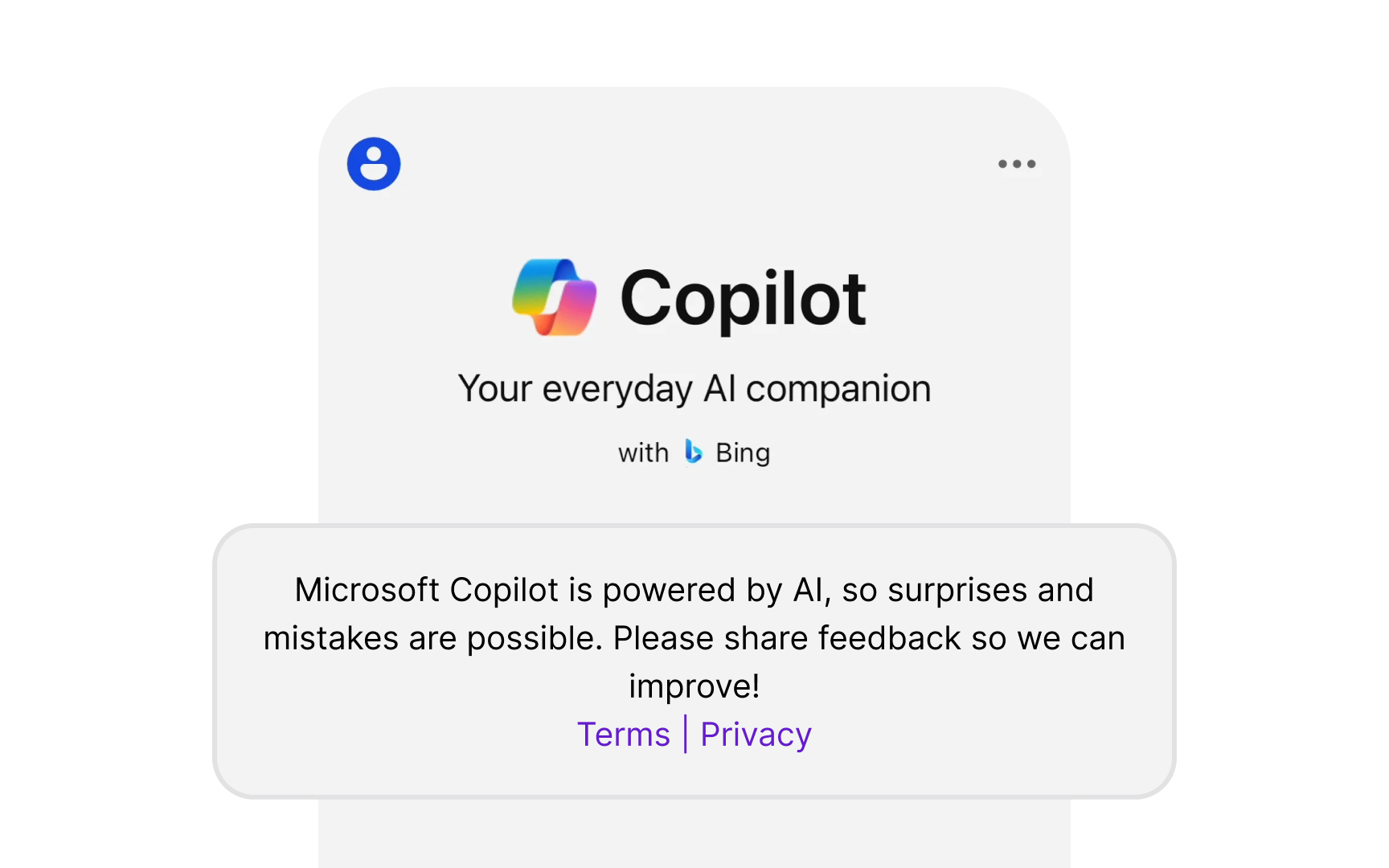
Trust calibration helps users develop just the right level of confidence in AI, not trusting it beyond its actual abilities, but also not dismissing features that could genuinely help them. This depends on users forming accurate mental models of what the AI can and can't do well. For example, users should know that a navigation app might have outdated information about road closures but excel at finding efficient routes.
The language used in AI interfaces directly shapes user trust. When a chatbot says "I think you might enjoy this movie" instead of "This movie matches your viewing history," it creates a false impression of human-like understanding. On the flip side, interfaces that say things like "The convolutional neural network has classified this image with 76.8% confidence" are too technical for most users. More effective approaches use plain language like "This appears to be a dog, but I'm not completely sure."
Good trust calibration requires honesty about mistakes: acknowledging errors, explaining why they happened when possible, and showing improvement over time. The goal is to help users rely on AI where it works well while maintaining healthy skepticism about its limits.
Pro Tip: Use visual cues to signal when the system is certain versus when it's making a best guess.