Evaluate existing content
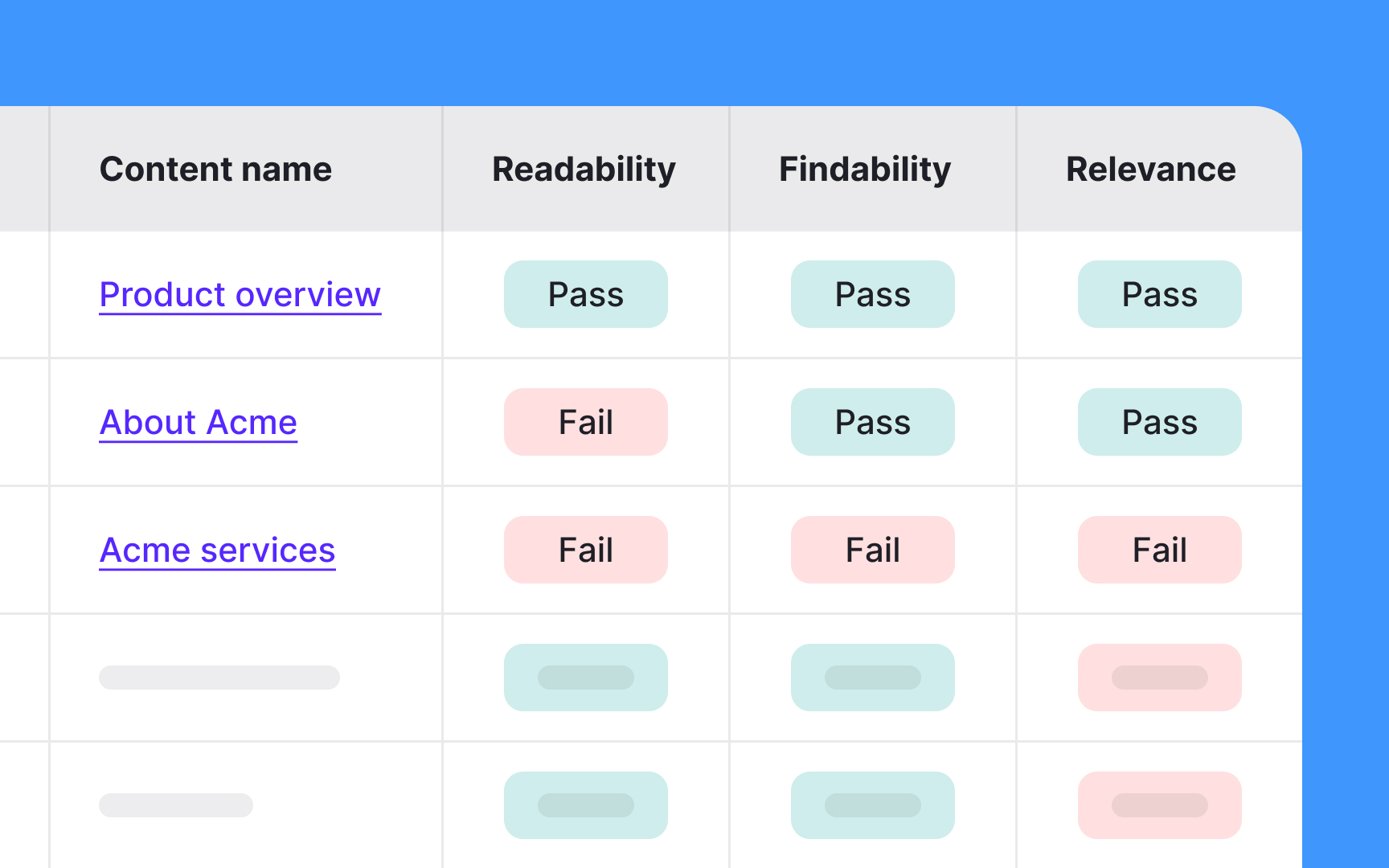
The usefulness of the content audit depends on setting up the right evaluators that reflect your audit goals. This step will make sure that your content audit has a tangible structure and methodology that allows for measurable results. Just as a content audit can have several different goals, it can have just as many criteria against which these goals can be measured.
Some commonly used evaluators include but are not restricted to:
- Readability: Ensuring that your content is on a readability score that matches that of your target audience.
- Relevance: Checking to see if the content is updated according to recent developments, trends, and findings.
- Findability: Making sure that information, wherever required, is strategically placed and readily available to users.
- Brand voice: Confirming if the brand voice and guidelines carry throughout the text uniformly and cohesively.[1]
Once the evaluators are selected, you can proceed to analyze whether your content meets the requirements set by these evaluators. You can use a simple Pass/Fail system, use a score of 1-10, or come up with your own unique metrics to mark the result of each piece of content that you audit.
Pro Tip: Do not let your personal preferences come in the way of a content audit — it should always be an objective process carried out based on pre-set goals and criteria.