Lifetime of the Product Vision and Strategy
Know when your product vision should stay firm and when your strategy needs to evolve
Product vision and strategy aren't static documents you create once and forget. They exist on different timelines and require different approaches to maintenance. Your vision typically spans years and should remain relatively stable, providing that north star your team rallies around. Your strategy, however, needs more frequent adjustments as you learn what works and what doesn't in the market.
Understanding when to hold firm and when to adapt is crucial for product success. A vision that changes too often creates confusion and erodes team confidence. But a vision that never evolves despite clear market signals leads to wasted effort and missed opportunities. Similarly, strategies need regular updates based on test results and market feedback, but constant pivoting without giving ideas time to prove themselves prevents meaningful learning.
The key lies in distinguishing between discovery pivots that move you closer to your vision and vision pivots that fundamentally change your direction. Most teams struggle not because their vision was wrong, but because they gave up too soon or held onto failing strategies too long. Learning to read the signals that indicate when change is needed, and what type of change is appropriate, separates successful products from failed ones.
Your
However, a stable vision doesn't mean ignoring feedback or market changes. It means you're committed to solving a problem that matters to customers. If people genuinely care about the problem you're addressing, the vision deserves time and persistence to find the right approach. Most successful products result from teams who stuck with their vision long enough to discover solutions that worked.
Jeff Bezos captures this principle perfectly: "Be stubborn on vision, but flexible on details." Your vision is the stubborn part. The features, monetization models, and specific approaches are the flexible details you'll iterate on repeatedly.[1]
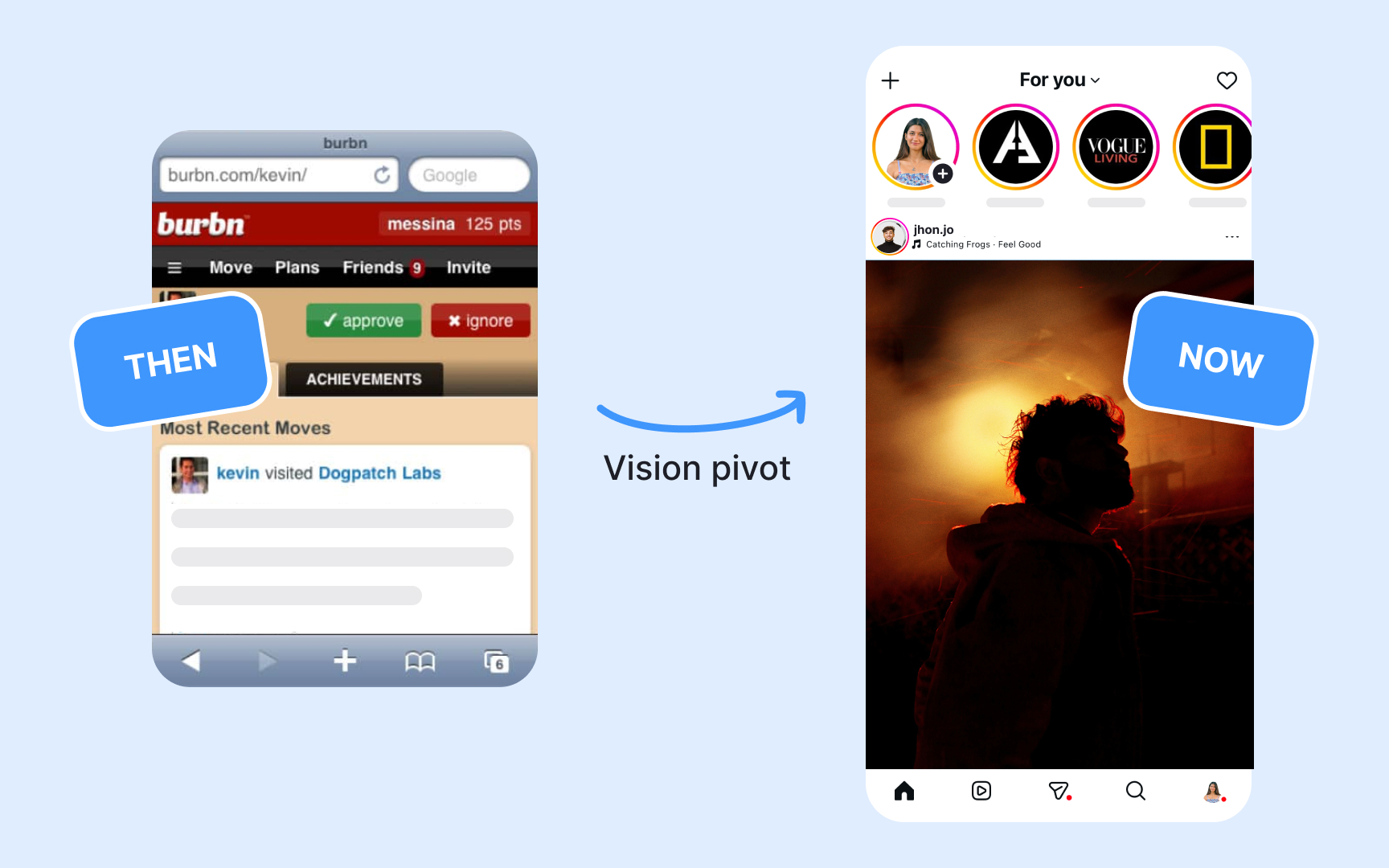
A vision pivot becomes necessary when you discover the problem you're solving doesn't matter enough to customers. This is about distinguishing vision from illusion. No matter how well you execute, if people simply don't care about the problem, your product won't succeed. This realization requires honest assessment and strong market validation signals.
Vision pivots are rare and serious decisions. They fundamentally change what business you're building and who you're serving. Instagram started as Burbn, a location check-in app, but pivoted when founders realized users only cared about the photo-sharing feature. YouTube began as a video dating site before discovering people wanted a general video platform.
The mistake most teams make is giving up too soon, not pivoting too late. But when evidence clearly shows the market doesn't exist, pivoting quickly saves resources and redirects effort toward problems people actually need solved.
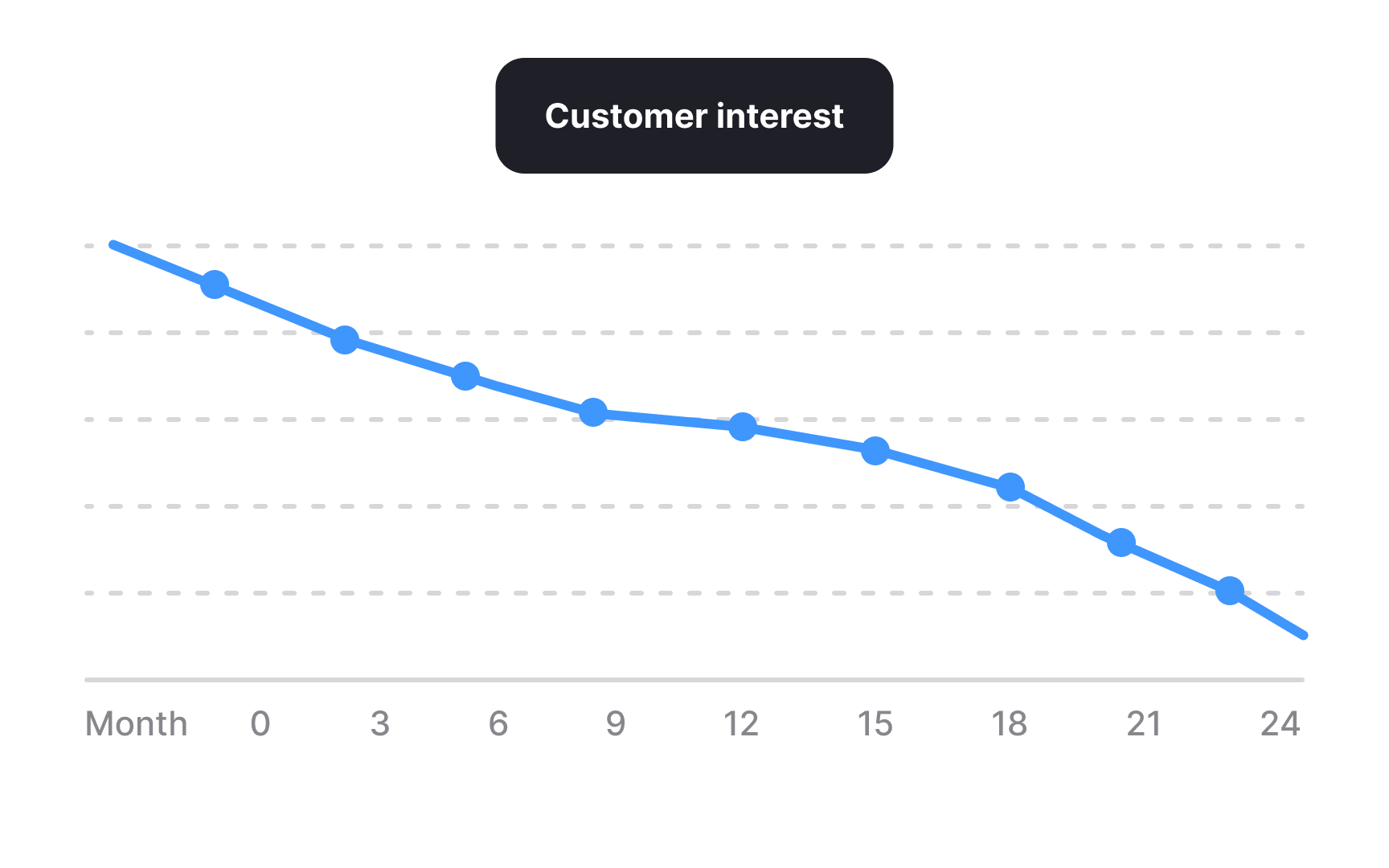
Certain warning signs indicate your product vision may need refreshing or complete replacement:
- The clearest signal is when customer research consistently shows people don't care about the problem you're solving. If multiple customer interviews, surveys, and market tests all point to lack of interest, your vision likely needs reconsideration.
- Another warning sign is when you've tried numerous strategies over an extended period without gaining traction. If you've spent 18-24 months testing different approaches and nothing moves the needle, the issue might be your vision rather than execution.
Market validation techniques should reveal whether genuine demand exists for what you're building.- Team morale can also signal vision problems. When talented people leave because they've lost faith in the direction, or when it becomes impossible to recruit strong candidates, your vision might not be compelling enough.
- Finally, if adjacent products solving similar problems consistently fail in the market, that's a strong indicator the underlying vision may be flawed. These signs require honest assessment rather than wishful thinking about eventual success.
Your strategy stays stable when it's actively moving you toward your vision and showing positive signals. If your current approach is generating learning, improving key metrics, and helping you understand what customers need, there's no reason to change it. Stability in strategy gives your team time to execute well and gather meaningful data about what works.
A stable strategy doesn't mean zero changes. It means your core approach, target market, and main priorities remain consistent while you refine tactics and optimize execution. When teams constantly shift strategies, they never give any single approach enough time to prove itself. This prevents real learning and creates confusion about what's actually working.
Regular strategy reviews (at least quarterly) help you assess whether your current direction deserves continued investment. If the metrics you're tracking move in the right direction and you're learning valuable insights from tests and customer feedback, your strategy should stay its course.[2]
Strategy updates happen far more frequently than vision changes. While your vision might stay constant for years, your strategy needs adjustment as you learn what works and what doesn't. These changes are discovery pivots, meaning they move you closer to realizing your vision through different approaches.[3]
Several signals indicate your strategy needs updating:
- Your key metrics plateau or decline despite execution efforts
- Test results consistently show customers responding differently than expected
- Customer feedback reveals they care about different aspects of your product than your strategy emphasizes
- You discover your current approach requires resources or timeline that aren't realistic
Strategy updates might involve changing your monetization model, trying different growth tactics, or focusing on different features than originally planned. You might shift from subscription to transaction pricing, or from viral growth to partnerships. These changes don't alter your fundamental vision, they're just different paths toward the same destination. Be stubborn about where you're going, but flexible about how you get there.
External market shifts can force updates to both your strategy and, in rare cases, your vision. New competitors, changing customer expectations, or emerging technologies can make your current approach less effective. Most market changes only require strategy adjustments, but sometimes they fundamentally alter whether the problem you're solving still matters.
Customer behavior shifts often trigger strategy updates. When the COVID-19 pandemic changed how people work, products built around office collaboration adjusted their strategies while keeping visions intact. When privacy regulations like GDPR emerged, many products needed new growth approaches. These are strategy changes responding to new constraints or opportunities.
More dramatic market shifts can invalidate a vision entirely. When smartphones became ubiquitous, standalone GPS device makers faced a vision problem, not just a strategy problem. The market for their core offering disappeared. Economic downturns, geopolitical turmoils, technological disruptions, regulatory changes, or even gradual generational changes can eliminate the need for what you're building, or even worse, make them illegal or undesired. The key is recognizing whether market changes require tactical adaptation or fundamental reconsideration of your direction.
Internal business changes can require updates to your strategy or vision just as much as external market shifts. Budget cuts, leadership changes, team restructuring, or shifting company priorities can all impact what's feasible or desirable for your product. These changes aren't failures, they're realities of working within organizational constraints.
Resource availability often triggers strategy updates. If your team size shrinks or budget gets reduced, you might need to narrow your focus or change your approach. A strategy that relied on aggressive paid acquisition might shift to organic growth. A feature-heavy roadmap might consolidate around core functionality. The vision can stay the same while you find more resource-efficient paths to reach it.
More significant business changes might require vision reconsideration. If your company decides to exit a market entirely or divest a business unit, your
The hardest skill in managing vision and strategy is knowing when to persist and when to change. Persist too long with a flawed approach and you waste resources. Change too quickly and you never give good ideas time to prove themselves. This balance determines whether teams reach product-market fit before running out of time or patience.
Vision requires patience measured in years. Most successful products come from teams who stuck with their vision through multiple strategy iterations. The typical timeline for realizing a compelling vision is 2-5 years, not 6-12 months. Strategy requires faster cycles. You should assess strategic effectiveness quarterly, looking at whether your approach generates learning and moves metrics.
Create clear criteria for both. For vision, define what
References
- Vision Pivots vs. Discovery Pivots - Silicon Valley Product Group | Silicon Valley Product Group
Top contributors

Topics
From Course

Share


Similar lessons

Intro to Product Discovery

Your Product Vision and Strategy