From persona to story
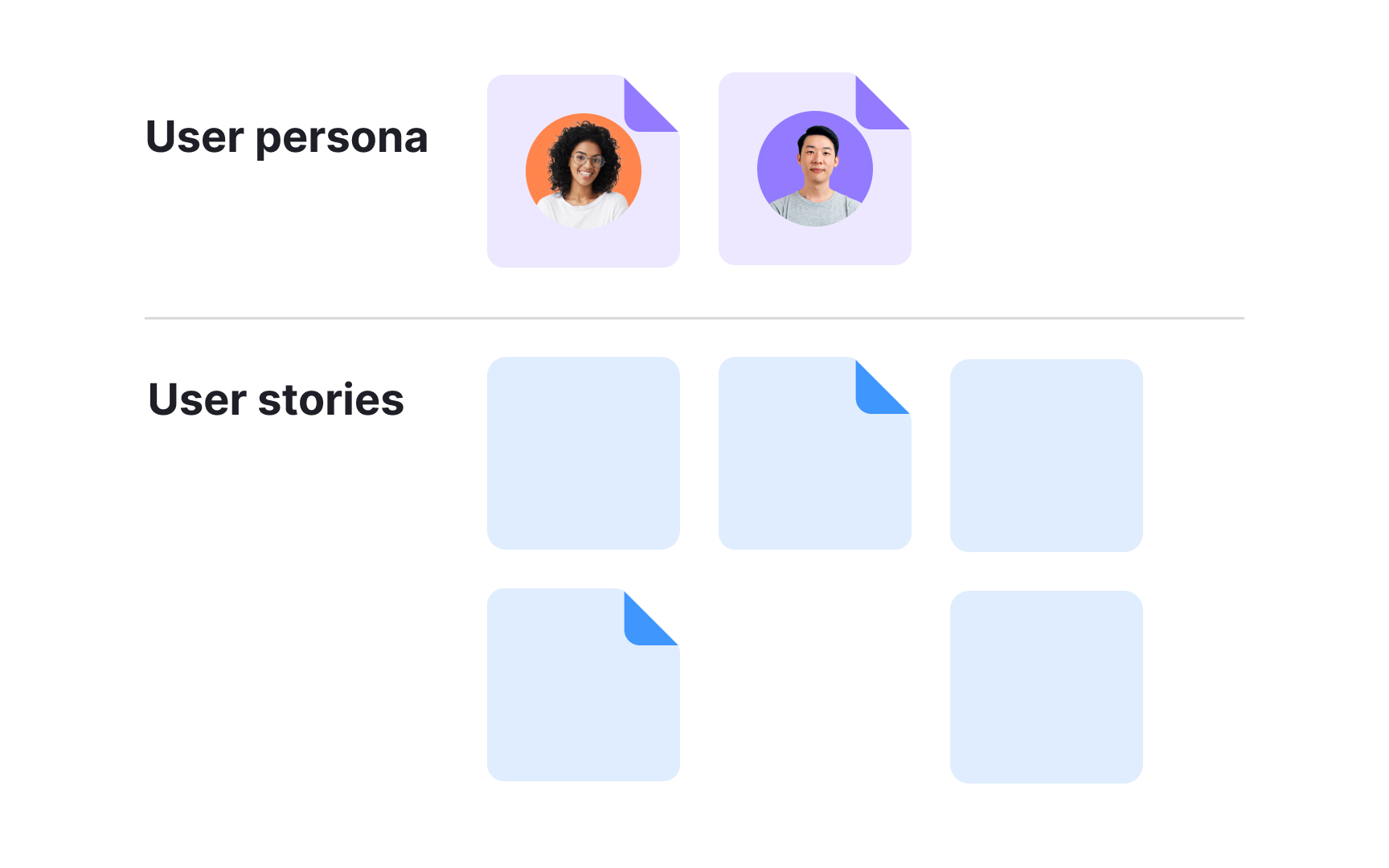
Personas give context, and user stories turn that context into action. Once the main user types are defined, each persona can inspire specific stories that represent real product interactions. For instance, a persona like “Liam, a remote team manager” can be linked to stories such as “As Liam, I want to track my team’s weekly goals so I can plan workload better.” Connecting stories to personas ensures that the product backlog stays rooted in authentic needs rather than abstract requirements.
This process also encourages cross-functional collaboration. Designers and engineers can align on how each story supports a particular user’s journey, while product managers can prioritize work based on impact. In this way, user stories become a natural continuation of persona work, bridging empathy from research with the structure needed for precise product specifications.[1]
Pro Tip: Always link stories to specific personas. It keeps product goals grounded in real people, not general assumptions.