Applying the RIVER framework to manage constraints
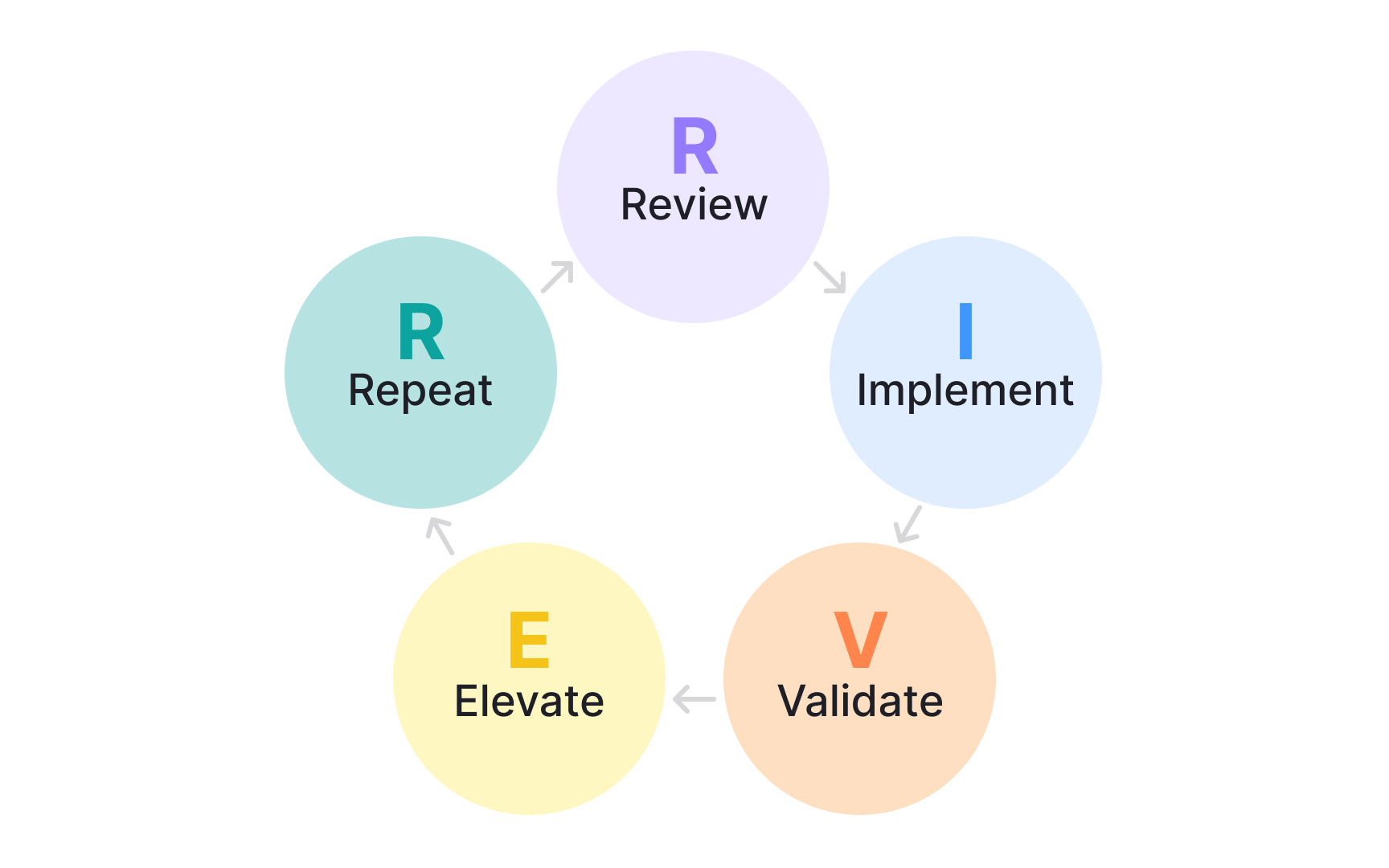
Managing constraints effectively means addressing them throughout the product lifecycle, not only during planning. The RIVER framework provides a structured way to do this through 5 repeating steps that help teams stay proactive and organized:
- Review compares current performance against product goals to identify where a constraint limits progress.
- Implement assigns ownership and defines how the team will act on those findings.
- Validate tracks whether the corrective steps are working, using measurable data such as cost, performance, or timing.
- Elevate comes into play when the team cannot resolve the issue alone and needs leadership support, extra resources, or a revised plan.
- Repeat ensures that this cycle continues regularly, preventing constraints from reappearing unnoticed later.
Documenting this process in the specification keeps constraint management visible and actionable. It turns a potential blocker into a continuous improvement loop that protects delivery quality and timing.[1]