Connecting OKRs to product decisions
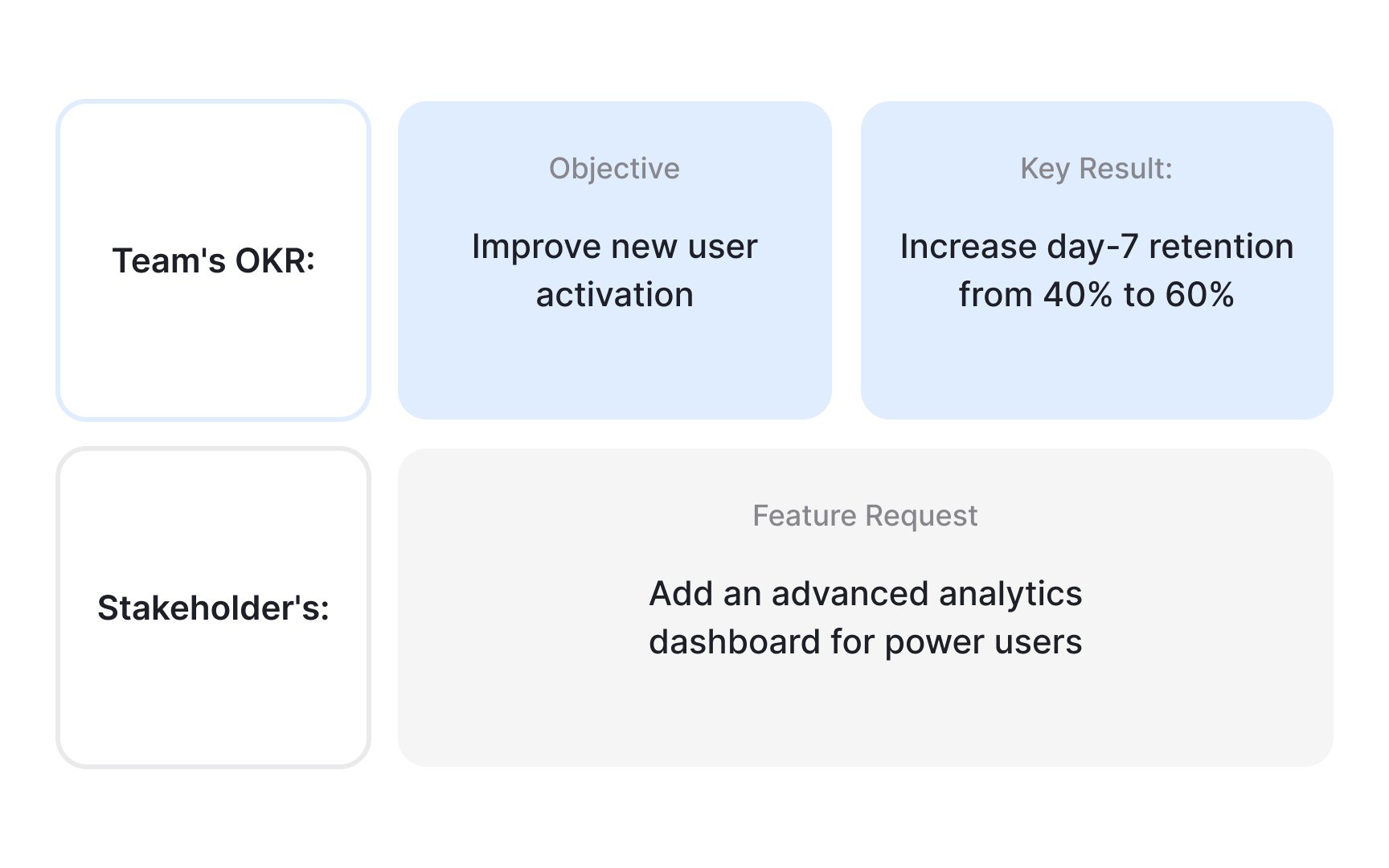
OKRs create a decision framework transforming how teams evaluate opportunities. Every feature request and design change can be measured against current objectives. This alignment prevents chasing shiny objects that don't advance strategic goals. Strong teams use OKRs to maintain focus. When stakeholders propose features, teams ask: "Which key result does this improve?" If unclear, the feature likely doesn't deserve priority. This discipline protects from feature creep. The connection must be explicit, not assumed.
Teams sometimes try to stretch logic so that any feature appears to support objectives. Real alignment requires showing exactly how a change drives a key result.
Regular check-ins strengthen connections between daily work and quarterly goals. Teams reviewing progress weekly make better decisions than those checking only at quarter's end. Continuous alignment prevents drift and enables course correction before it's too late. OKRs provide objective criteria when politics might otherwise drive decisions.