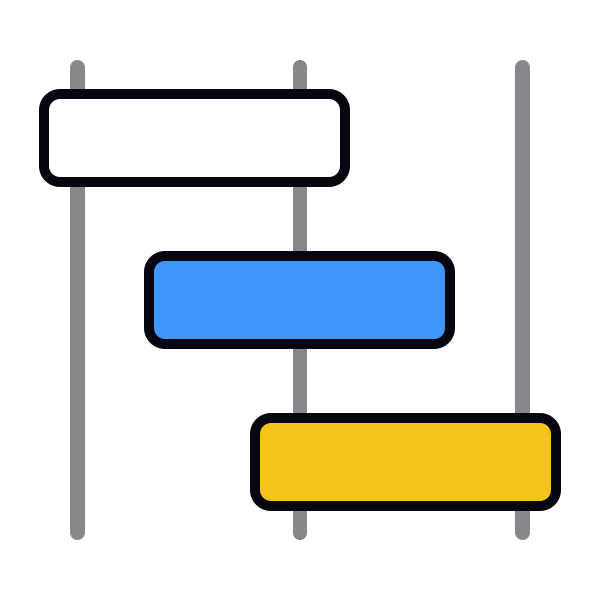
Distinguishing roadmaps from backlogs
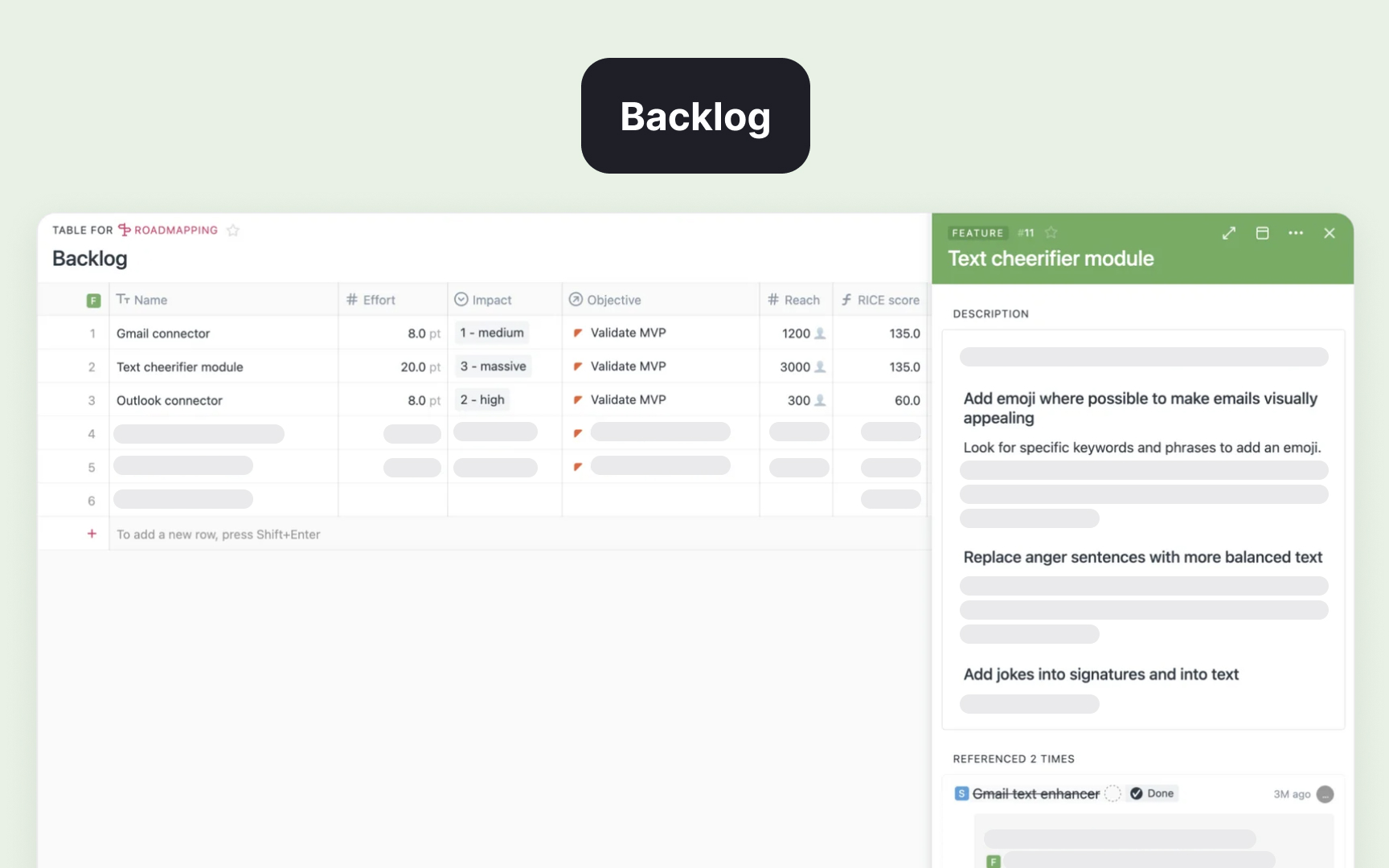
Product roadmaps and backlogs serve fundamentally different purposes in product development. Understanding their distinct characteristics helps teams use each tool effectively.
- Purpose and focus: Roadmaps provide the strategic view, showing major themes and initiatives that answer questions about direction and timing at a high level. The backlog contains tactical details of what needs to be built, including specific user stories, tasks, and bugs that teams work on during each sprint.
- Target audience: Roadmaps are primarily an external communication tool designed for executives, customers, investors, and other stakeholders who need to understand strategic direction using business-focused language. The backlog serves as an internal tool for development teams, containing detailed requirements, acceptance criteria, and technical specifications needed to build the product.
- Time horizons: Roadmaps extend far into the future, often covering 6 months to a year or more, helping organizations plan resources and set customer expectations. The backlog typically covers just a few sprints at most, focusing on immediate priorities that teams can complete within weeks.
- Frequency of change. Roadmaps should remain stable to provide consistent direction and be regularly updated. The backlog changes frequently as teams learn and adapt, often refined weekly or even daily as new information emerges.
While the backlog feeds into the roadmap by turning strategic initiatives into executable work, each artifact maintains its distinct purpose. This separation ensures teams can balance long-term vision with short-term flexibility.