Map OKRs to strategic themes
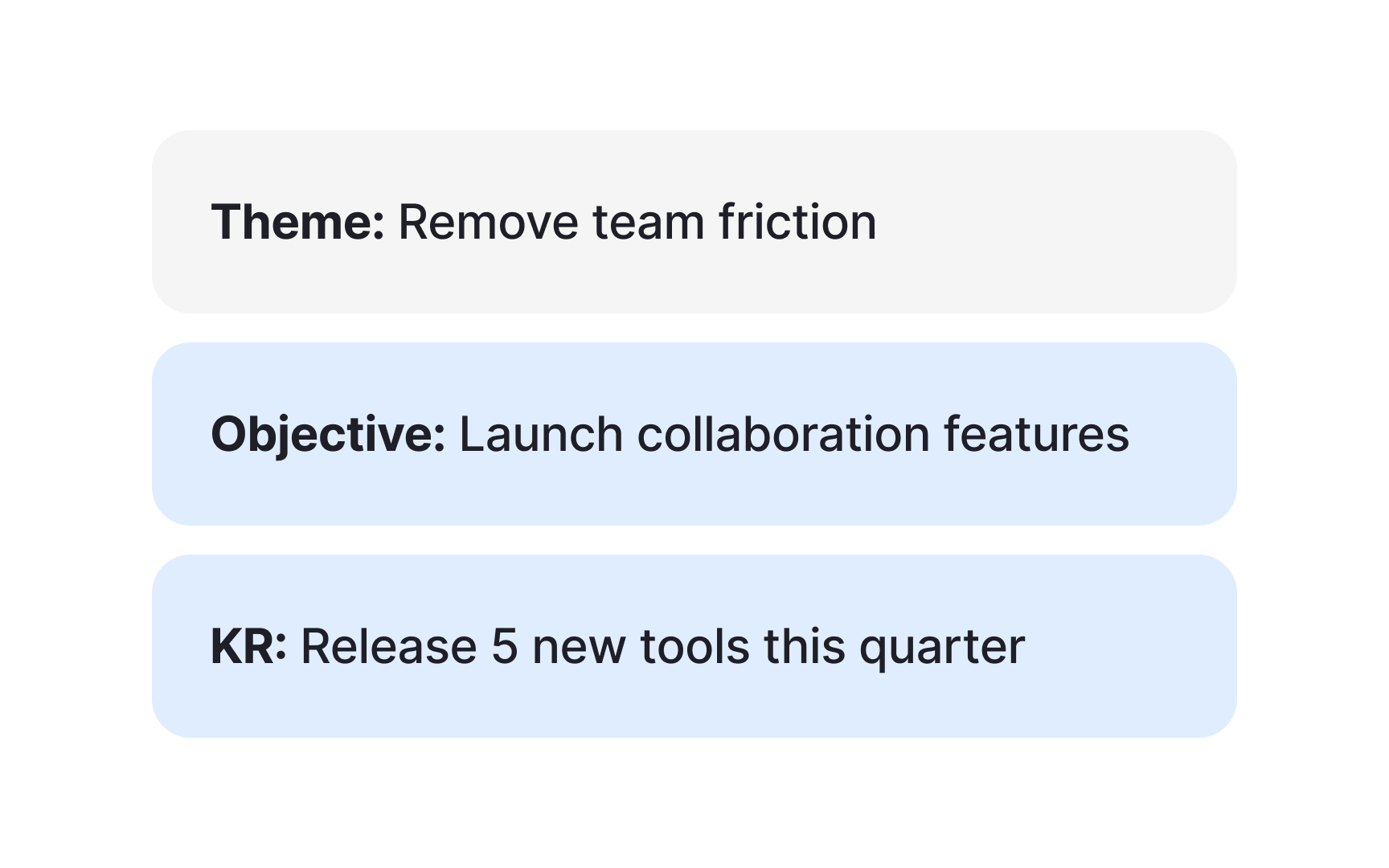
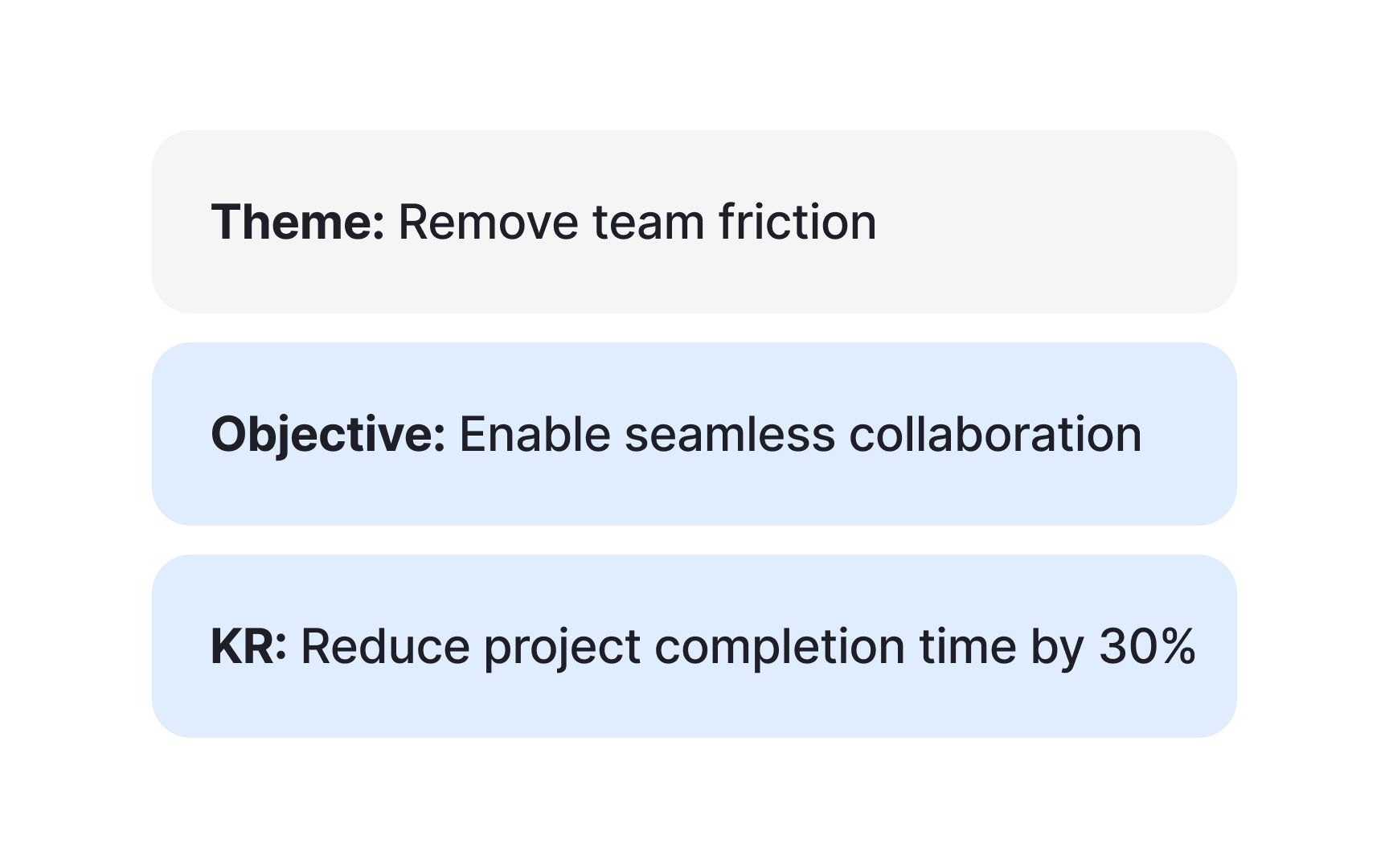
Strategic themes need measurable goals to drive execution. OKRs translate your themes into concrete targets that teams can work toward.
Start with each theme and write one objective that captures what success looks like. For "Remove friction from remote teamwork," an objective might be "Enable teams to collaborate seamlessly regardless of location."
Create 2-3 key results that measure progress. Focus on outcomes: "Reduce average time to complete team projects by 30%" rather than outputs like "Launch 5 new features." Key results should directly indicate whether you're achieving the theme's purpose. Ensure OKRs cascade properly. Company-level OKRs should reflect overall strategic themes. Team-level OKRs should show how each team contributes to themes. This creates clear line-of-sight from daily work to strategy.
Review OKRs quarterly alongside theme performance. Are you making progress? If not, is the problem with execution or with the theme itself? This regular check keeps strategy and execution tightly connected.[1]