Interpret survey results without bias
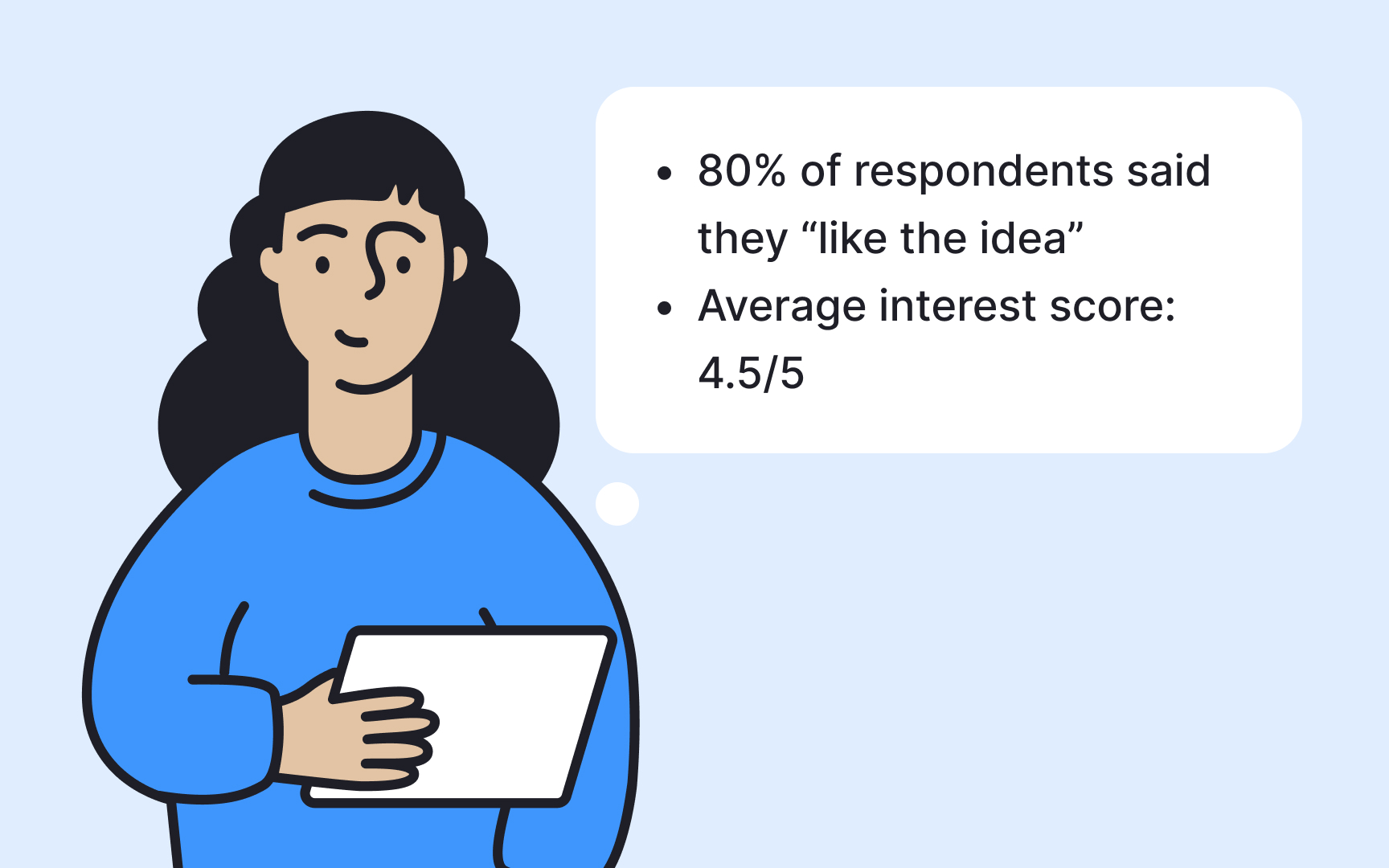
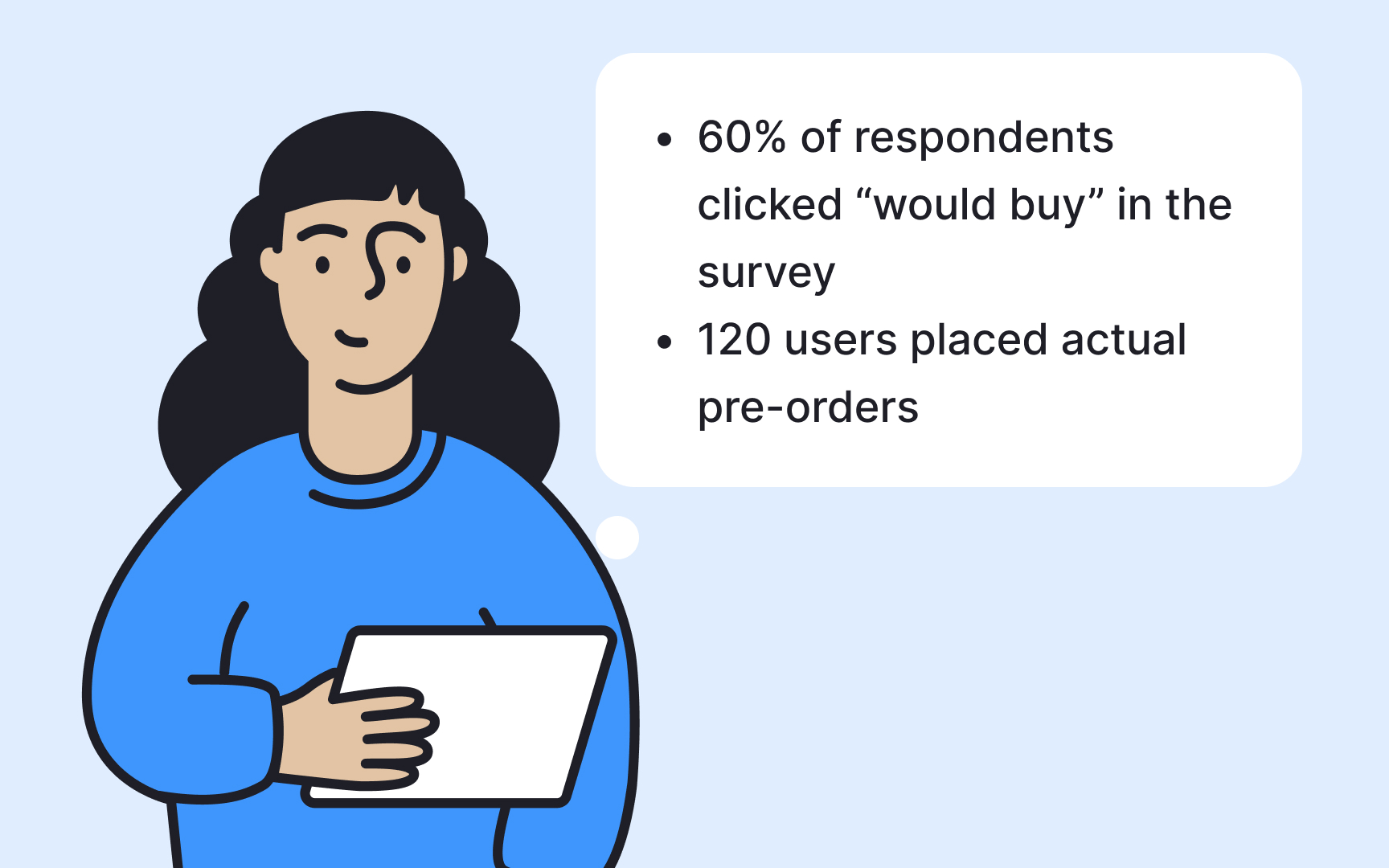
Gathering survey responses is only the beginning. The real value comes from analyzing results in a way that avoids bias and surfaces reliable signals of demand. Many teams fall into the trap of celebrating high percentages of “interest” without asking if those numbers reflect actual intent. To avoid this, surveys should be carefully structured and interpreted with discipline.
One proven approach is to design surveys in 3 sections:
- The first screens respondents to make sure they match the target audience.
- The second confirms whether they truly face the problem, rather than steering them toward your solution.
- The third sets expectations by asking what they would need in a solution and how much they would realistically pay.
This structure helps separate casual interest from real commitment.
When interpreting results, look beyond surface-level enthusiasm. Several tips make interpretation stronger:
- Compare results with real-world behavior, like clicks on landing pages or pre-orders.
- Beware of leading questions that may have inflated enthusiasm.
- Avoid relying on a single metric. Cross-check interest, willingness to pay, and repeat use.
- Treat surveys as signals to be combined with other methods, not as final proof.
Pro Tip: Randomize the order of survey options. This avoids bias from people always picking the first or last answer.