Comparing the value propositions of competing products
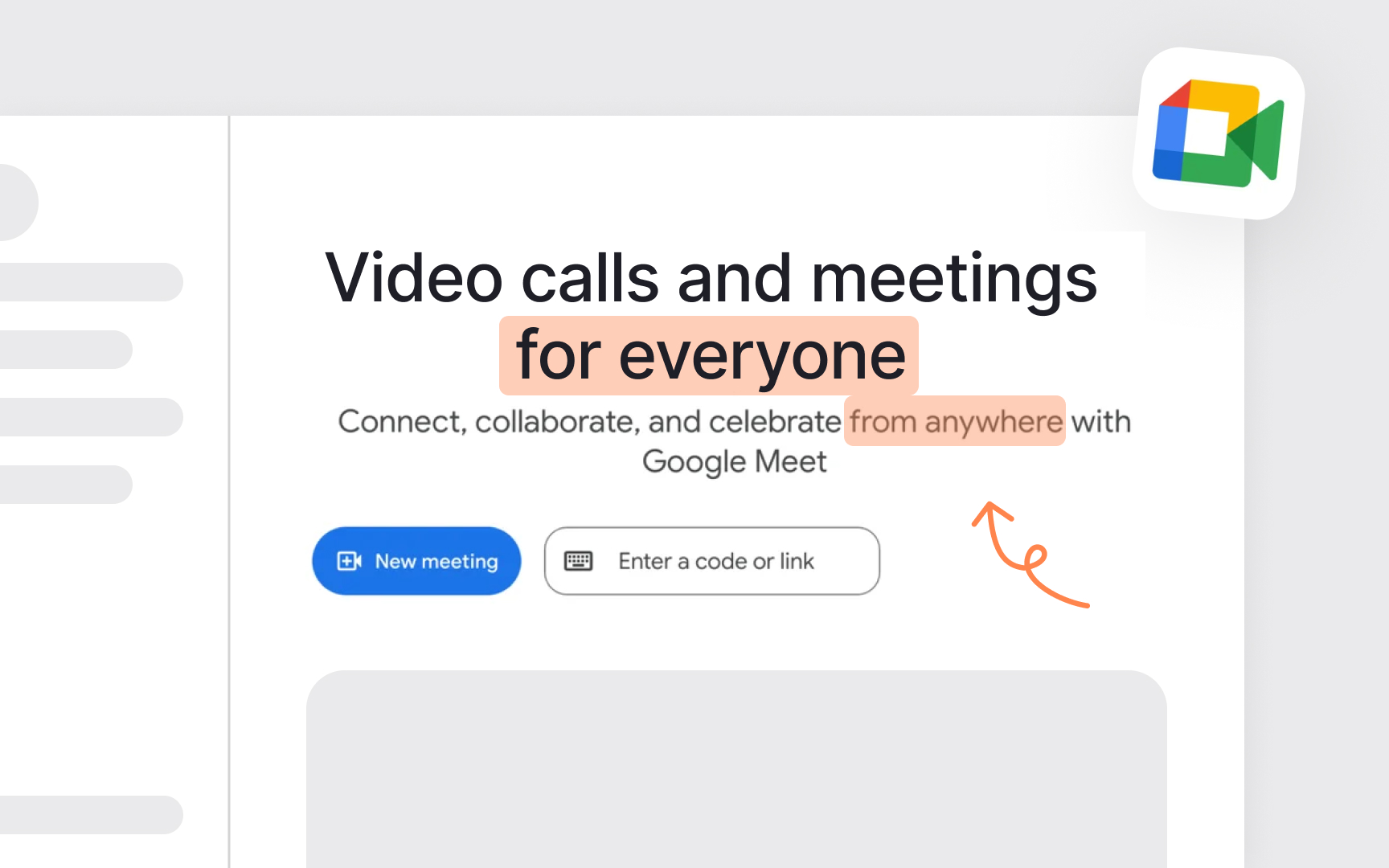
Defining a product becomes clearer when you examine how competitors express their value. By comparing value propositions side by side, you can see not just what others offer but also how they choose to present it. For example, in meetings and communication, Google Meet emphasizes accessibility by promising that anyone can join calls and collaborate from anywhere. Its message is simplicity and universality, appealing to both casual and professional users. A competitor in the same space might highlight customization or developer integration, showing its strength in flexibility rather than broad accessibility. Both address the same need but position themselves differently.
At the product definition stage, competitor positions should already be well understood from earlier discovery work. The goal here is to use that knowledge to sharpen your own message. A value proposition should clearly state what your product offers, who it helps, and what outcome it enables, in language that makes it stand out from generic or vague competitor claims.
To practice, select 3 competitors in a market, write down their public value statements, and compare how each answers the questions:
- What the product offers
- Who it helps
- What outcome it enables
The aim is to write it in a way that highlights what makes your product distinctive while still being clear, specific, and customer-focused.