Prioritize competitors
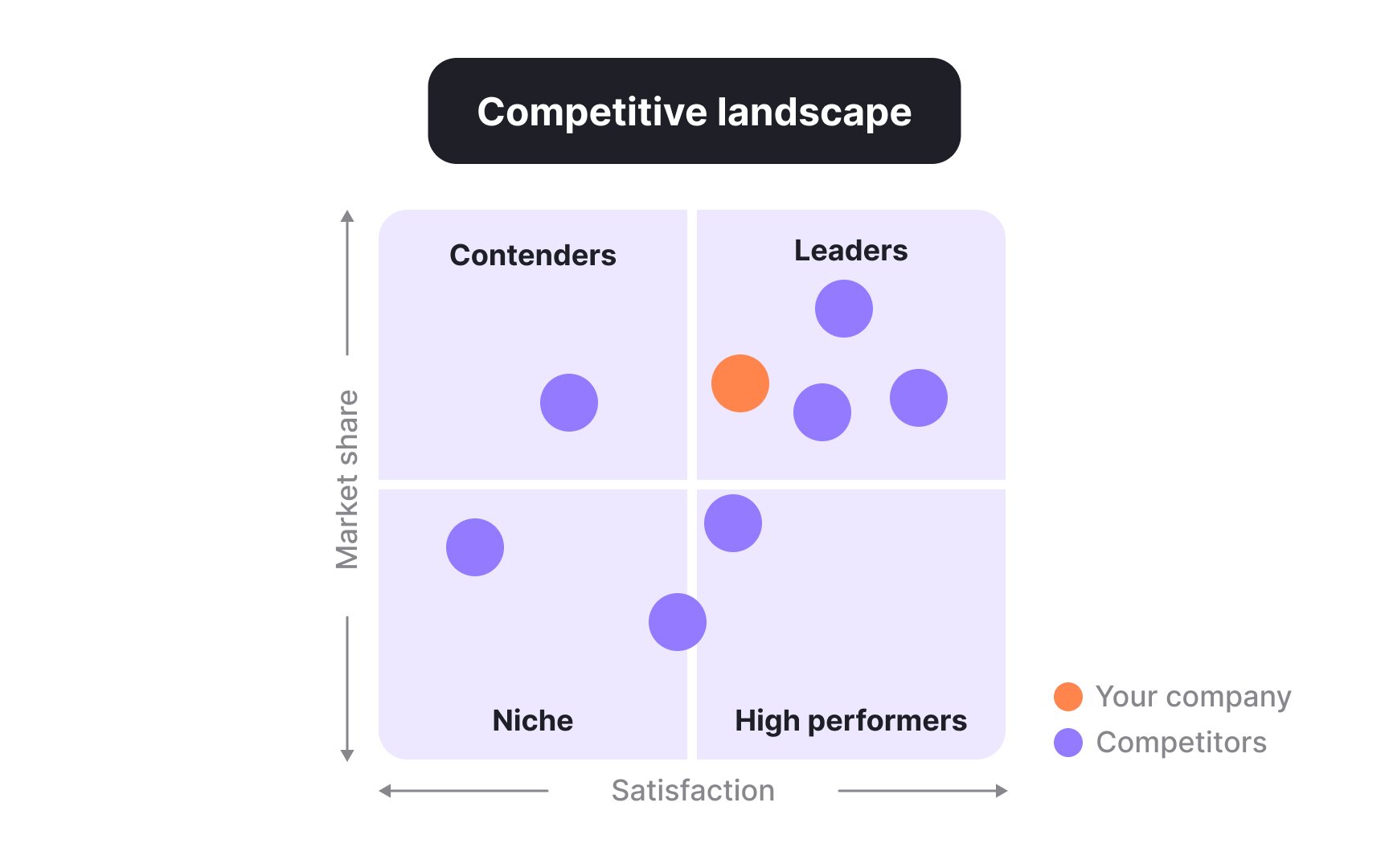
Not all competitors deserve equal attention. Prioritizing competitors helps you focus on those whose moves matter most, instead of spreading your analysis thin across dozens of players. A well-prioritized list is essential for planning where to invest resources.
One common approach is to rank competitors into tiers:
- Primary competitors are the ones that most closely match your product and audience, and their strategies will directly affect your success.
- Secondary competitors overlap with you partially, perhaps serving a different customer group or focusing on adjacent features.
- Tertiary competitors may not compete with you today but could become relevant as they expand or as trends shift.
For example, for Spotify, Apple Music is a primary competitor, YouTube is secondary, and TikTok could be tertiary, since its growing role in music discovery could disrupt the industry.
Visual tools like a competitor landscape graph help bring this prioritization to life. By mapping companies along axes such as price vs. product depth, or mass market vs. niche focus, you can quickly see clusters of players and outliers. This visualization makes it easier to spot who dominates the same space as you, who could challenge your position in the future, and who is less relevant. The goal is not to ignore smaller players but to recognize where your strategic energy is best applied.