Ethical considerations
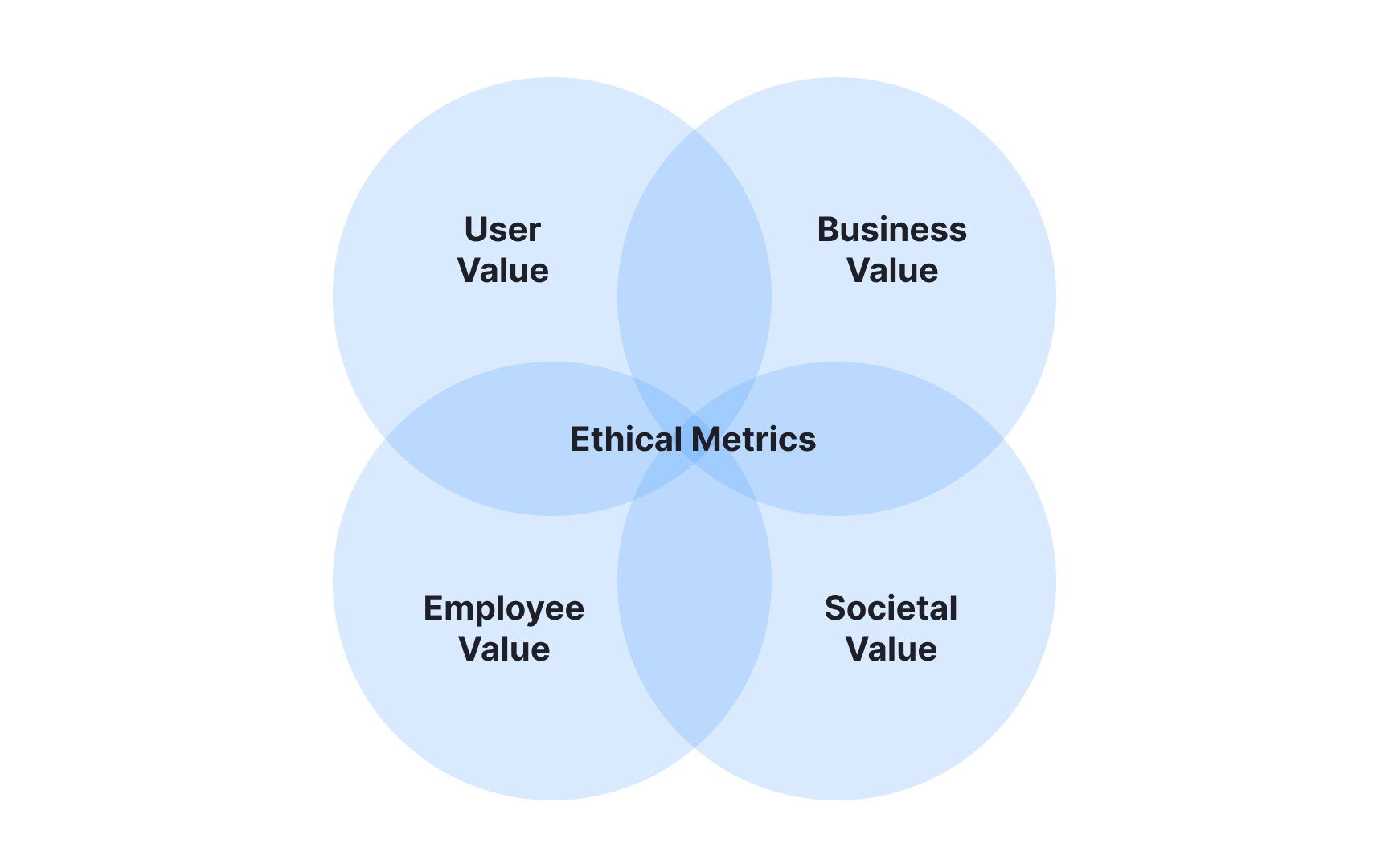
Metrics aren't neutral. They reflect values and shape behavior. Ethical metric design starts with a fundamental question: Who benefits from what we're measuring? Teams must consider all stakeholders, users, business, society, and employees, rather than prioritizing business interests alone.
The most common ethical pitfalls emerge when metrics incentivize engagement without considering content quality or user well-being. Social media platforms measuring "time spent" without tracking content quality often promote addictive or polarizing content. Similarly, ride-sharing apps optimizing for "rides completed" without considering driver sustainability lead to exploitation concerns and eventual regulatory backlash.
Forward-thinking organizations now employ frameworks like consequence scanning, a structured approach to identify potential metric-driven harms before implementation. This proactive stance prevents dark patterns from emerging while protecting long-term business interests from reputational damage and regulatory risk.