Inclusive research methods
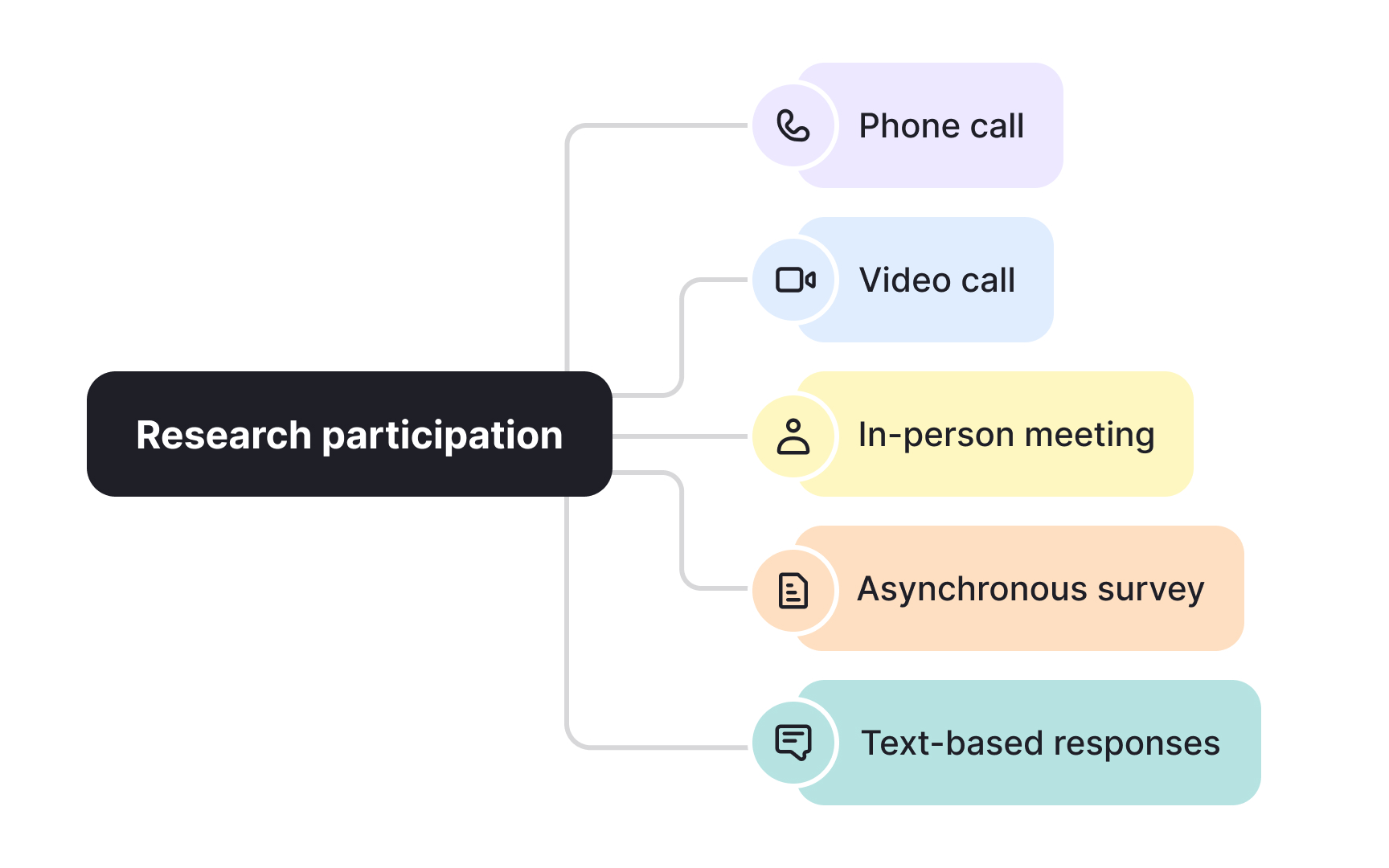
Research methods shape whose voices get heard during discovery. Traditional approaches like in-person interviews or lengthy surveys can systematically exclude people with disabilities, caregiving responsibilities, irregular work schedules, or limited internet access. Teams often default to convenient methods without questioning who these choices leave out.
Inclusive research means offering multiple ways for people to participate. This might include phone calls for those without reliable video access, asynchronous options for different time zones, or shorter sessions for people with limited availability. Physical locations matter too. Choosing accessible venues, providing childcare support, or conducting research in community spaces rather than corporate offices removes barriers. Language accessibility extends beyond translation. Using plain language, avoiding jargon, and providing materials in multiple formats helps people with varying literacy levels and cognitive abilities participate fully. Audio, video, and text options let participants choose what works best for them.
Compensation also plays a role. Fair payment for participants' time shows respect and makes participation possible for people who can't afford to volunteer their expertise.