Organizing journey stages
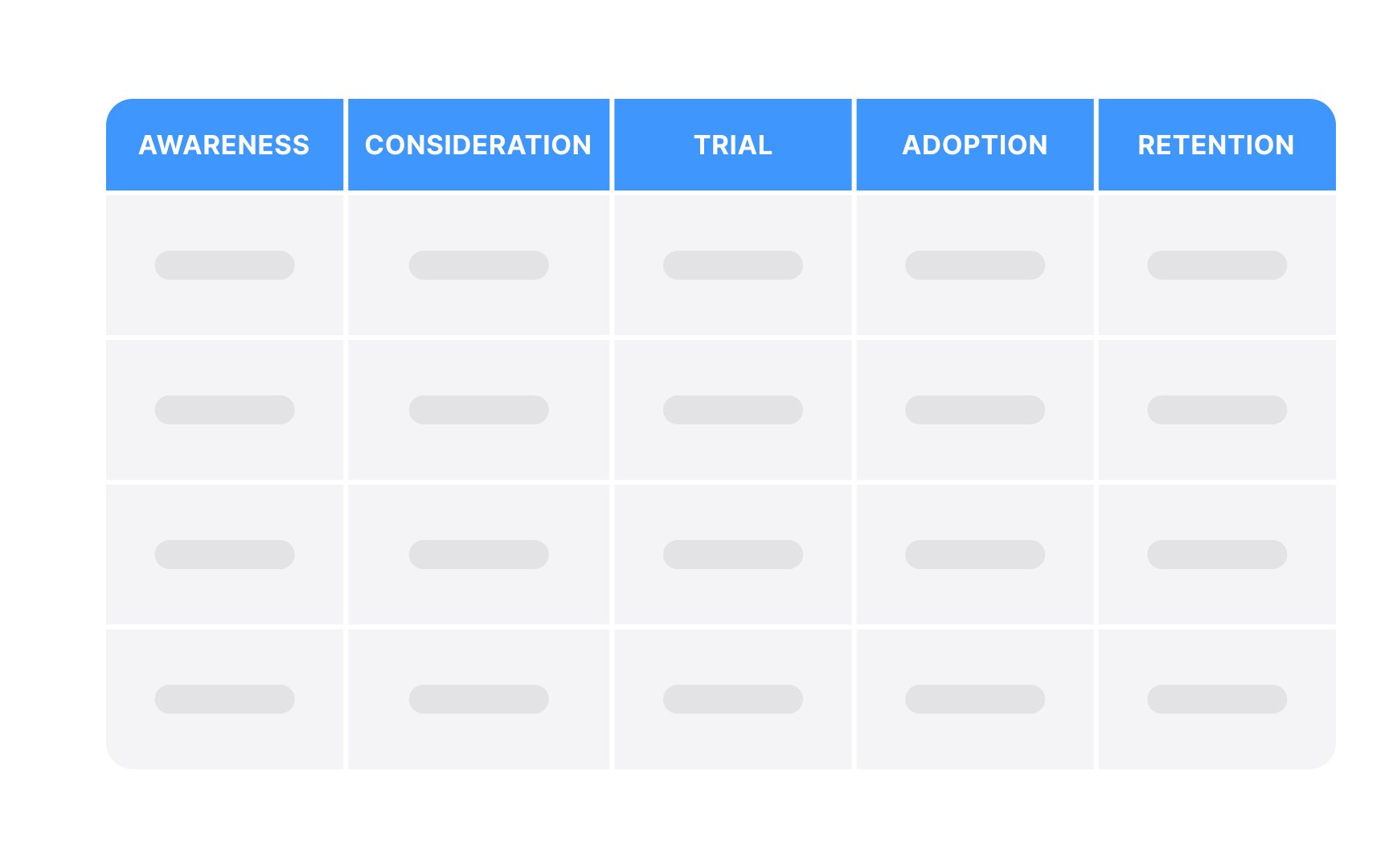
Journey stages represent major phases in the customer experience, typically ranging from initial awareness through post-purchase support. Effective stage organization groups related actions and decisions into logical chunks. Most journey maps benefit from 4-7 stages that reflect natural transition points in the user's mental model.
Stage names should use customer language rather than internal terminology.[1] Instead of "Conversion Phase," use "Purchase." Each stage should have clear start and end points based on user goals or significant transitions. Avoid creating stages based solely on internal processes or departments.
Ensure stage widths reflect their relative importance or duration rather than forcing equal sizes. Longer, more complex stages naturally require more horizontal space.