Telling multiple parallel stories
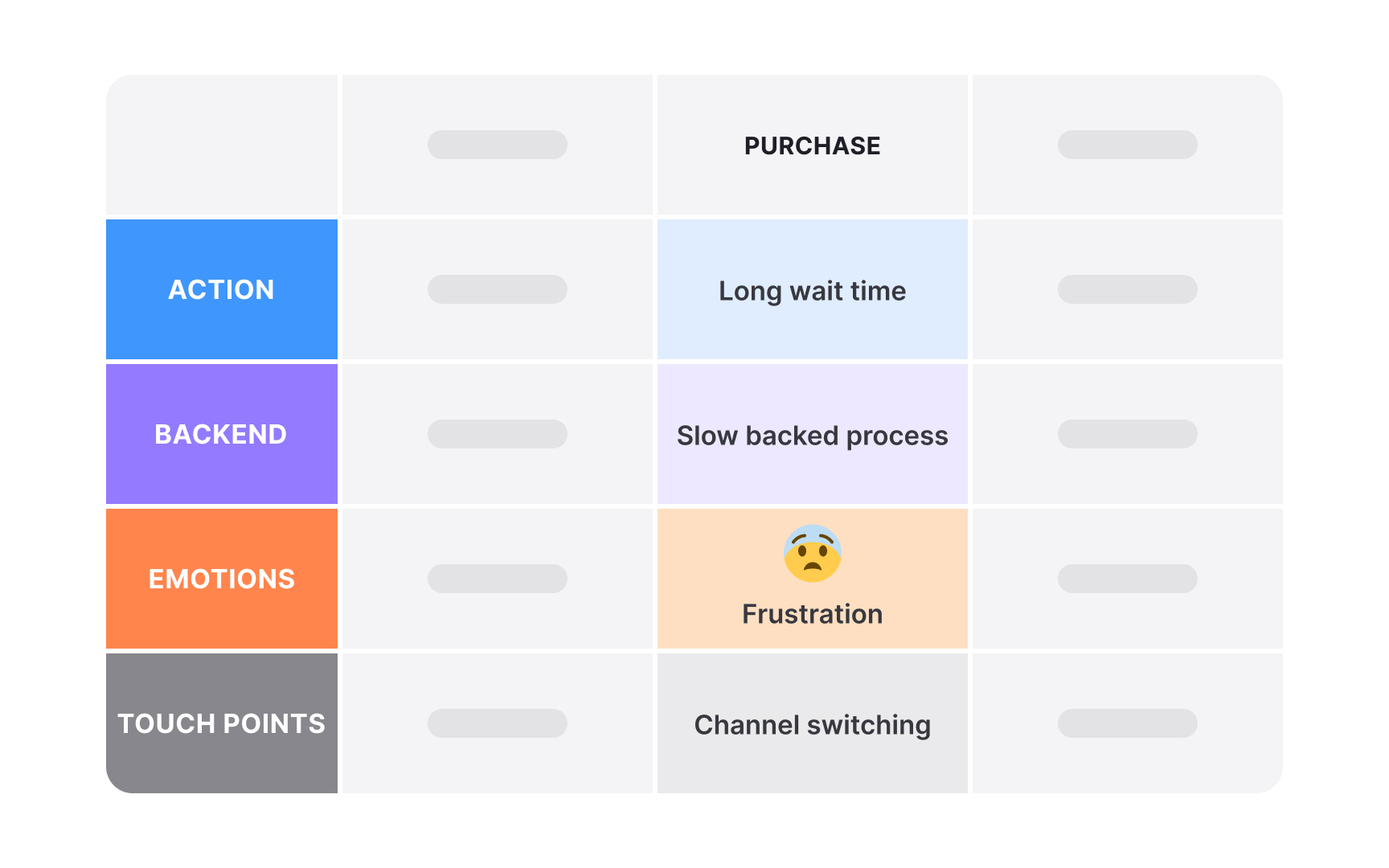
Journey maps gain power when layers work together to reveal interconnected narratives. The action layer provides plot, emotions add drama, while touchpoints and processes supply context. Reading across layers at any journey point tells a complete story: what happened, how it felt, where it occurred, and why it unfolded that way.
Align layers to expose cause-and-effect relationships. When negative emotions spike, look directly above and below to understand why. Perhaps a complex backend process creates delays, causing frustration during a critical action. Or multiple touchpoint changes confuse customers trying to complete a simple task. These layer intersections reveal root causes that single-layer analysis would miss.
Use visual techniques to strengthen cross-layer storytelling. Color-code related elements across layers, draw vertical lines connecting linked items, or highlight critical moments that appear in multiple layers. Some teams add annotation layers that explicitly call out insights discovered through layer relationships. The goal is making complex interconnections immediately understandable to stakeholders.