Conflict management styles
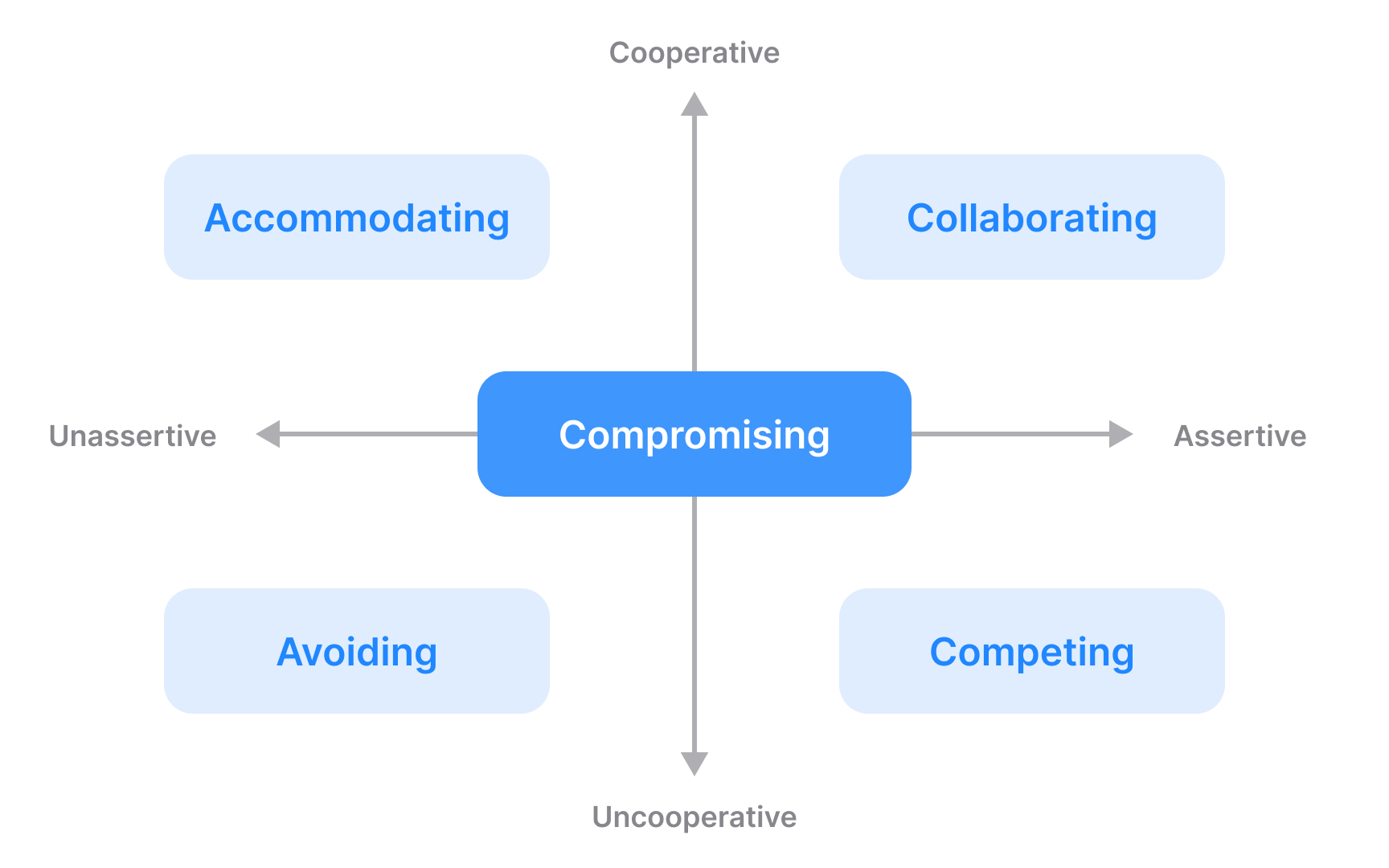
Conflict management styles shape how individuals approach and handle disagreements within design teams. The Thomas-Kilmann Conflict Mode Instrument identifies 5 distinct approaches:
- Competing (assertive and uncooperative)
- Accommodating (unassertive and cooperative)
- Avoiding (unassertive and uncooperative)
- Collaborating (assertive and cooperative)
- Compromising (moderate in both assertiveness and cooperativeness).[1]
Each style serves different situations in the design process. For example, competing works well during urgent design decisions or when implementing critical security measures. Accommodating helps maintain relationships when the issue is more important to others. Collaboration proves valuable for complex UX problems requiring diverse perspectives.
Understanding your default conflict style and knowing when to adapt it enables more effective team dynamics.
Top contributors