Asking questions
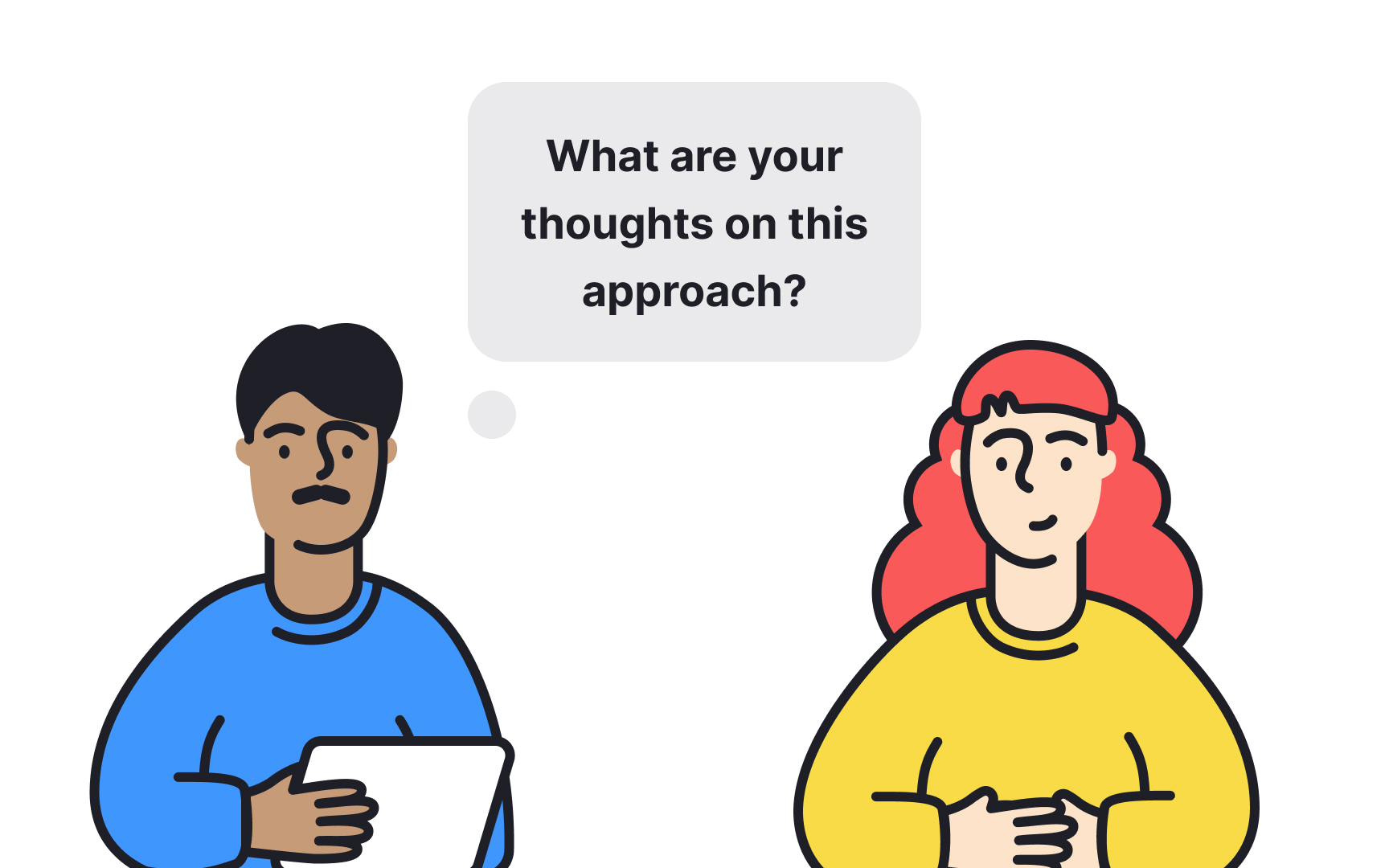
Effective question-asking drives deeper understanding, uncovers hidden assumptions, and leads to better solutions in team collaboration. The right questions at the right time can prevent misalignments, clarify requirements, and spark innovative thinking.
Questions fall into distinct categories, each serving different purposes. Open-ended questions ("How might we..." or "What leads you to that conclusion?") encourage exploration and detailed responses. Closed questions ("Have you tested this?" or "Is this the final version?") confirm specific facts. Probing questions ("Could you elaborate on...") dig deeper into initial responses.
When using questions in conversations. keep these tips in mind:
- Start with broad, open questions to understand context, then use probing questions to explore specific areas of interest. End with closed questions to confirm understanding.
- Practice silence after asking questions — allow others time to think and respond fully.
- Leading questions, like "Don’t you think this solution is better?" suggest a desired response and can make the person feel pressured. A neutral alternative would be, "What do you think about this solution?" which allows the person to share their opinion without feeling manipulated.
- Similarly, difficult questions should be framed neutrally to prevent defensiveness. For example, instead of asking, "Why didn’t you complete this on time?" which can sound accusatory, a more neutral approach like, "Can you help me understand what might have delayed the timeline?" encourages an open discussion without placing blame.