Implementing role-based AI personas
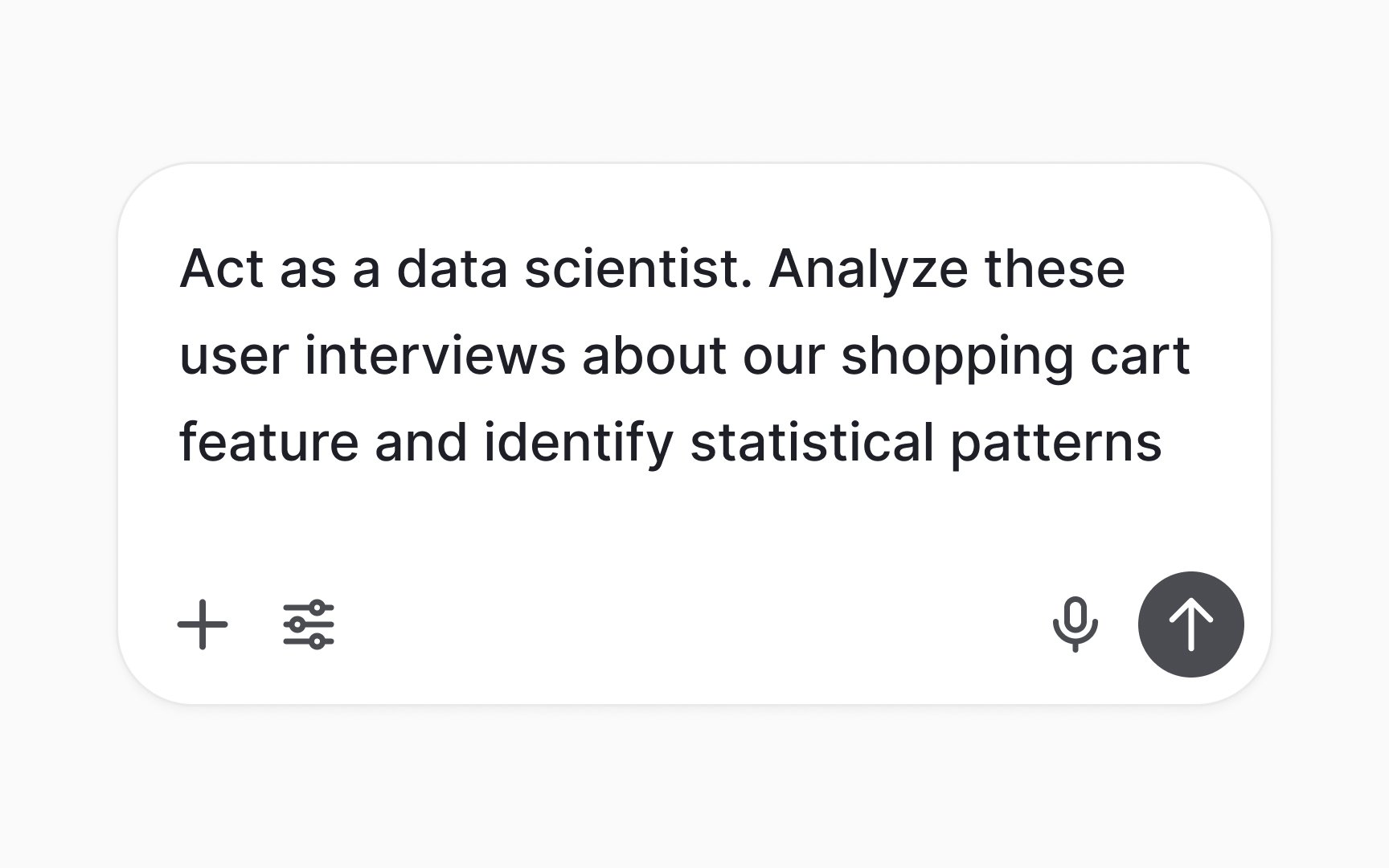
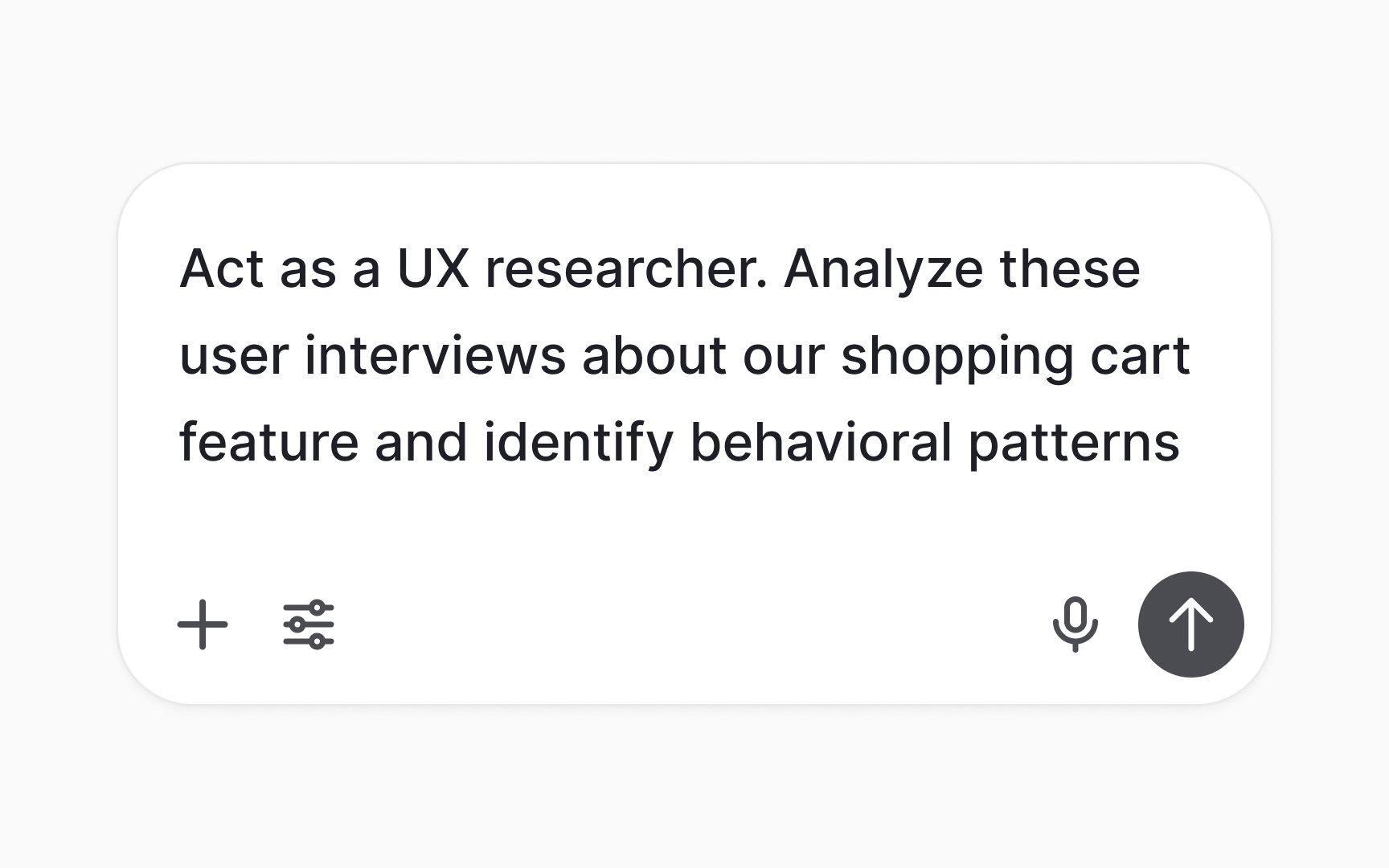
Role-based prompting transforms AI into specialized experts for different tasks. Like hiring consultants with specific expertise, you craft personas that bring unique perspectives and knowledge to your projects.
Define clear roles with specific expertise. A UX researcher persona focuses on user behavior and research methodologies. A data analyst persona emphasizes statistics and insights. A creative director persona prioritizes innovation and visual impact. Each role comes with its own vocabulary, priorities, and approach.
Script role transitions smoothly. Use clear markers when switching personas: "Now, as a data analyst, review these user feedback themes and identify statistical patterns." This helps AI adjust its mindset and response style appropriately. Maintain role consistency within tasks. Once you establish a persona, stick with it until the task completes. Switching mid-task confuses the context and dilutes the specialized perspective you're seeking. Document successful personas for reuse across similar projects.
Pro Tip: Create a "persona library" with tested role descriptions that your team can quickly deploy for common tasks.