Estimated vs. actual time taken
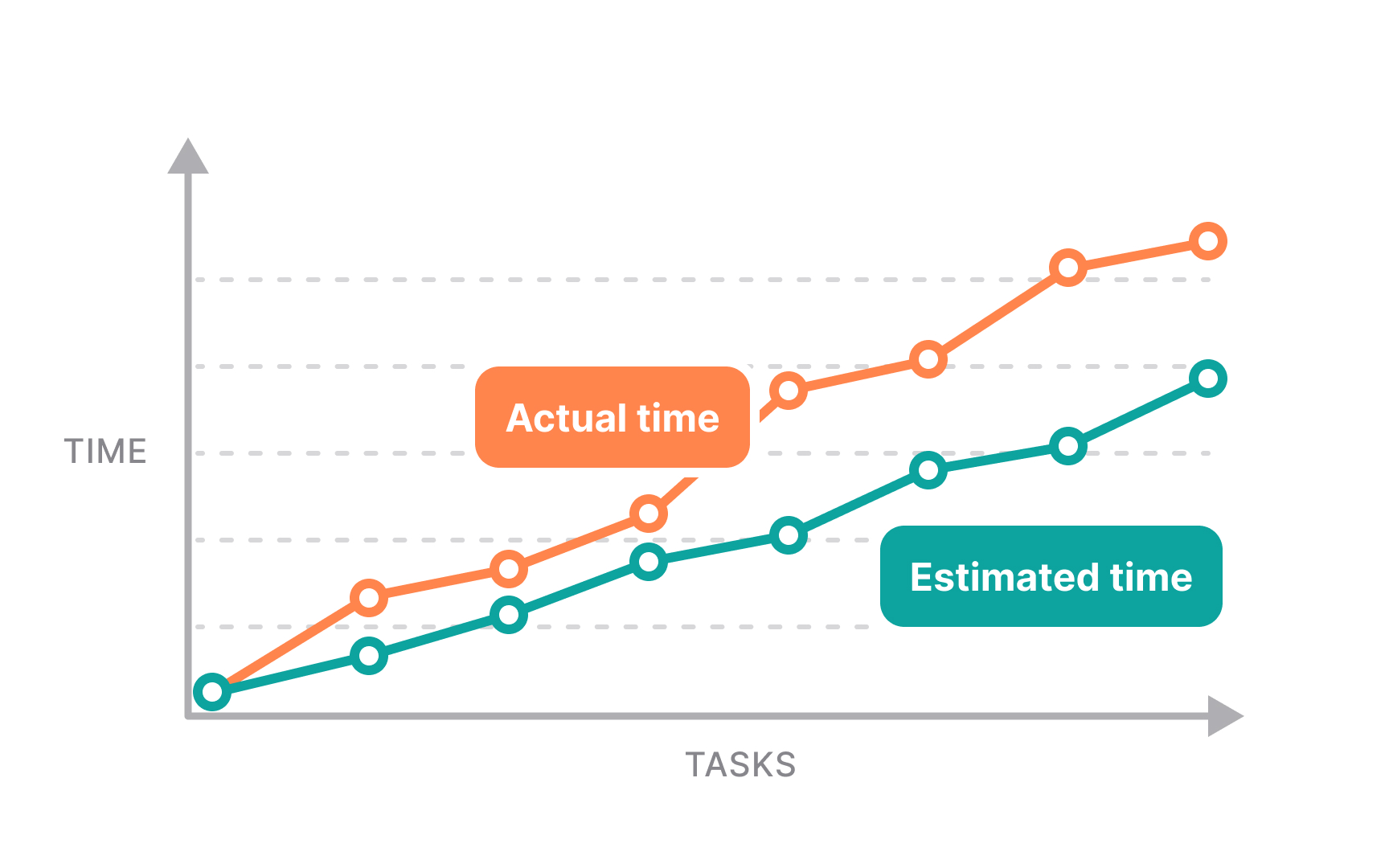
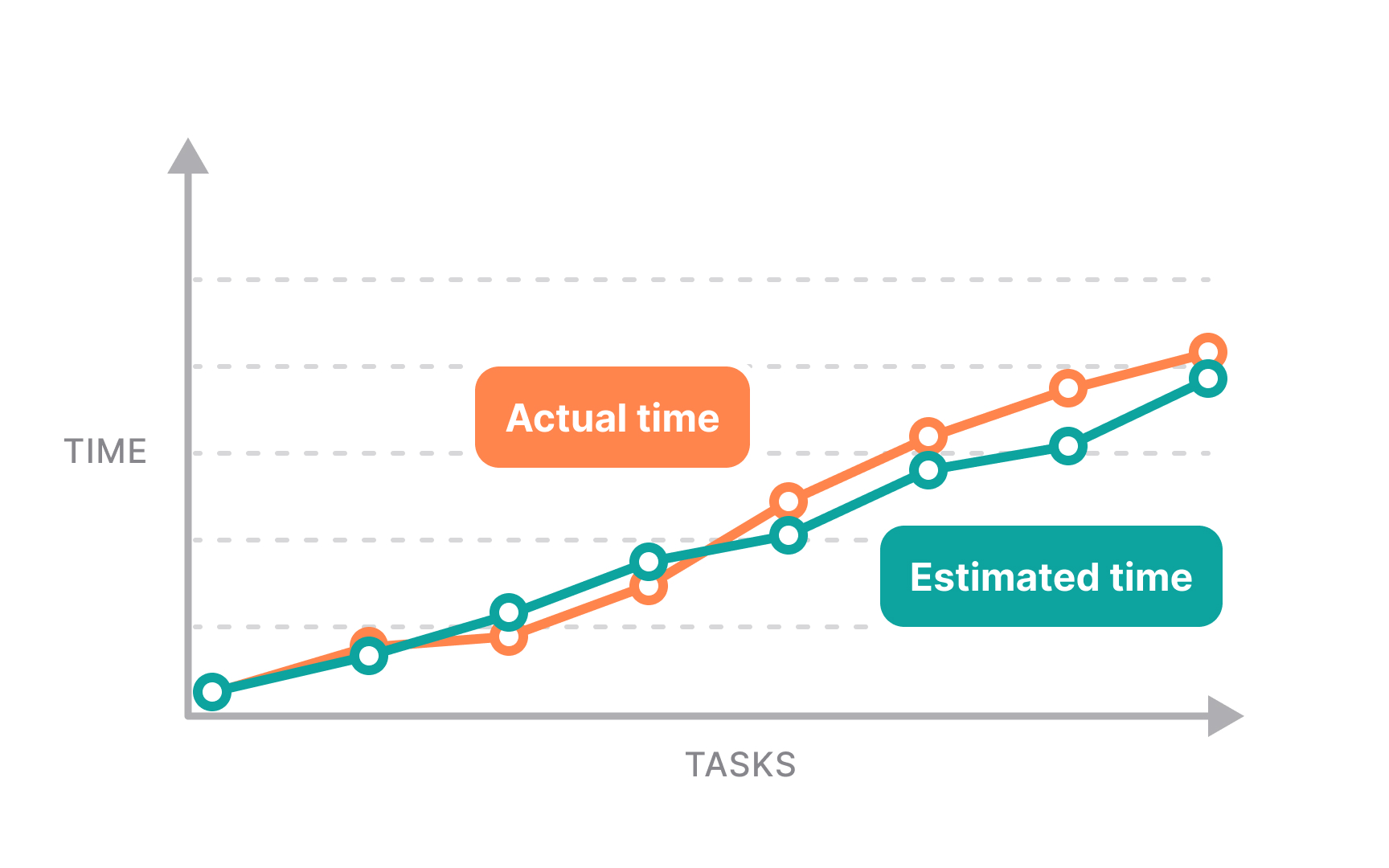
Let's say your team is tasked with creating a new website layout. You estimate it will take 3 weeks to complete, but it ends up taking 4 weeks. This metric compares your initial guess (estimated time) to how long it really takes (actual time).
Why is this comparison important? It helps you understand how accurate your planning is. If your actual time is often much longer than your estimated time, it might mean you’re not accounting for everything that could happen, such as client feedback delays or technical challenges.
By regularly checking the estimated versus actual times, you can get better at predicting how long tasks will take, which makes your team more reliable and credible. It also helps you communicate more clearly with clients about how long projects will really take, preventing stress and building trust.[1]