Secondary elements
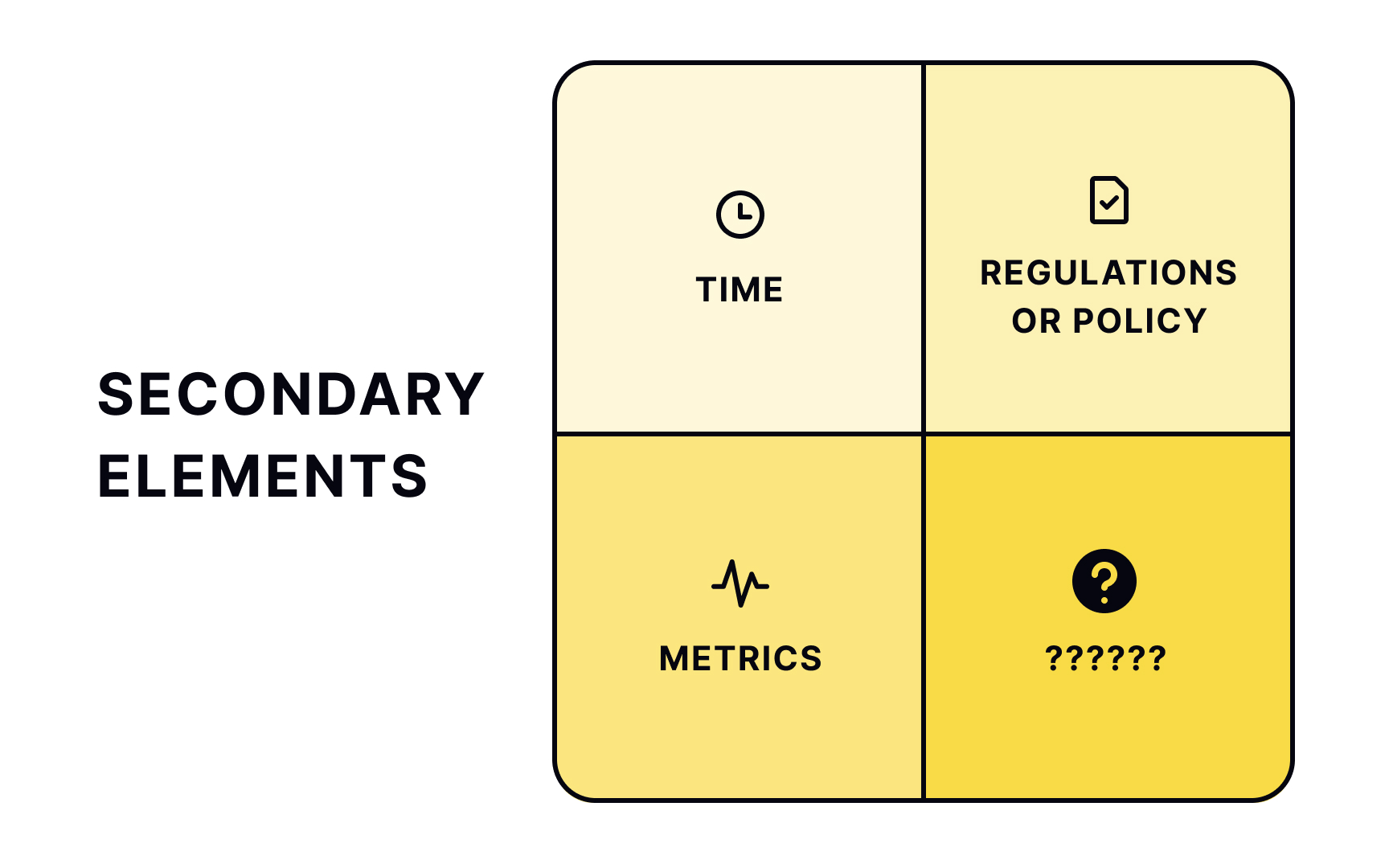
Service blueprints are versatile and can be adapted to the business goals and context by introducing additional elements as needed. Some of these elements include:
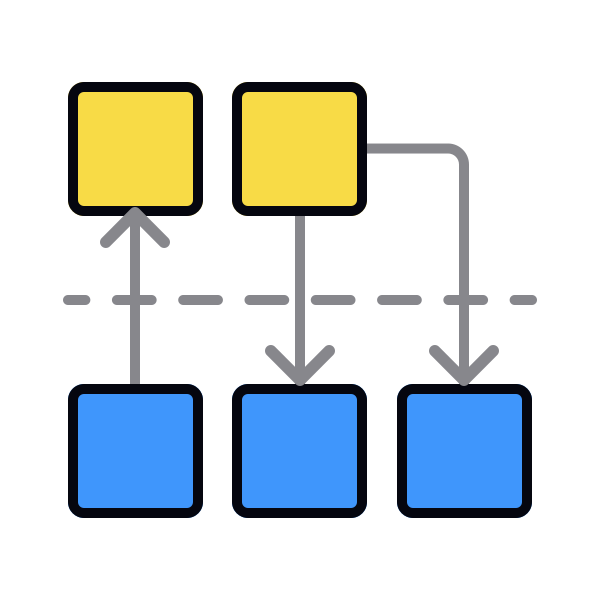
- Arrows: These indicate relationships and dependencies. A single arrow suggests a linear, one-way exchange, while a double arrow suggests the need for agreement and codependency.
- Time: If time is a primary variable in the service, an estimated duration for each customer action can be represented in the blueprint.
- Regulations or policy: Any policies or regulations that dictate how a process is completed can be added to the blueprint. This information will help teams understand what can and cannot be changed to optimize the service.
- Emotion: Employees’ emotions can be represented in the blueprint to identify points of frustration or motivation.
- Metrics: Any success metric that can provide context to the blueprint will help the business identify where time or money is wasted due to miscommunication or other inefficiencies. For example, the time spent on various processes or the associated financial costs.