Understanding the user story formula
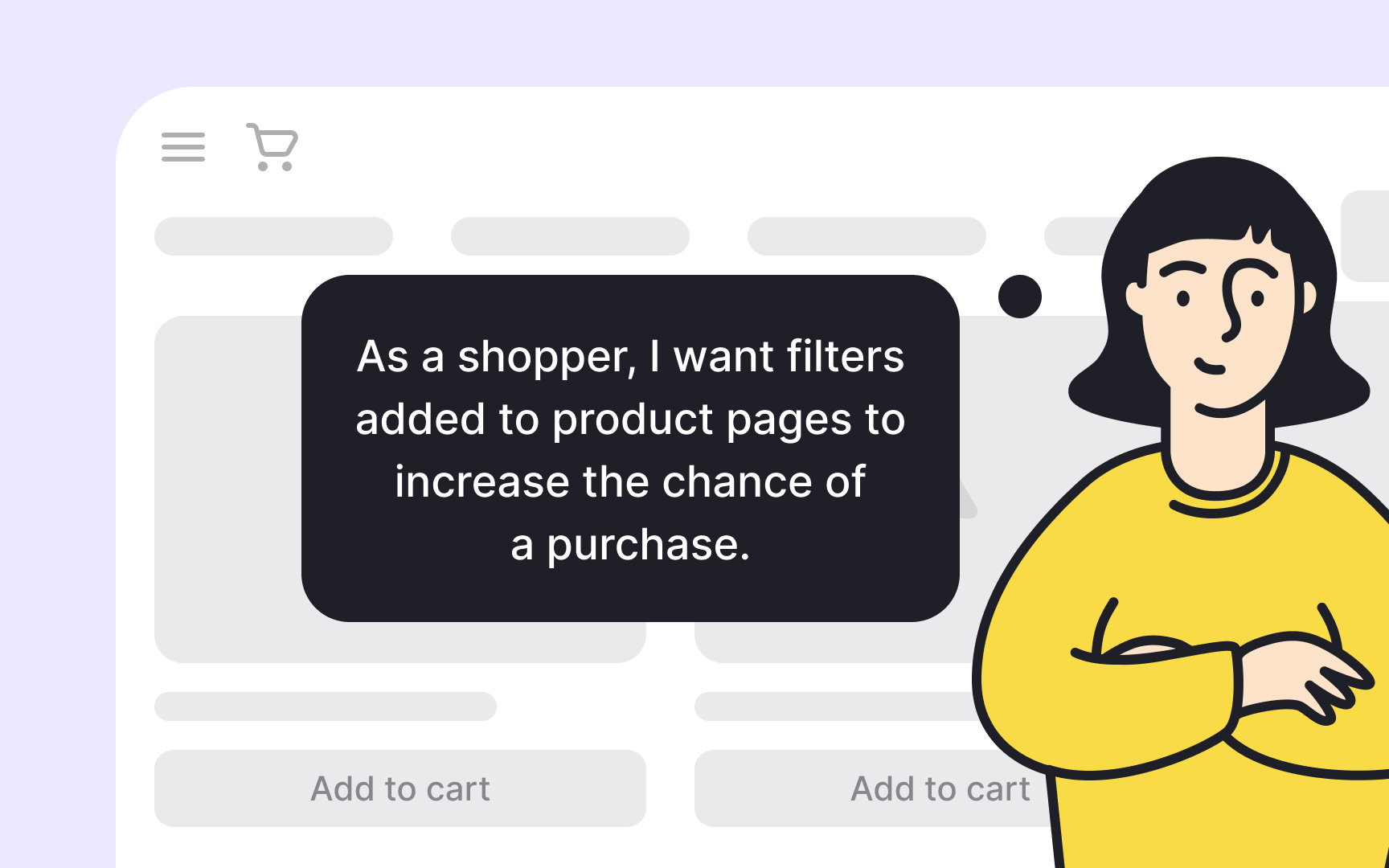

User stories give teams a simple way to describe what users need and why it matters. They are short, goal-focused statements written from the user’s point of view, often using the format: “As a [persona], I want to [action], so that [benefit].” This formula helps teams express intent rather than features. For example, “As a shopper, I want to filter products by price so I can find affordable options faster.” By focusing on motivation and value, this structure ensures that each story represents a specific user problem to solve, not a technical task to complete.
This clarity is what makes user stories vital in agile and product documentation. They provide shared understanding between product, design, and development teams about who the product serves and what outcome it should achieve. A well-formed user story acts as a small but complete unit of user value, ready to guide specifications and acceptance criteria.[1]
Pro Tip: Keep user stories short and focused on value, not on features. If it’s too technical, it’s no longer from the user’s voice.