A stakeholder power-interest matrix
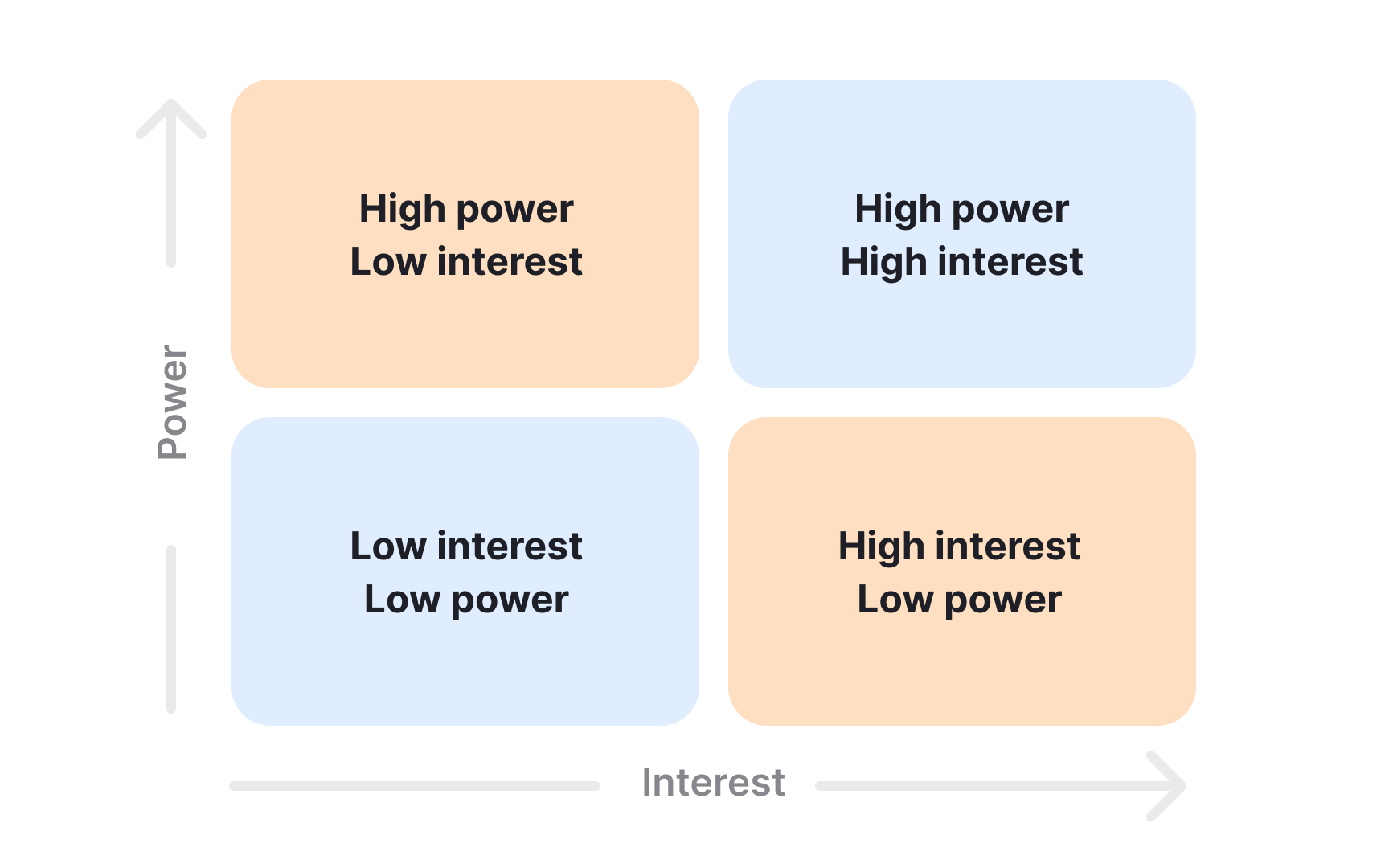
The stakeholder power-interest matrix helps you prioritize your efforts with different stakeholders. This tool maps people based on 2 factors: their power (ability to influence your product) and their interest (how much they care about your product). This matrix divides stakeholders into 4 groups, each needing a different approach:
- High-power, high-interest stakeholders are your key players. They can greatly impact your product and care deeply about it. These people need close attention and regular communication. Examples include executive sponsors and engineering leads.
- High-power, low-interest stakeholders have influence but aren't involved day-to-day. Keep them satisfied with updates that don't overwhelm them with details. Senior executives often fit here.
- Low-power, high-interest stakeholders lack authority but care about your product. Keep them informed and use them for feedback. This might include support teams or certain users.
- Low-power, low-interest stakeholders need minimal engagement. Monitor them occasionally but focus your energy elsewhere.
A stakeholder's position can change over time, so update your matrix regularly as your product evolves.[1]
Pro Tip: When creating your matrix, consider both formal authority and informal influence. Some people impact projects through their networks or expertise rather than their official role.