Connecting digital and physical touchpoints
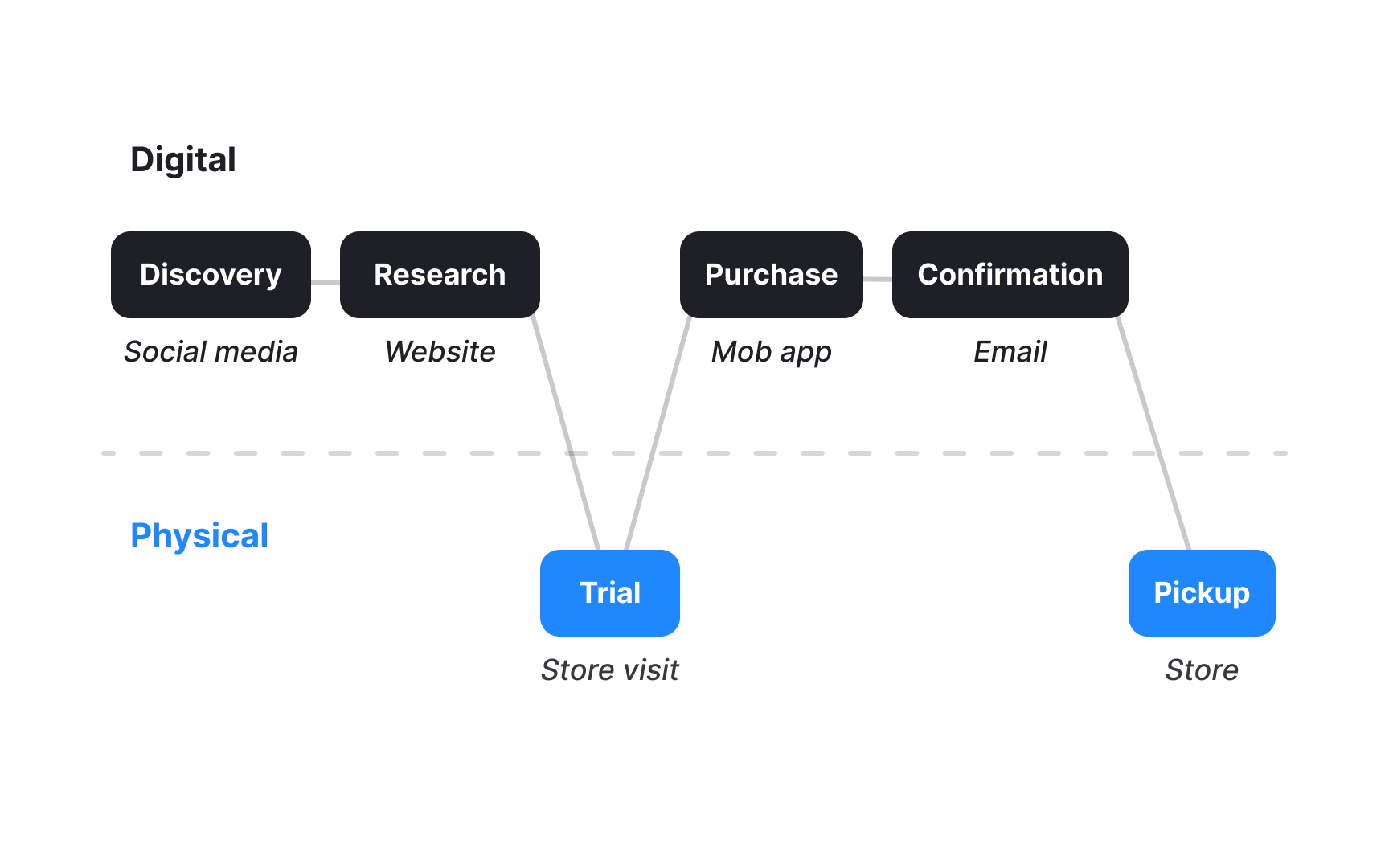
Modern customer journeys rarely stay within one channel. A customer might discover your product on Instagram, research it on your website, try it in a physical store, then purchase through your mobile app. Customer journey mapping captures this omnichannel reality by showing how touchpoints connect and influence each other.
The key is understanding transitions between touchpoints. Why do customers switch from website to store? What information carries over? What gets lost? These transition moments often hide the biggest friction points and opportunities for seamless experiences.
Effective journey maps distinguish channel types while showing their relationships. For example, they can reveal how a poor mobile experience might increase call center volume, or how in-store staff knowledge gaps drive customers to competitors' websites. This holistic view helps teams design experiences that work together, not in isolation.