Establish ownership models
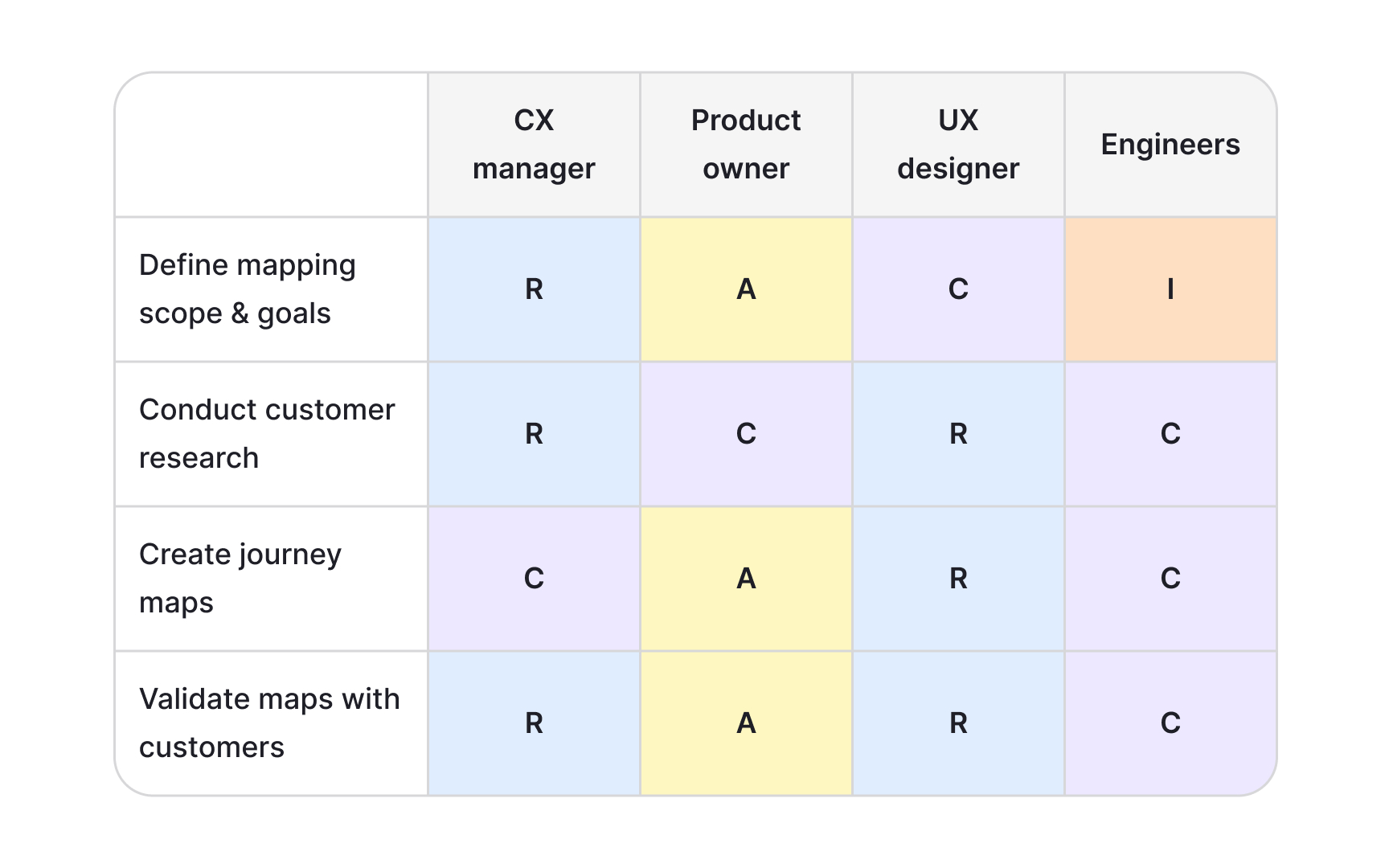
Clear ownership structures prevent journey mapping from becoming nobody's responsibility. Define who maintains maps, who updates them with new insights, and who ensures insights translate into action. Without explicit ownership, even the best maps gather dust instead of driving improvements.
Consider different ownership models based on organizational structure:
- Centralized models work when a dedicated customer experience team exists
- Distributed models succeed when departments own their portion of the journey
- Hybrid approaches combine central coordination with departmental ownership
Choose the model that aligns with how your organization makes decisions. Use RACI matrices to clarify who is Responsible for doing the work, Accountable for outcomes, Consulted for input, and Informed of progress. This framework eliminates confusion about roles and ensures every mapping task has clear ownership.[1]
Document ownership responsibilities in detail. Specify update frequencies, quality standards, and escalation paths. Create service level agreements between teams sharing journey touchpoints. Regular ownership reviews ensure accountability remains clear as organizations evolve and team structures change over time.