Building and leveraging agile enablement teams
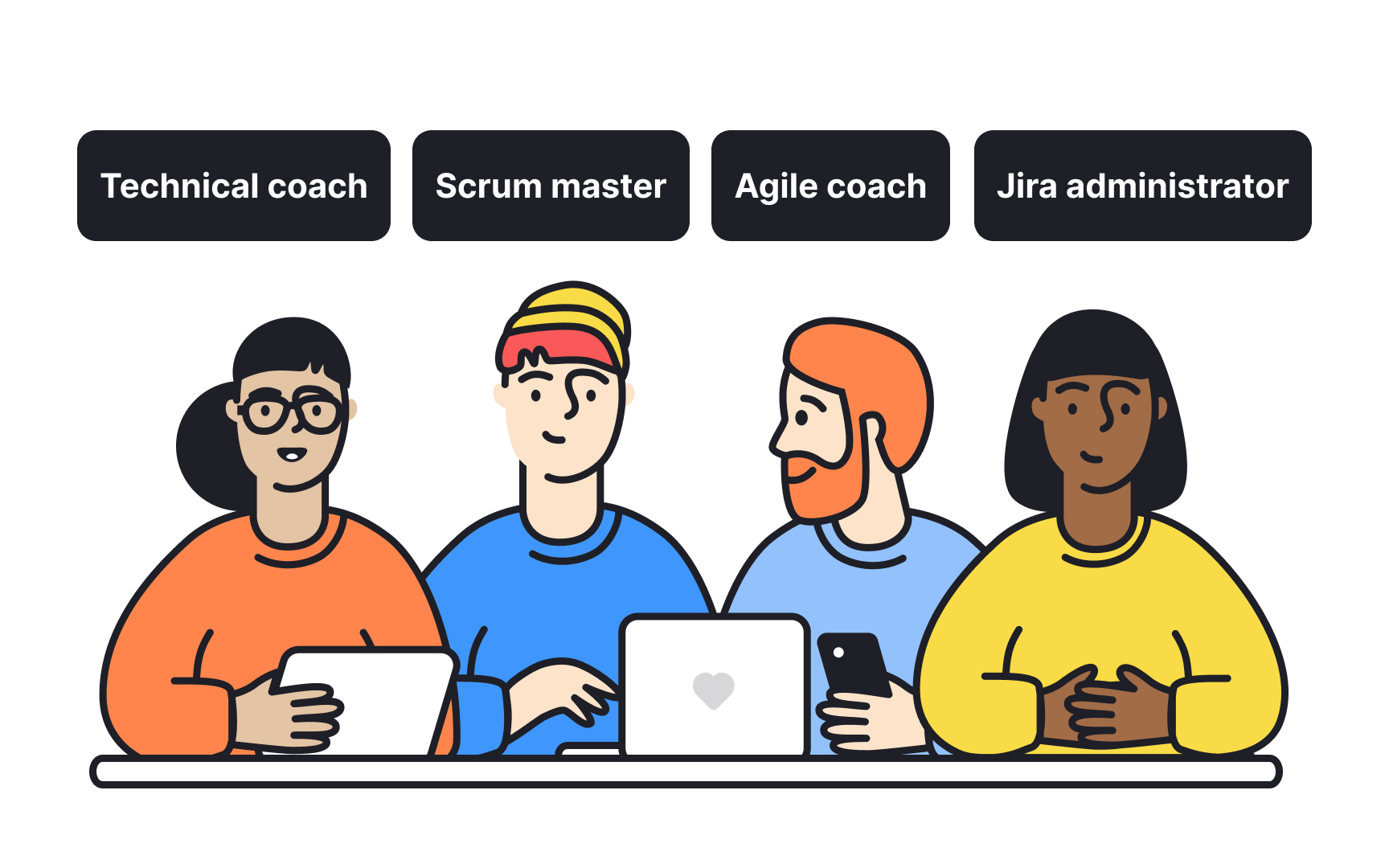
Agile enablement teams support organizations in scaling agile successfully through specialized expertise. These teams typically include:
- Agile coaches who help teams apply agile principles effectively, facilitate challenging ceremonies, and resolve team dynamics issues.
- Scrum Masters or Kanban specialists who train teams on specific methodologies, help establish effective workflows, and coach teams through implementation challenges.
- Technical practice coaches who guide teams in adopting engineering practices like test automation, continuous integration, and refactoring techniques.
- Tool administrators who configure and support agile management platforms (like Jira, Azure DevOps, or Rally), create useful dashboards, and help teams use these tools effectively.
Unlike external consultants, internal enablement teams understand the organization's specific context and culture. They can provide continuous support over time, building relationships and tailoring their approach to each team's unique needs. The most effective enablement teams focus on capability building rather than doing the work themselves. They might temporarily fill roles like Scrum Master, but always with the goal of transferring knowledge and skills. Success should be measured not by how many teams depend on them, but by how many teams become self-sufficient. Enablement teams should position themselves as mentors and capability builders who work toward making themselves unnecessary, not as process police or permanent facilitators who create dependency.
Pro Tip: Have your agile enablement team create a "graduation plan" for each team they support, defining capabilities needed before reducing direct coaching.