Prioritization matrix
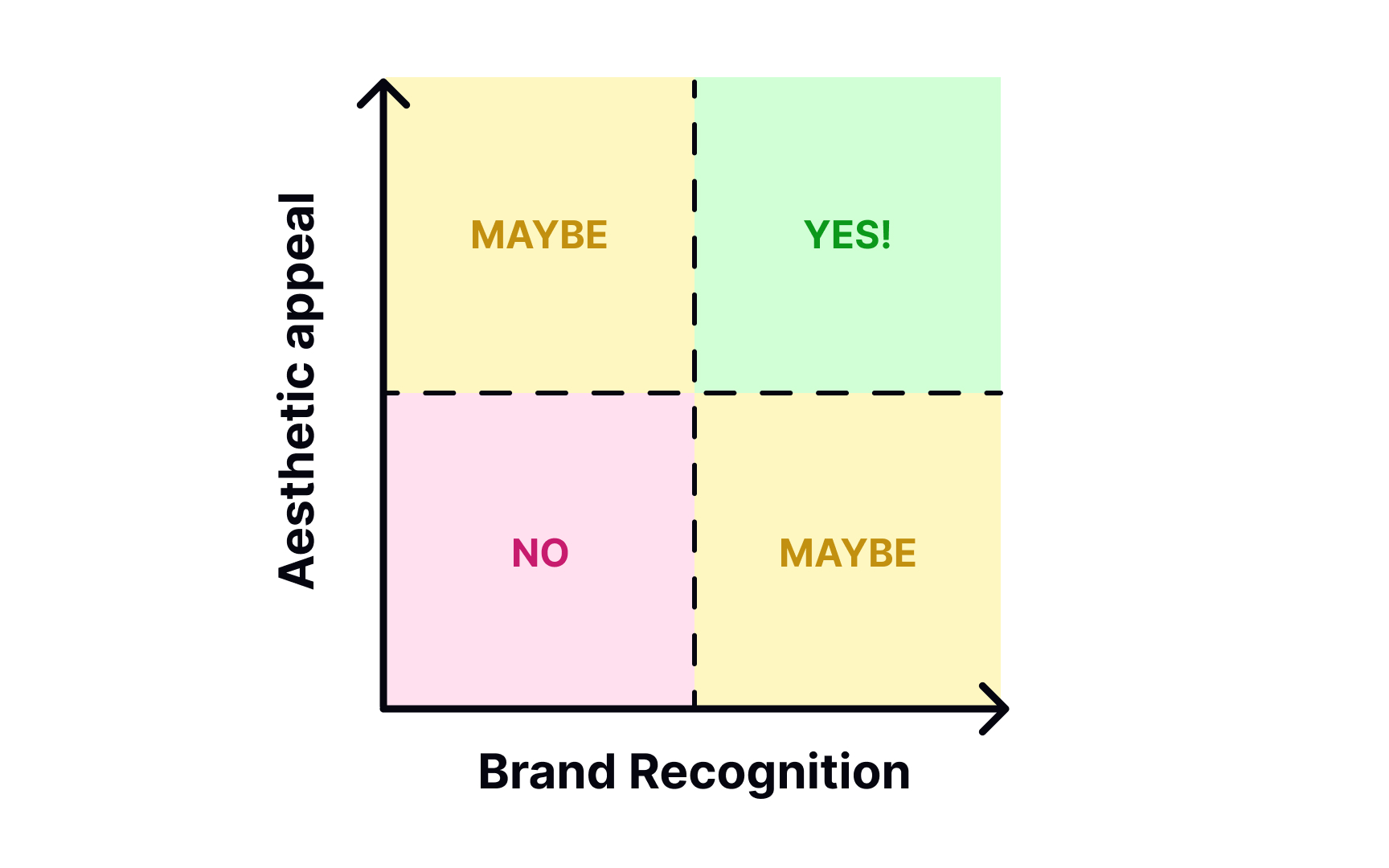
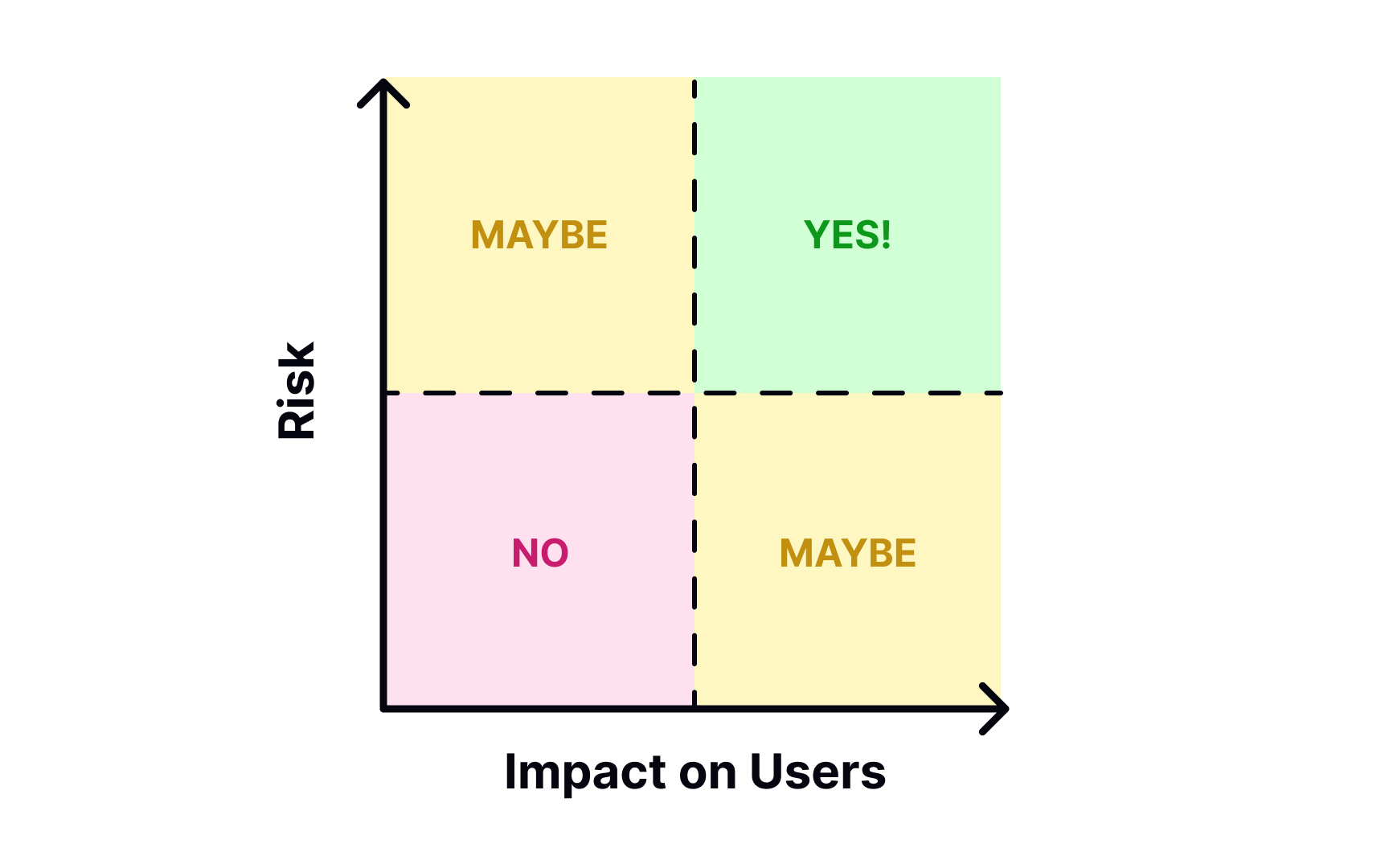
A prioritization matrix helps teams evaluate ideas against specific criteria to identify which ones will deliver the most value to users. One common approach is the 2x2 matrix, which plots ideas against two key dimensions.
Here's how to use a 2x2 prioritization matrix to reduce options:
- Define your two evaluation criteria. Choose dimensions that matter most for your project goals and user needs. For example, a team designing a fitness app needs to prioritize features like workout tracking, social sharing, and nutrition tracking. They choose "Impact on Users" (how much value it provides) and "Risk" (how difficult or uncertain it is to build).
- Plot each option on the matrix. Place ideas in one of four quadrants based on where they fall on both dimensions. High-impact, low-risk ideas land in the "YES!" quadrant and should be prioritized first. High-impact, high-risk ideas are "MAYBE" (worth exploring but need risk mitigation). Low-impact options, regardless of risk, typically fall into "MAYBE" or "NO" categories.
- Focus on the high-priority quadrant. The ideas in the "YES!" zone (high impact, low risk) become your starting point for development, while others may be deprioritized or require further validation.
Teams can customize their matrix axes based on what matters most: effort vs. value, feasibility vs. desirability, or cost vs. user engagement. The visual nature of the matrix makes trade-offs clear and helps teams align on priorities quickly.[1]
References
- Using Prioritization Matrices to Inform UX Decisions | Nielsen Norman Group
Top contributors